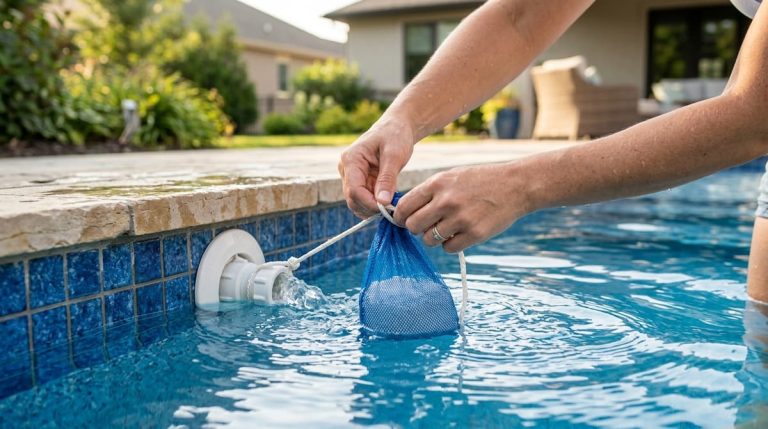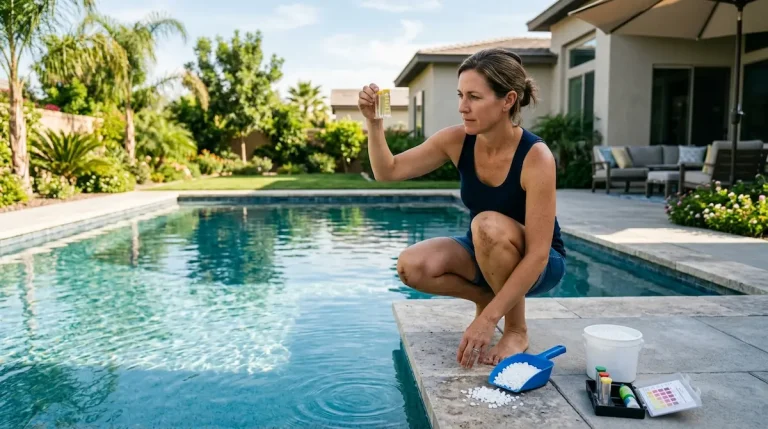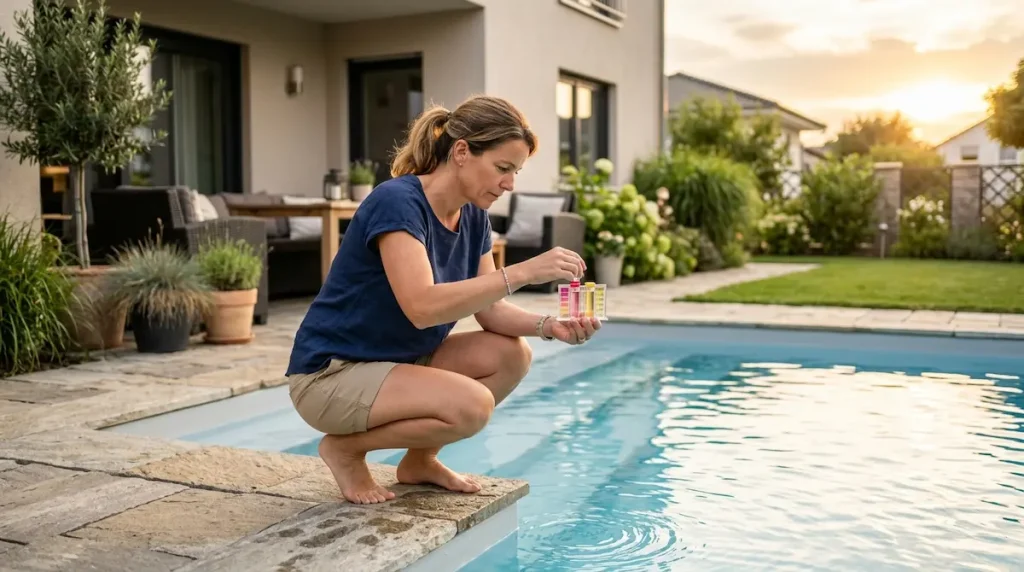
So how often should you shock your pool? For most backyard pools, once a week in peak summer and every two weeks when it cools down covers it. That’s the baseline. But the calendar isn’t really the boss here. Your water is. Test first, then shock when the numbers tell you to, not just because it’s Sunday.
I’ve watched plenty of owners dump shock in every week on autopilot and still fight cloudy water. The fix usually isn’t more shock. It’s shocking at the right moment, for the right reason.
The quick answer for busy pool owners
Shock your pool roughly once a week during peak swim season and every two weeks in cooler months. On top of that routine, shock any time your free chlorine reads zero, combined chlorine climbs past 0.3 ppm, or right after heavy use, an algae bloom, or a big storm.
| Situation | How often to shock |
|---|---|
| Peak summer, regular swimming | Once a week |
| Cooler months or light use | Every two weeks |
| After a pool party or big bather load | That same evening |
| After heavy rain or a storm | Within about 24 hours |
| Visible algae or cloudy water | Right away, then retest |
| Free chlorine reads 0 ppm | Immediately |
| Combined chlorine above 0.3 ppm | As soon as you can |
| Opening or closing the pool | Once each time |
What shocking actually does to your water
Think of shocking as a reset button. You hit the water with one heavy, fast-acting dose of chlorine (or a non-chlorine oxidizer) to torch the buildup your regular sanitizer keeps falling behind on. Sweat, sunscreen, pee, pollen, dead algae. All of it stacks up as combined chlorine, and that’s what makes your eyes sting and your pool smell like a locker room.
Funny thing about that heavy chlorine smell: it doesn’t signal too much chlorine. Nine times out of ten it means the opposite. Your free chlorine has locked into chloramines and stopped working. That smell is your cue to shock.
How the season and usage change your schedule
By weather and season
Heat and rain speed everything up. During hot, humid, or rainy stretches, algae moves fast, so weekly shocking makes sense. In mild, stable weather, every other week is plenty. Once the water drops below about 60°F and nobody’s swimming, you can stretch it out further, since chlorine lingers longer in cold water and algae basically goes to sleep.
By how hard the pool gets used
A pool that hosts kids and guests every weekend needs more shock than one that mostly looks pretty. Think of each swimmer as a little chlorine drain. After a crowded afternoon, shock that night. If your pool sits quiet most of the week, you can lean toward the two-week end of the range.
Signs it’s time to shock right now
Forget the schedule for a second. Grab a test kit. These are the real triggers, and any one of them means shock tonight:
- Free chlorine has dropped to zero.
- Combined chlorine is above 0.3 ppm (the gap between total and free chlorine).
- The water looks cloudy, dull, or slightly green.
- You can smell chlorine strongly near the surface.
- You just had a storm, a party, or a dog decided to take a swim.
Testing beats guessing every time. The CDC recommends keeping free chlorine between 1 and 4 ppm and pH between 7.0 and 7.8 (CDC: Home Pool Water Treatment and Testing), and checking at least twice a day when the pool is busy. If your free chlorine keeps crashing between shocks, something’s eating it, and that’s worth chasing down. For the full walkthrough on dosing and application, see how to shock a pool.
How much to add and when
Dose by shock type
For routine upkeep, you’re pushing free chlorine up to about 10 ppm. Dealing with algae or storm mess? Aim higher, and let breakpoint math set the number: take your combined chlorine reading and multiply it by 10. Below is what common products add per 10,000 gallons in clean, balanced water:
| Shock type | Free chlorine added per 10,000 gal | Best for |
|---|---|---|
| Liquid chlorine (6% bleach), 1 gallon | About 6.2 ppm | Frequent shocking, no stabilizer buildup |
| Cal hypo (65%), 1 lb | Around 7.7 ppm | Fast results, adds some calcium |
| Dichlor (56%), 1 lb | Roughly 6.6 ppm | Convenience, but adds CYA over time |
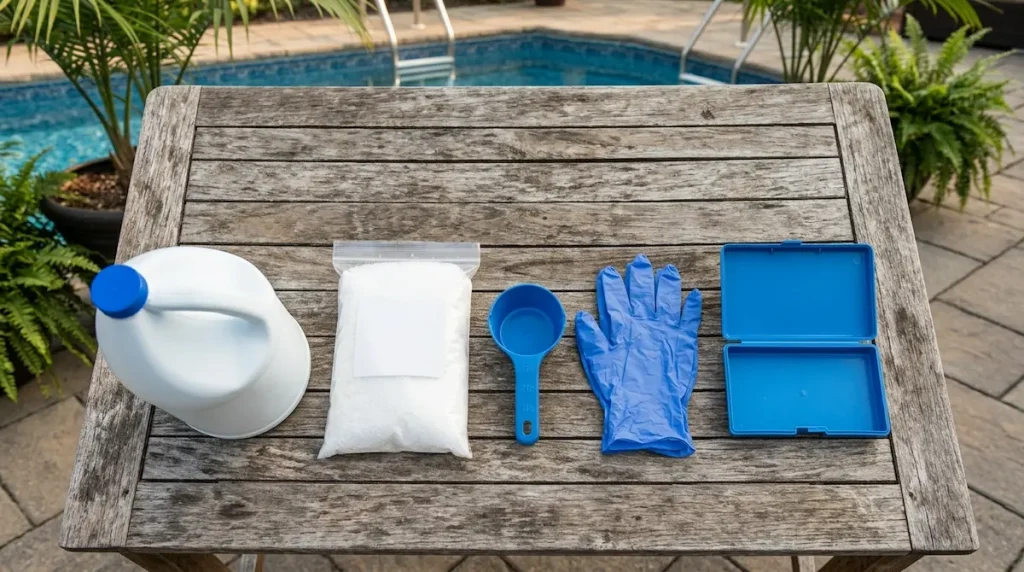
Always add more than you think you need to fully clear the chloramines, and mind the direction: shock goes into the water, never water into the shock container. Shock is honestly one of the cheaper parts of upkeep. If you want to see where it fits in the bigger budget, check our pool maintenance cost guide.
The best time of day
Wait for sunset. The midday sun chews through free chlorine in a couple of hours, so a noon dose throws away a big slice of what you just added. Put it in during the evening, run the pump for at least 8 hours overnight, then retest in the morning. Don’t swim until free chlorine falls back to 1 to 4 ppm.
The mistake most “shock weekly” guides skip
Here’s the part almost nobody mentions: if you shock every single week with a stabilized product like dichlor or trichlor, you’re quietly stacking cyanuric acid (CYA) into your water. A little CYA protects chlorine from the sun. Too much slows it way down, which makes your pool harder to sanitize, so you shock even more. A vicious loop.
Once your CYA creeps past about 50 ppm, switch your shock to liquid chlorine or cal hypo, which add none. Rigid weekly shocking with granular products is how a lot of pools end up needing a partial drain. Test CYA once a month, and let the number guide your product choice. This is exactly the kind of thing our pool water chemistry guide digs into.
Frequently asked questions
Can you shock a pool too often?
Yes. Over-shocking wastes money, and with stabilized shock it drives CYA up until your chlorine barely works. Shock on triggers and a light weekly rhythm, not five times a week for no reason.
Do you have to shock after every rain?
No. A light shower usually just dilutes things a bit. Heavy rain or a full storm is different, since it drags in contaminants and drops your chlorine, so shock within a day if the water looks off or tests low.
How long after shocking can you swim?
Wait until free chlorine drops back to 1 to 4 ppm. For a chlorine shock that’s often 8 hours or more. Non-chlorine oxidizers let you back in much sooner, sometimes within 15 minutes, but always follow the label.
Do saltwater pools need shocking too?
They do. Most salt systems have a “super chlorinate” or boost setting for routine oxidation, but you’ll still want to manually shock after algae or a heavy weekend.
What if my chlorine won’t hold after shocking?
That points to high CYA, a hidden algae bloom, or heavy organic load. Retest CYA and combined chlorine, and if CYA is high, a partial water replacement often does more than another dose ever will.
Your simple shock routine
Keep it practical. Test your water twice a week in summer. Shock once a week when it’s hot and busy, drop to every two weeks when it cools, and add an extra dose after storms, parties, or any time the numbers dip. Watch your CYA and switch to liquid chlorine if it climbs. Do that, and you’ll shock less, spend less, and still keep the water clear all season.