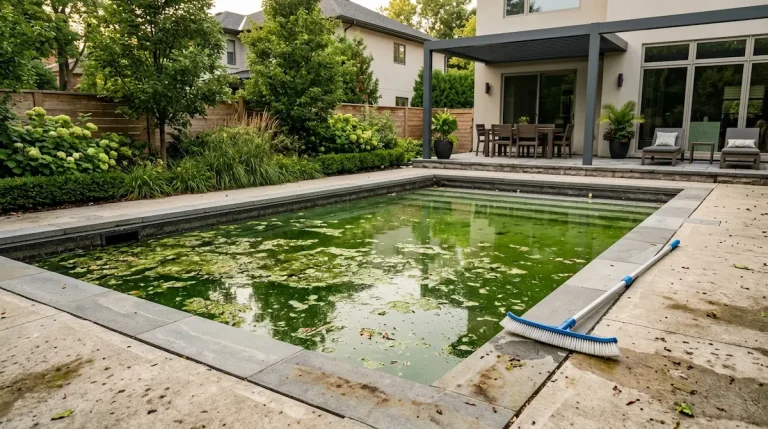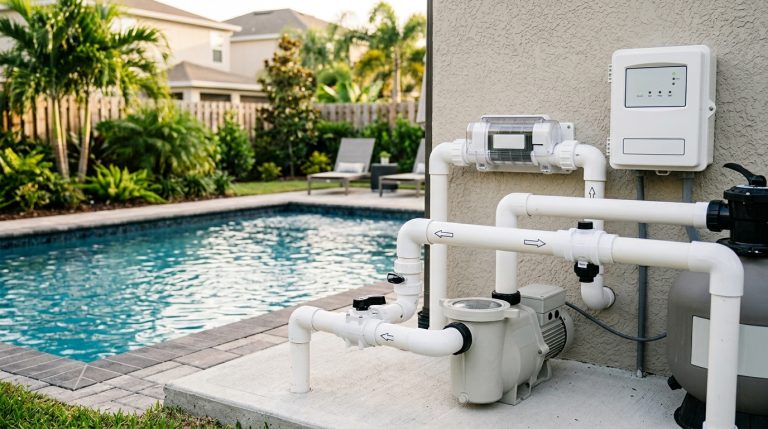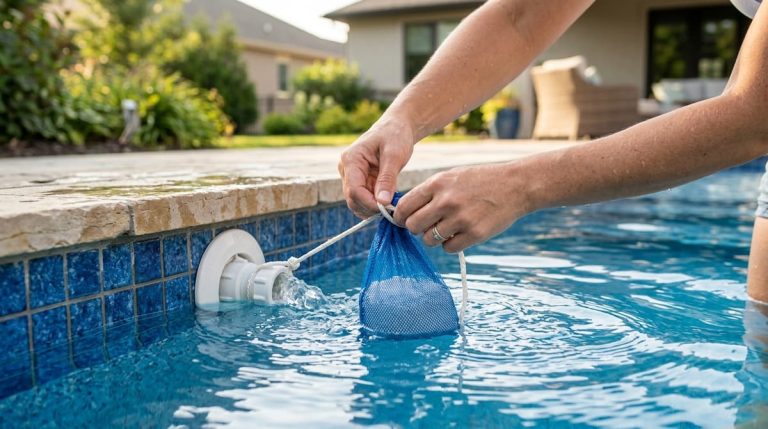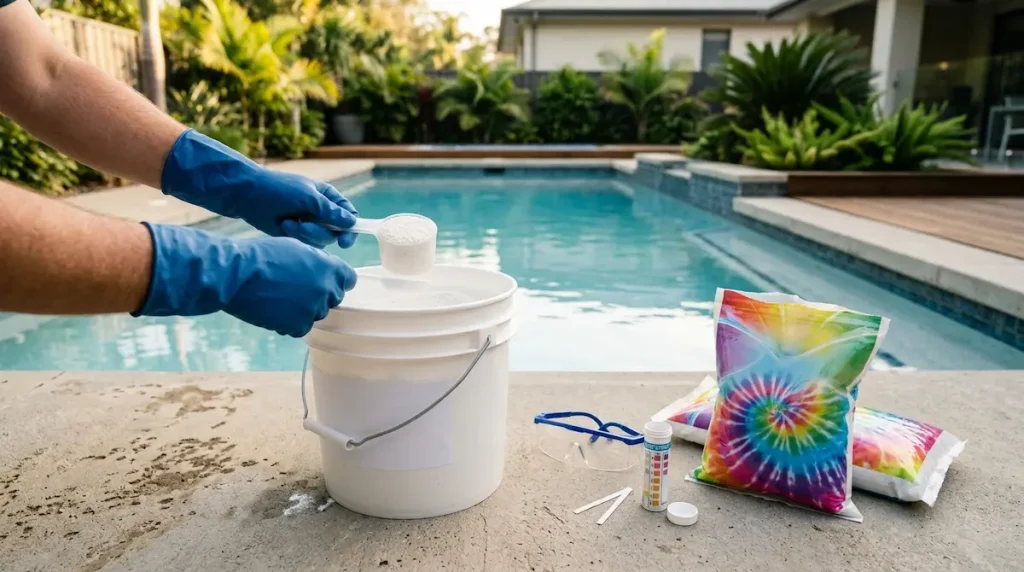
Your water looks a little cloudy, maybe even faintly green, and the chlorine smell is stronger than usual. That’s your pool asking for a reset. Learning how to shock a pool is one of the few maintenance skills that pays off fast, and you can do the whole thing yourself in under an hour of hands-on work. This guide walks you through the exact steps, the right dose for your pool size, and the mistakes that quietly waste your chemicals.
Pool shock is a short, strong treatment that helps your sanitizer catch up when normal chlorine has fallen behind. It oxidizes algae, bacteria, sweat, sunscreen, and chloramines, the used-up chlorine compounds that can make the water smell harsh and sting your eyes.
The short answer: how to shock a pool
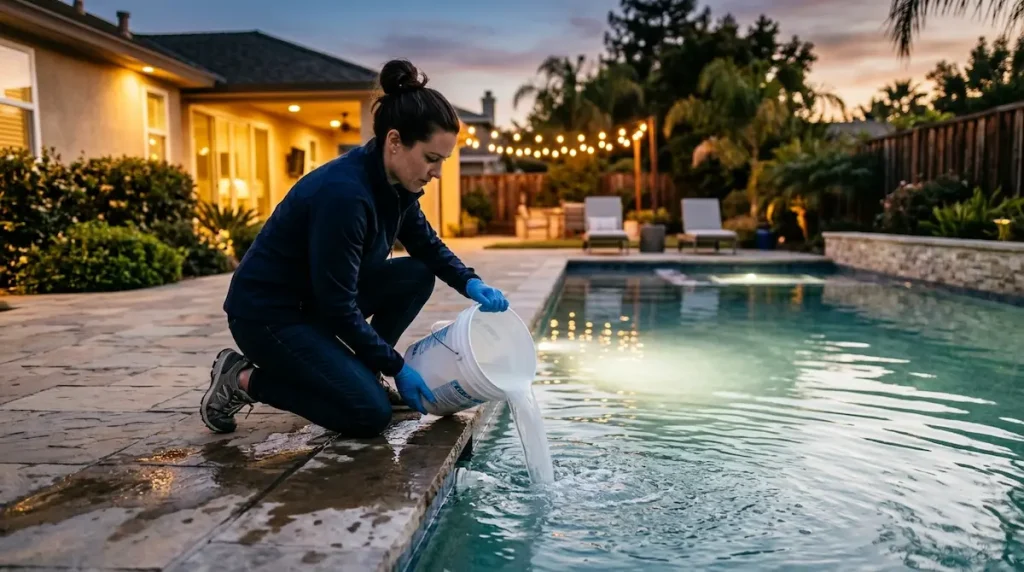
Start by balancing pH to 7.2 to 7.8. Run the pump, dose by your real pool volume, and add about 1 pound of chlorine shock per 10,000 gallons at dusk for a routine shock. Let the filter run overnight. Before anyone swims, test again and wait until free chlorine is back down to 1 to 4 ppm. For standard chlorine shock, that usually means 8 to 24 hours.
What you’ll need before you start
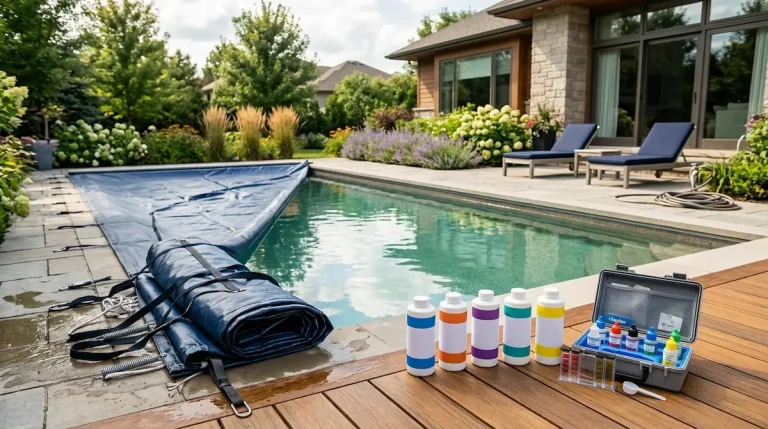
Grab your supplies first so you’re not running back to the shed with wet hands. It’s a short list.
- Pool shock (cal hypo, dichlor, or liquid chlorine)
- A test kit or test strips that read free chlorine and pH
- Chemical-resistant gloves and safety glasses
- A clean 5-gallon bucket for pre-dissolving granular shock
- A pool brush
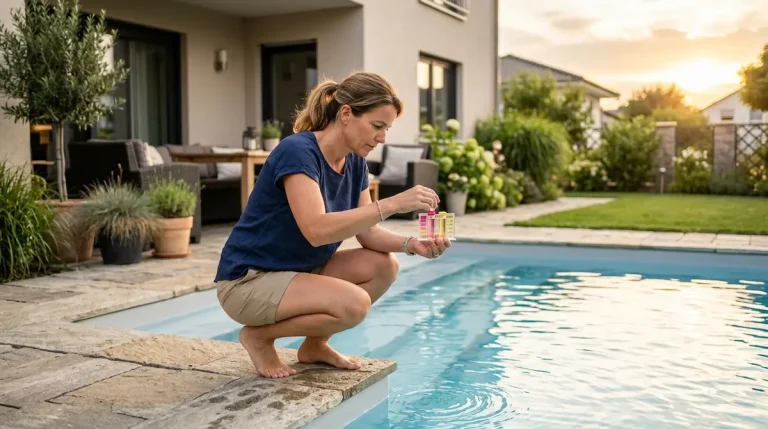
One habit worth building before every shock: test and fix your water chemistry. If your pH sits too high, some of the chlorine you add gets wasted before it can do much good. The CDC recommends free chlorine of 1 to 4 ppm and pH between 7.0 and 7.8 for safe, effective sanitizing, and shocking works best when you start inside that pH band (CDC Healthy Swimming). To keep those numbers steady between shocks, read about pool water chemistry.
How much pool shock do you actually need?
For routine shocking, a common starting point is 1 pound of granular shock per 10,000 gallons of water. If you’re fighting visible algae, many labels and pool-care references call for doubling or tripling that amount (In The Swim; Niran Chemical). Treat that as a working rule, not a replacement for the product label. Different shocks have different strengths, so the amount needed to raise chlorine by about 10 ppm changes by type.
| Shock type | Strength | Dose to raise about 10 ppm per 10,000 gal | Pre-dissolve? |
|---|---|---|---|
| Calcium hypochlorite (cal hypo) | 68 to 73% | About 1 to 1.3 lb | Yes |
| Dichlor (granular) | About 56% | About 1 lb (roughly 15 oz) | Optional |
| Liquid chlorine (sodium hypo) | 10 to 12.5% | About 1 gallon | No, pour directly |
Use this quick size chart for routine shocking with cal hypo, the most common choice:
| Pool size | Routine dose (cal hypo) | Algae dose (double) |
|---|---|---|
| 5,000 gal | 0.5 lb | 1 lb |
| 10,000 gal | 1 lb | 2 lb |
| 15,000 gal | 1.5 lb | 3 lb |
| 20,000 gal | 2 lb | 4 lb |
| 25,000 gal | 2.5 lb | 5 lb |
Not sure of your volume? Don’t guess. Measure length, width, and average depth, then use an online pool volume calculator. A bad gallon estimate is one of the easiest ways to under-dose a shock.
Step-by-step: shocking your pool the right way
Follow this order. Doing the steps out of sequence is the usual reason a shock underperforms.
- Test and balance first. Get pH into the 7.2 to 7.8 range so your chlorine works at full strength.
- Skim, brush, and vacuum. A clean pool lets the shock work on the water, not leaves and debris.
- Turn on the pump. You want the water circulating the whole time so the shock spreads evenly.
- Pre-dissolve granular cal hypo. Fill your bucket three-quarters with warm water, add the shock slowly to the water (never the reverse), and stir with gloves on.
- Pour it in around the perimeter, preferably in front of a return jet for good mixing. Liquid chlorine and dichlor can go straight in.
- Brush any settled granules off the floor so they don’t bleach or stain the surface.
- Wait and retest. Let the filter run 8 to 12 hours or overnight, then confirm free chlorine has fallen to 1 to 4 ppm before swimming.
Why night beats noon
Shock at dusk or after sunset. Sunlight breaks down unstabilized chlorine fast, so a midday shock can lose much of its punch before it finishes the job (Leslie’s Pool Supplies). Running the pump overnight gives the chemical uninterrupted time to work while nobody’s in the water.
Pre-dissolving isn’t optional for cal hypo
Cal hypo is strong enough to damage the wrong surface if granules sit in one spot. Vinyl liners and painted finishes are the big worry, but even plaster owners are better off taking the bucket step. It takes two minutes and helps protect the finish.
Which type of pool shock should you pick?
The best pool shock depends less on the brand and more on what it leaves behind in your water. Match the product to your pool surface, your stabilizer level, and how fast you need to swim again.
| Type | Best for | Pros | Cons |
|---|---|---|---|
| Calcium hypochlorite | Plaster and concrete pools, stubborn algae | Strong (up to 73%), fast, no CYA buildup | Adds calcium hardness; can bleach vinyl if not dissolved |
| Dichlor | Saltwater pools and quick, clear-dissolving doses | Stabilized, dissolves clean, gentle on all surfaces | Raises cyanuric acid over time; watch CYA above 70 ppm |
| Liquid chlorine | Large pools and frequent shockers on a budget | Cheap per dose, no residue, pour and go | Heavy to store, loses strength over weeks, higher pH |
| Non-chlorine (MPS oxidizer) | Quick refresh after heavy use | Swim in about 15 minutes | Won’t kill algae or bacteria |
One nuance most guides skip: dichlor adds roughly 9 ppm of cyanuric acid for every 10 ppm of chlorine per 10,000 gallons (The Pool Nerd). Lean on it too often and your stabilizer climbs until chlorine goes sluggish. If your CYA is already high, switch to cal hypo or liquid. When you’re ready to buy, get more on best pool shock.
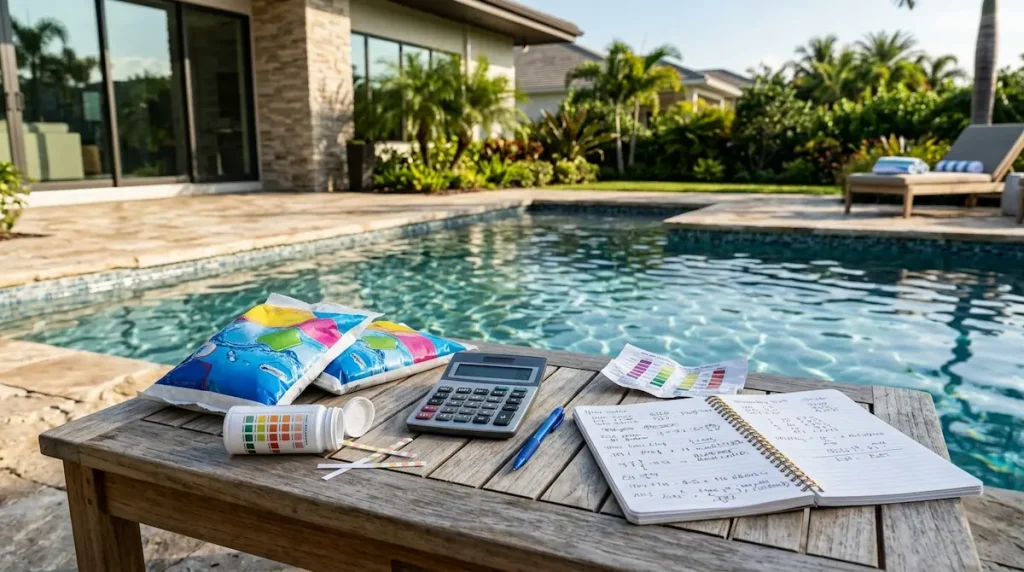
IMAGE PLACEHOLDER 3 — how-to-shock-a-pool-cost.webp Alt: Pool shock bags, a calculator, and handwritten pool care notes arranged near a clean backyard pool.
What does shocking a pool cost?
For most homeowners, shocking is a small line item compared with the rest of pool ownership. As a rough current-market reference, a single 1-pound bag of cal hypo often falls around $6 to $9, while a 25-pound bucket may land around $80 to $110 (Walmart; Septicfit). For a typical 15,000-gallon pool, one routine shock is roughly an $8 to $14 product cost. Weekly shocking through a warm season might put you near $100 to $180 a year in shock alone. Prices move by brand, region, store, and season, so check current local pricing before budgeting. To see how it fits the bigger picture, see pool maintenance cost.
Common mistakes that waste your shock
I’ve watched plenty of new owners pour in bag after bag and wonder why the water stays cloudy. Usually it’s one of these.
- Shocking at high noon, so the sun eats the chlorine
- Skipping the pH test, which cuts the shock’s killing power before it starts
- Tossing cal hypo granules straight onto a vinyl floor and bleaching a patch
- Guessing the pool volume and under-dosing below breakpoint (around 30 ppm chlorine is needed to fully clear chloramines, per In The Swim)
- Getting back in too soon while chlorine is still above 4 ppm
Frequently asked questions
How often should you shock your pool?
For most backyard pools, weekly shocking during swim season is a practical rhythm, especially in hot weather. Add an extra shock after heavy rain, a big pool party, or the first sign of algae. For a full schedule by pool type and season, check how often should you shock your pool.
How long before you can swim again?
The test result matters more than the clock. After a chlorine shock, wait until free chlorine falls to 1 to 4 ppm, which usually takes 8 to 24 hours. Non-chlorine oxidizer can let you swim again in about 15 minutes. For the full breakdown by shock type, read our how long after shocking pool can you swim guide.
Can you over-shock a pool?
You can. Too much cal hypo can push chlorine above 10 ppm, which may irritate skin and eyes. It also adds calcium hardness, and too much calcium can lead to scale. Measure, don’t eyeball.
Do you shock before or after adding chlorine tablets?
Shock is a separate, occasional treatment. Keep your tablets running for daily sanitizing, and shock on top when the water needs a reset. They work together, not instead of each other.
Is pool shock the same as chlorine?
Sort of. Most shocks are concentrated chlorine, just at a much higher dose than your everyday tablets. Non-chlorine shock is the exception, since it oxidizes without adding chlorine.
The takeaway
Shocking isn’t complicated once you nail the order: balance pH, run the pump, dose by your real gallon count, add it at dusk, then wait for chlorine to settle before you swim. For a standard weekly reset on a plaster pool, 1 pound of cal hypo per 10,000 gallons at night is your go-to. If your stabilizer’s creeping up, reach for liquid chlorine instead. Test before, test after, and you’ll spend less on chemicals while keeping the water genuinely safe.