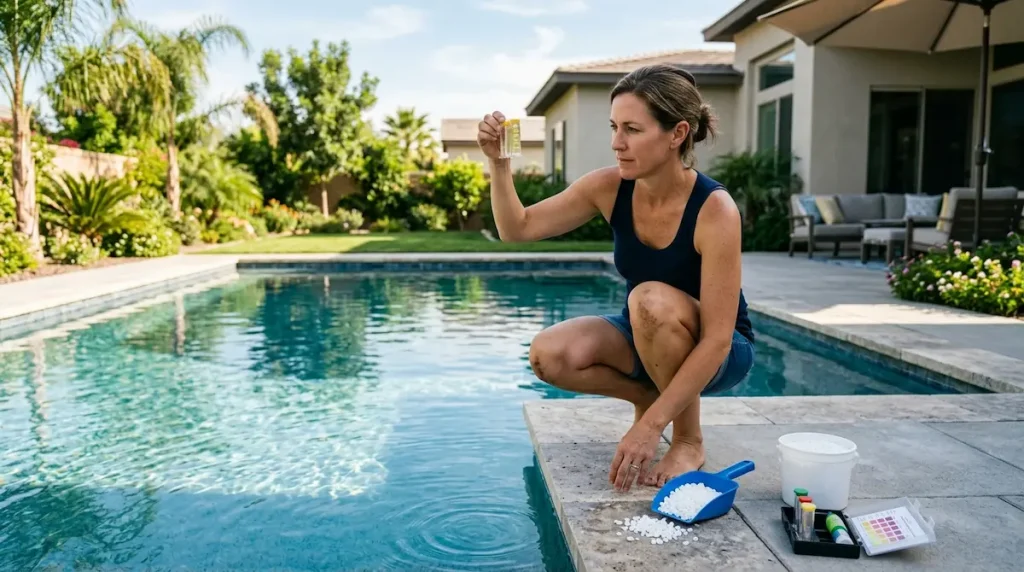
Your test kit reads 120 ppm, and the pool store already has a bucket waiting by the register. Before you hand over your card, know one thing. A calcium hardness increaser is just calcium chloride, and what you pay per pound can triple depending on the label slapped on the bag.
Soft water is sneaky. It looks fine, feels fine, then quietly starts pulling calcium out of your plaster, your grout, and the metal inside your heater. I’ve seen a heater core corrode in two seasons on a pool that sat around 90 ppm. So a calcium hardness increaser earns its spot in your basic pool chemicals kit. The question isn’t whether you need it. It’s which one, and how much you should really pay.
The short answer
Strip away the branding and a calcium hardness increaser is calcium chloride, nothing more. It lifts the calcium level in soft water so the water stops leaching calcium out of your plaster and metal. For most pools, 100% calcium chloride pellets (Aqua Joe is the easy example) win on value, since a single pound moves 10,000 gallons up by about 10 ppm. Shop on strength and price per pound, not the name on the bag.
Best calcium hardness increaser picks, compared
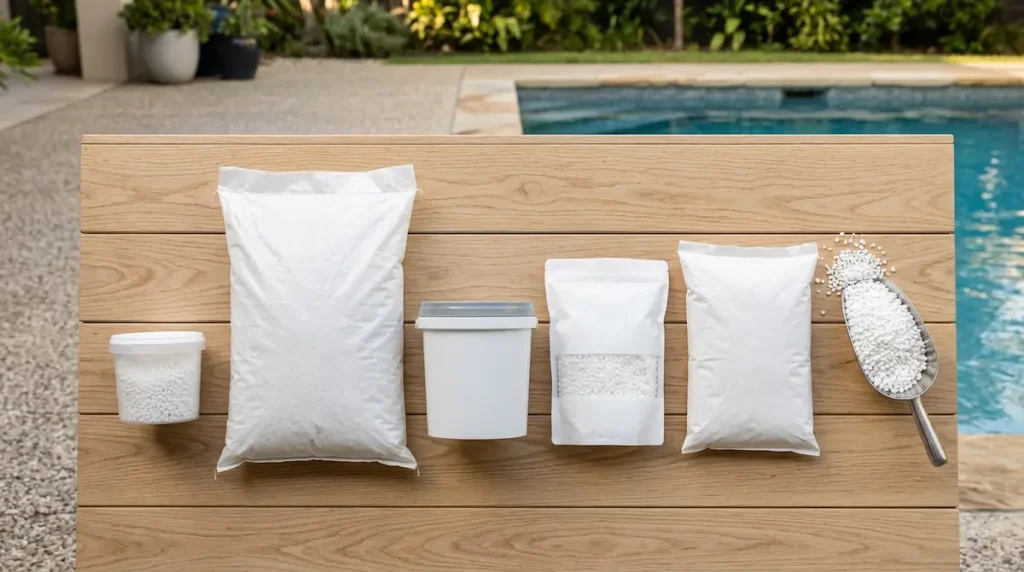
Every product below is calcium chloride in some form. What changes is the strength, the grain size, and how much you’re paying for the name. The last column is the part most “best of” lists skip: what it actually costs to move your water 50 ppm in a 10,000-gallon pool.
| Product | Form & strength | Size / typical price | Est. cost to raise 50 ppm (10,000 gal) | Best for |
|---|---|---|---|---|
| Aqua Joe Calcium Increaser (CCPL50) | 100% calcium chloride pellets | 50 lb, about $60 | around $6 | Best value; big or freeze-climate pools |
| Robelle Calcium Up | Granular calcium chloride | 25 lb, about $49 | around $12 | Mid-size pools; easy to find |
| Leslie’s Hardness Plus | Calcium chloride (dihydrate) | 25 lb, about $60 (8 lb, about $30) | around $15 | Buyers who want in-store help |
| HTH Pool Care Calcium Up | Granular calcium chloride | 4 lb, about $17 | around $25 (two bags) | Small pools; a one-time top-up |
| Bulk / ice-melt calcium chloride | 94-97% pellets or flake | 50 lb, from about $21 | around $3 | DIYers who read ingredient labels |
Cost-to-raise figures assume label dosing and typical online prices in early 2026. Prices swing by brand, region, and when you buy, so check current local pricing and treat these as ballpark, not gospel.
Quick pros and cons
- Aqua Joe pellets. Cheapest way to buy real strength, and the pellets sink instead of clouding the water. The catch is the 50 lb bag: overkill for a small above-ground pool, and it clumps if it gets damp.
- Robelle is the middle-of-the-road pick. Solid price, sold almost everywhere, nothing fancy. Granules can dust up on a windy day.
- Leslie’s Hardness Plus. You’re paying for the store and the staff who’ll test your water for free. Reliable product, premium price per pound. Fine if you value the hand-holding.
- HTH Calcium Up works, but the 4 lb bag is tiny. You’ll burn through it fast on anything bigger than a spa, and the per-pound cost stings.
- Bulk calcium chloride is the same compound for pennies. Only buy it if the bag says calcium chloride and nothing else. Skip any ice-melt with anti-caking agents, dyes, or a “blend” of salts.
How much calcium hardness increaser do you actually add?
Dosing depends on the product’s strength, which is exactly why the cost math above matters. Test first, then aim for a target, then measure. Don’t eyeball it.
- Anhydrous pellets at full 100% strength: budget one pound for every 10,000 gallons to gain roughly 10 ppm (per OxyChem).
- Pool-grade granular at 94 to 97%: around 6 lb per 10,000 gallons gets you a 50 ppm jump.
- Dihydrate flake is the weak one at 77 to 80%, so plan closer to 1.25 lb per 10,000 gallons for that same 10 ppm.
Golden rule from the field: add less than the label suggests, wait, then retest. Going up is easy. Getting calcium back down means draining and refilling, which puts a real dent in your budget. Set that against a $6 dose done right, and you see why it belongs in any honest look at pool maintenance cost.
Pre-dissolve or broadcast? It depends on your pool
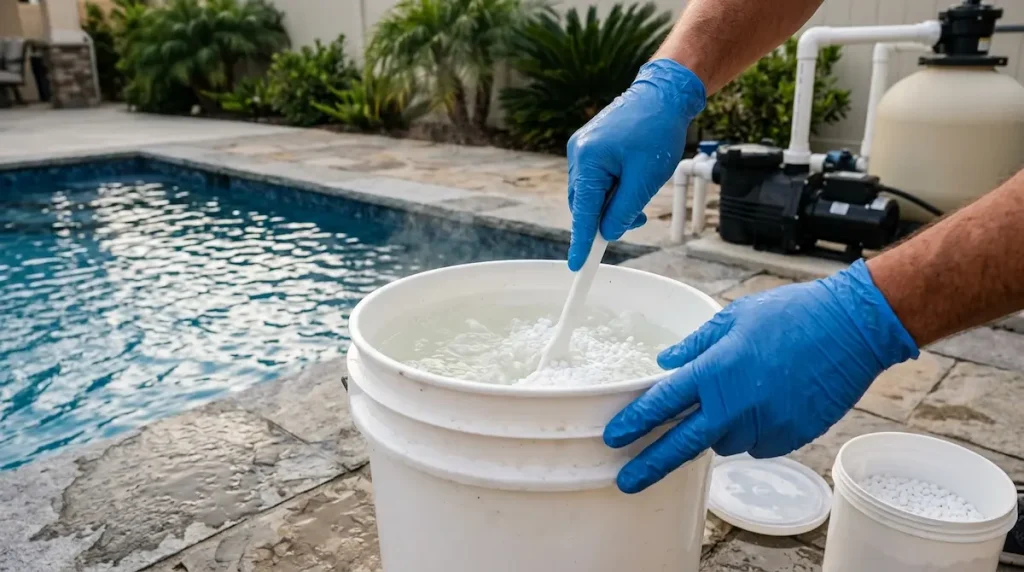
This trips people up, because trusted sources flat-out disagree. Leslie’s label says broadcast it over the surface with the pump running and do not pre-dissolve. Orenda says the opposite: dissolve it in a bucket first. Both are right, for different pools.
Calcium chloride throws off serious heat when it hits water. On a vinyl or fiberglass pool, undissolved granules can settle and mark the surface, so pre-dissolving in a bucket of pool water is the safer call. On a sturdy plaster or gunite pool, broadcasting thinly with the pump running is usually fine. Whichever way you go, work in small batches and keep gloves on. One thing everyone agrees on: never dump calcium into the skimmer.
What not to do
- Don’t add calcium chloride right before or after soda ash or baking soda. You’ll cloud the water. Space the doses out by a few hours with the pump running.
- Don’t pack more than 10 lb into a single bucket if you’re pre-dissolving. It can get hot enough to warp the plastic, according to Orenda.
- Don’t chase a number blindly. Retest after a few hours of circulation before adding more.
What calcium level should you aim for first?
Aim inside 200 to 400 ppm, and treat 150 ppm as the hard floor most labels won’t drop below. Got plaster or gunite? Lean toward the top of that band, 250 to 350 ppm, because the surface itself is calcium-based and gives some back to hungry water. Vinyl and fiberglass can sit a little lower. If your pool freezes over winter, Orenda pushes for 400 ppm or more, since cold water turns corrosive fast. Want the full picture of how calcium plays with pH and alkalinity? It pays to get your head around pool water chemistry before you start dosing.
Frequently asked questions
Is calcium hardness increaser the same as calcium chloride?
Yes, completely. Whatever the tub says on the front, you’re buying calcium chloride, either as anhydrous pellets or the weaker dihydrate flake. The name is marketing. The compound doing the work is identical.
Can I use ice-melt calcium chloride in my pool?
You can, as long as the label lists calcium chloride and nothing else. Plenty of de-icers are pure 94-97% calcium chloride, the exact stuff pool stores sell at a markup. Steer clear of any product with anti-caking agents, colorants, or a mix of salts like sodium or magnesium chloride.
How much does it cost to raise calcium hardness?
Less than you’d think. Bumping a 10,000-gallon pool by 50 ppm runs from about $3 with bulk pellets to around $15 with a premium branded bucket. The cost scales with pool size and the product’s strength.
How long before I can swim after adding it?
Run the filter for 2 to 4 hours, then test again before anyone gets in. The water may look cloudy for a bit if you added a lot at once. That usually clears on its own once it fully dissolves and circulates.
Can you add too much calcium?
You can. Push it too high and you invite scale, cloudy water, and a filter that works harder for less. Scale is annoying but treatable. Under-dosing is the real danger, because the etching and corrosion it causes can’t be undone. Aim for the middle of the range and creep up if needed.
The verdict
For most pool owners, buy 100% calcium chloride pellets and skip the branded premium. Aqua Joe’s 50 lb bag lands around $6 to move a typical pool 50 ppm, and it stores well between seasons. Got a small above-ground pool or spa? A 4 lb bag of HTH or an 8 lb tub of Leslie’s costs more per pound but saves you from storing 50 lbs you won’t use for years. If you’re comfortable reading an ingredient list, pure bulk calcium chloride does the identical job for a couple of dollars. Test, aim for 250 to 350 ppm on plaster, and add in small doses.