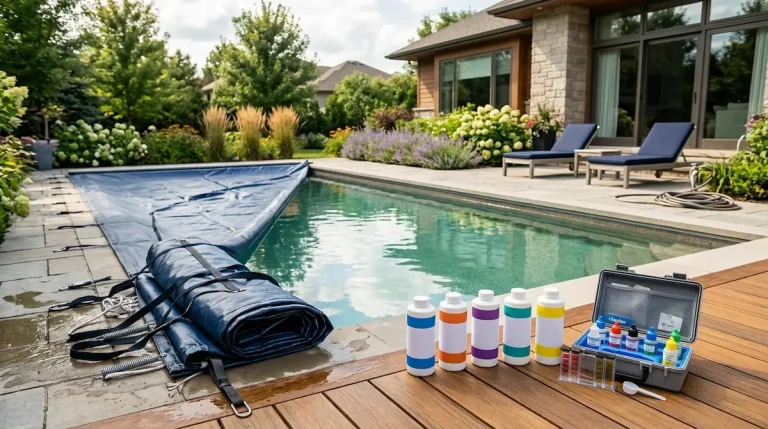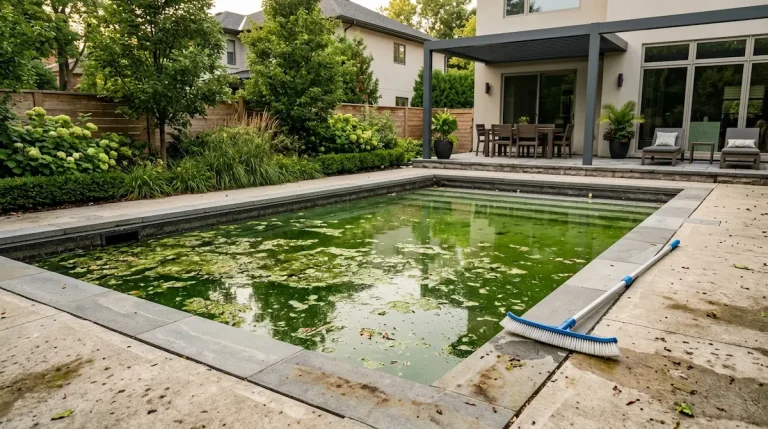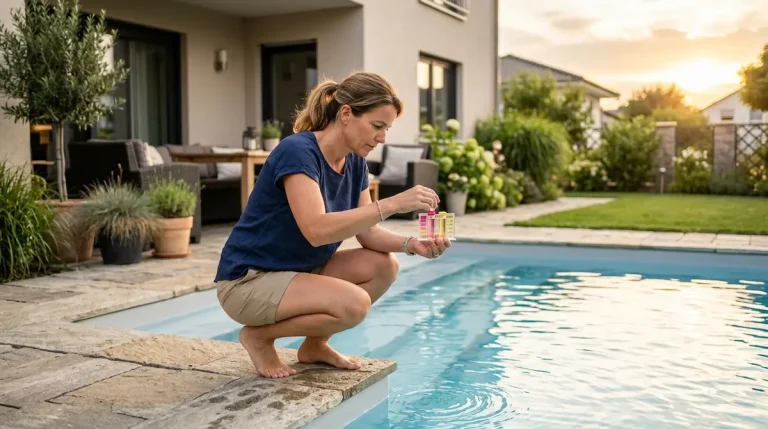
You just inherited a pool, and now you’re standing in the store aisle staring at forty different buckets. Chlorine, shock, stabilizer, clarifier, this jug, that tub. Which ones do you actually need?
Good news first. The list of pool chemicals that genuinely matter is short. Most backyard pools run fine on five or six products, and a big chunk of that shelf is stuff you can skip. This guide walks through every pool chemical worth buying, what each one does, the levels to aim for, and roughly what it all costs.
Quick answer: Most pools need five essentials: a sanitizer (chlorine), a pH adjuster, an alkalinity increaser, a stabilizer (cyanuric acid), and shock. Calcium hardness increaser and algaecide are situational. Always test your water first, then add only what it actually needs.
The core pool chemicals at a glance
Before we get into each one, here’s the whole shortlist in one place. Aim for these ranges and your water stays clear, safe, and easier on your equipment.
| Chemical | What it does | Target range |
|---|---|---|
| Chlorine (sanitizer) | Keeps germs and algae from taking over the water | 2–4 ppm free chlorine |
| pH adjuster (up/down) | Keeps water from leaning too acidic or too scaly | 7.4–7.6 |
| Alkalinity increaser | Buffers pH so it stops bouncing around | 80–120 ppm |
| Stabilizer (cyanuric acid) | Helps chlorine last longer in sunlight | 30–50 ppm |
| Shock | A short, strong sanitizer boost to reset the water | Weekly or after heavy use |
| Calcium hardness increaser | Protects surfaces from soft, hungry water | 200–400 ppm |
| Algaecide | Backup against algae blooms | As needed |
Ranges pull from In The Swim’s chemical chart and the CDC’s home pool guidance. The CDC sets a floor of at least 1 ppm free chlorine and a pH between 7.0 and 7.8, and it recommends at least 2 ppm chlorine once you’re using a stabilizer. If you want to understand how these numbers push and pull on each other, our pool water chemistry guide digs deeper.
Sanitizers: the chemicals that actually keep water safe
If you buy nothing else, buy a sanitizer. This is the one doing the real work. Everything else just helps it work better.
Chlorine
Chlorine is the everyday sanitizer in most home pools. It handles the germs and algae that try to build up between cleanings, which is why it stays on the must-buy list. You’ll find it in three main forms: tablets (the slow-dissolving pucks that go in a floater or feeder), granular, and liquid. Tablets are the low-effort default for most people. Liquid works fast and is often cheaper by the gallon, but it does not last as long in the sun.
One honest catch worth knowing before you load up on tablets: most tablets already contain stabilizer, so every puck slowly raises your cyanuric acid level. Use them all season without watching that number and you can end up with locked-up chlorine that just won’t sanitize well. More on that below.
Shock is not a separate job, it’s a bigger dose
New owners often think shock is its own mystery chemical. It isn’t. In most backyard pools, shocking means raising chlorine hard for a short window so the water can catch up after a party, a rainstorm, or the first sign of cloudiness. Plan on shocking about once a week in swim season, and more after heavy use. After a strong chlorine shock, wait until levels drop back under 5 ppm before you swim, which usually means giving it several hours to overnight.
Balancers: the supporting cast
Balancers don’t sanitize. They set the stage so your chlorine performs and your pool surfaces last. Skip them and you’ll burn through chlorine, fight cloudy water, and slowly chew up your plaster and equipment.
pH up and pH down
Your pH reading is the quick check for whether the water is leaning too acidic or too basic. Too low and the water turns corrosive, eating at metal fittings and stinging eyes. Too high and it goes cloudy while your chlorine gets lazy. You want it sitting between 7.4 and 7.6. You’ll keep two products on hand: a pH increaser (soda ash) and a pH decreaser (dry acid or muriatic acid).
Alkalinity increaser
Think of total alkalinity as a shock absorber for your pH. When it’s in range, your pH holds steady. When it’s too low, pH swings wildly every time you add anything. The fix is cheap and familiar. Alkalinity increaser is basically sodium bicarbonate, the same stuff as baking soda, and you want it around 80 to 120 ppm.
Stabilizer (cyanuric acid)
Here’s the chemical nobody explains well. Cyanuric acid, sold as stabilizer or conditioner, gives chlorine some protection from sunlight. Without it, the sun can burn through your free chlorine fast. Aim for 30 to 50 ppm and you’re set for the season, since it only needs topping up occasionally.
But don’t overdo it. Push CYA too high and chlorine gets sluggish. A rough working rule many pros use: keep free chlorine near 7.5 percent of your CYA level. That single ratio is something most beginner guides never mention, and it’s why “my chlorine reads fine but the pool’s still green” happens.
Calcium hardness increaser
Soft water is hungry water. When calcium hardness runs low, the water pulls calcium out of your plaster, grout, and even metal parts to satisfy itself. That’s slow, expensive damage. Keep it between 200 and 400 ppm. If your test comes back low, our calcium hardness increaser guide covers dosing step by step, and you can read the full background on calcium hardness pool.
Specialty chemicals: useful, but easy to oversell
This is where the shelf gets crowded and your budget gets nibbled. A few specialty products earn their place. Algaecide is a solid backup, especially if your pool gets a lot of shade or you travel and can’t stay on top of chlorine. Clarifier can rescue mildly cloudy water by clumping tiny particles so your filter grabs them. Metal sequestrant matters if you’re on well water with iron or copper.
The rest? Situational at best. You don’t need a cabinet full of them to keep a pool clean.
What order do you add pool chemicals in?
Order matters more than most people realize, because each chemical nudges the next. Start with the test result, not the bottle label. Then correct the readings in this order, waiting between steps so the water can circulate.
- Test the water so you know what’s actually off.
- Adjust total alkalinity first, since it steadies pH.
- Balance pH next.
- Correct calcium hardness if it’s low.
- Set your stabilizer (cyanuric acid).
- Add chlorine or your regular sanitizer.
- Shock if needed, then algaecide or clarifier last.
Give each addition time to circulate with the pump running. Keep concentrates separate, too. Add each product to the pool water as directed instead of blending chemicals together first. For exact timing, we break down how long to wait between pool chemicals in its own guide. And if you’re reopening after a closed season, the sequence shifts a little, so check more on chemicals to open pool.
How much do pool chemicals cost?
As a planning number, many DIY pool owners land around $50 to $100 a month during swim season for the basics. That works out to somewhere between $175 and $750 a year depending on pool size, climate, local prices, and how heavily you swim. That’s according to Swim University. A basic pool service often starts around $80 to $170 a month with chemicals included, but local labor rates and visit frequency matter. Want the full yearly picture including equipment and repairs? See our pool maintenance cost breakdown.
Use those numbers as a range, not a fixed quote. Brand, region, store pricing, pool size, and the month you buy can all change the total, so check current local prices before you stock up.
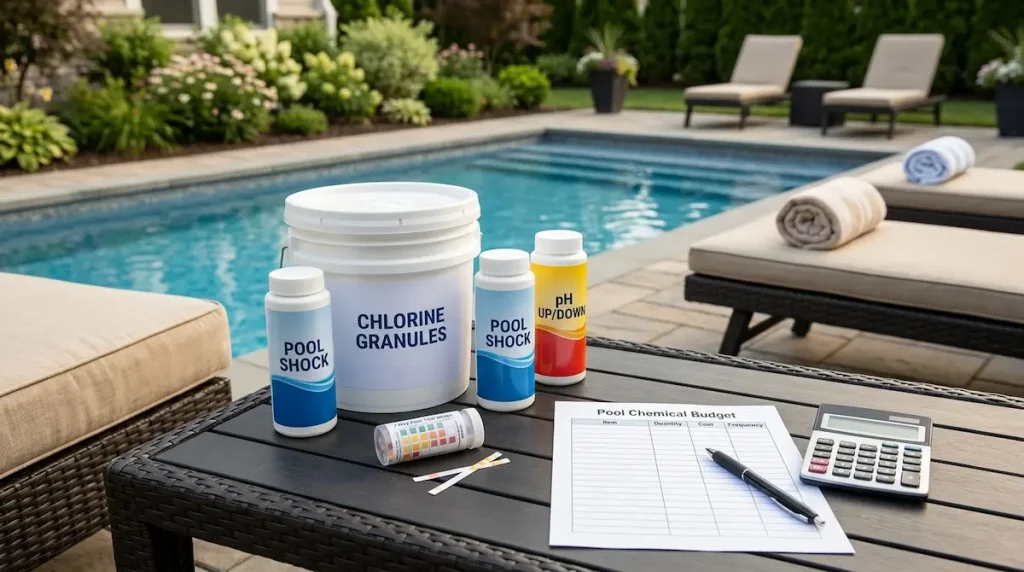
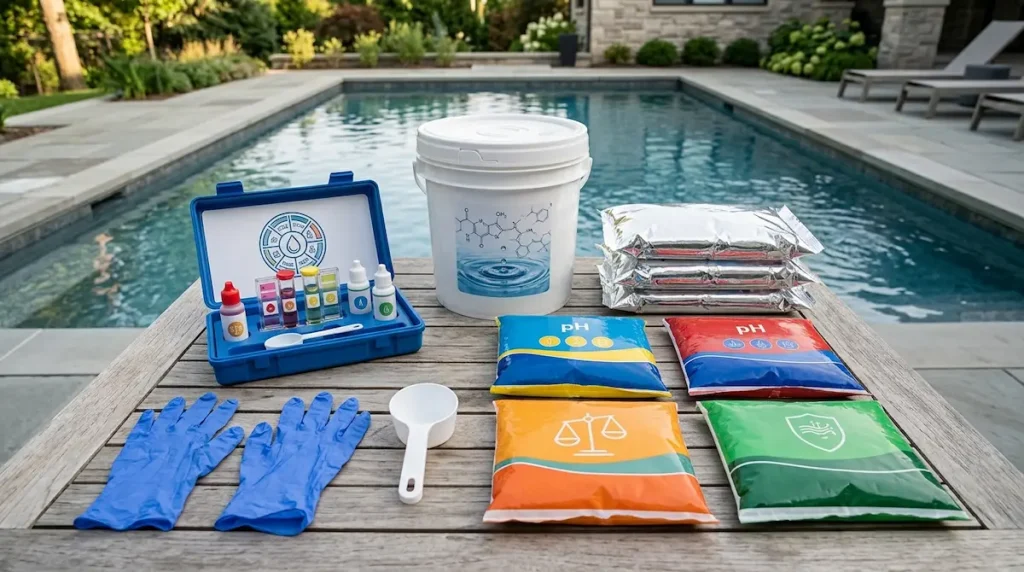
Here’s a realistic first-month starter cart so you’re not guessing at the register. Prices are typical 2026 retail ranges and vary by brand and region.
| Item | Typical price | Do you need it day one? |
|---|---|---|
| Chlorine tablets (25 lb bucket) | around $90 to $150 | Yes |
| Pool shock (6–8 lb bags) | from $25 to $50 | Yes |
| pH increaser and decreaser | about $10 to $25 total | Yes |
| Alkalinity increaser | roughly $15 to $30 | Yes |
| Stabilizer (cyanuric acid) | around $20 to $40 | Usually |
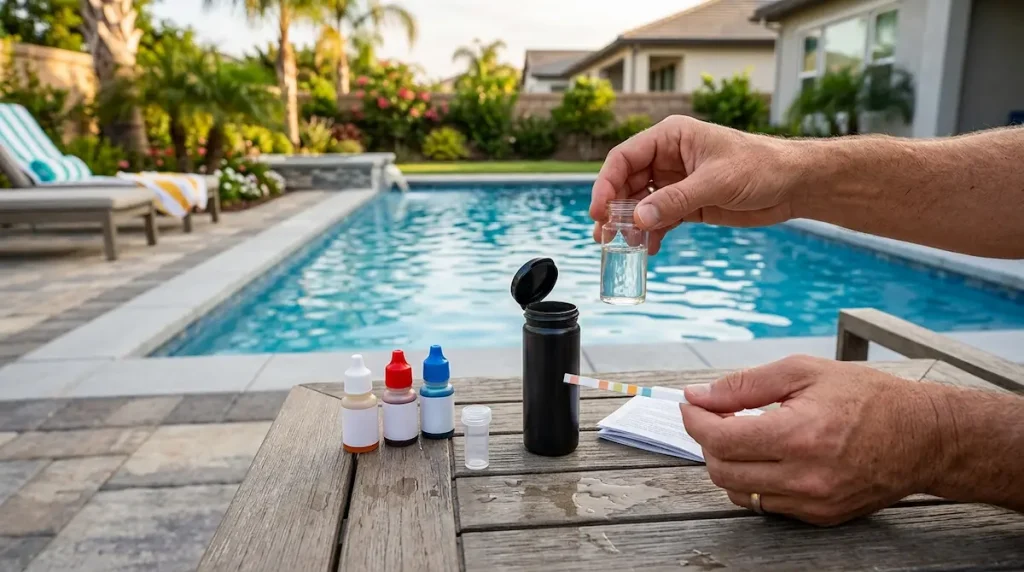
| Test kit or strips | $15 to $60 | Yes, non-negotiable |
| Algaecide | about $15 to $30 | Optional |
Not sure how much of each to pour in? Don’t eyeball it. Plug your pool volume and readings into a dosing tool, and read about pool chemical calculator before you add anything.
The stuff stores push that you probably don’t need
This is the part most guides skip, and it’s where beginners waste the most money. Walk into a big pool retailer and you’ll get talked into a shopping cart twice the size of what your water needs. Skip these unless a specific problem calls for them.
- Weekly algaecide as a “just in case” habit. Good chlorine control prevents algae on its own. Keep algaecide as a backup, not a routine.
- Clarifier every week. It’s a rescue tool for cloudy water, not a maintenance staple.
- “Enzyme” and “phosphate remover” bundles. Nice in narrow cases, rarely essential for a well-balanced backyard pool.
- Pre-mixed startup kits at a premium. You can usually buy the same core chemicals separately for less.
Buy the five essentials, a good test kit, and one bottle of algaecide for emergencies. That covers the vast majority of home pools without the clutter.
Frequently asked questions
Do I really need all these chemicals?
No. Five carry the load: chlorine, pH adjuster, alkalinity increaser, stabilizer, and shock. Calcium hardness increaser and algaecide come in only when your test or your pool tells you they’re needed.
Can you run a pool without chemicals?
Not safely for long. Even saltwater pools make chlorine, they just generate it on site instead of you pouring it in. Without sanitizer, algae and germs can build fast, especially in warm weather.
What chemicals do I need to open my pool?
Opening calls for its own sequence of balancers, a strong shock, and often a stain or scale preventer. The steps differ from weekly upkeep, so follow a dedicated opening checklist rather than your normal routine.
How often should I add pool chemicals?
Test two to three times a week in peak season. Chlorine gets topped up most often, pH and alkalinity as needed, and stabilizer only every so often since it lingers in the water.
Is shock the same as chlorine?
Usually yes, just stronger. Most shock is concentrated chlorine meant to reset the water fast. Non-chlorine shock exists too and lets you swim sooner, but it doesn’t kill algae the way chlorine shock does.
The bottom line for new pool owners
Keep it simple your first season. Buy chlorine, a pH pair, alkalinity increaser, stabilizer, shock, and a reliable test kit. Add calcium hardness increaser if your reading is low and keep one algaecide on the shelf for emergencies. Test two or three times a week, add chemicals in the right order, and let the pump do the mixing. Do that, and you’ll spend less at the store and far less time fishing algae out of green water.