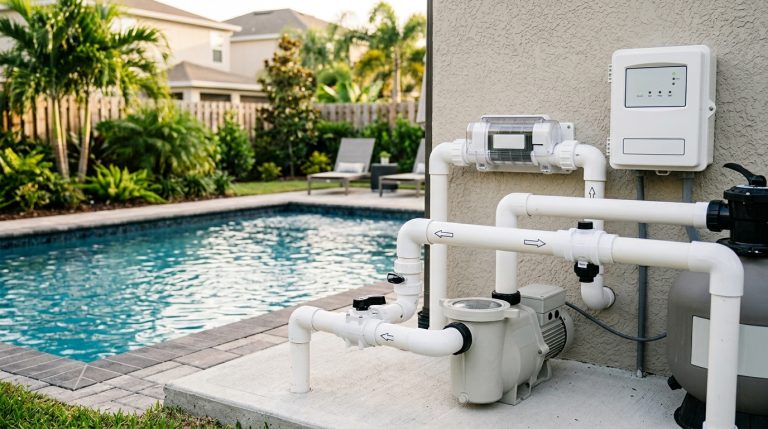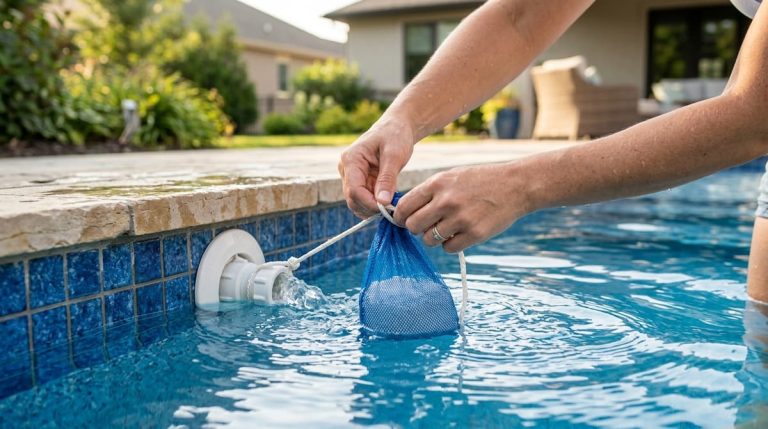
The test strip says your chlorine is fine. So why is the water still hazy, and why won’t the algae take a hint? Nine times out of ten, that pairing points to one culprit: cyanuric acid that has crept too high. This guide on how to lower cyanuric acid hands you the fixes that genuinely work, a way to calculate exactly how much water to swap, and the money traps worth dodging. Real costs, honest trade-offs, a drain formula you can actually use. No hand-waving.
The short answer
Partially drain the pool and top it back up with fresh water. That single method works every time, because dilution is the only thing that truly pulls cyanuric acid out. Swap roughly half the water and you’ll cut the reading by about half. Can’t drain? Reverse osmosis or an enzyme reducer might get you there, though the results are far less predictable.
| Method | Best for | Speed | Rough cost |
|---|---|---|---|
| Partial drain & refill | Most pools, the reliable fix | Same day | Water bill only |
| Reverse osmosis (mobile) | Drought zones, high water tables | 1 day, by appointment | Premium; get a current local quote |
| Enzyme / bio reducer | Small overages, can’t drain | 1 to 3 weeks | from $45 to $59 per treatment (check current pricing) |
| Rain, splash-out, backwash | Mild, patient owners | Weeks to months | Free |
Why your CYA climbed in the first place
Picture cyanuric acid as a pair of sunglasses for your chlorine. It blocks UV, which lets free chlorine hang around three to five times longer on a sunny day. Strip it away and unstabilized chlorine can burn off half its strength in roughly a quarter hour of direct sun. In the right dose, it earns its keep.
Here’s where it goes sideways. Most tab and powder products (trichlor pucks, dichlor shock) come pre-stabilized, so every time you sanitize you’re also dosing in more cyanuric acid. And it never leaves on its own. The stuff piles up month after month until the meter drifts north of 80, then past 100 ppm. Before you touch a thing, it pays to get your cyanuric acid basics straight: the ideal range and how to test for it.
What “too high” actually means
On a typical outdoor chlorine pool, 30 to 50 ppm is the sweet spot. Cross about 70 ppm and your chlorine starts dragging, needing far longer to knock out bacteria and algae. Public pools get a hard ceiling of 100 ppm under the CDC’s Model Aquatic Health Code. Go higher and you can pour in chlorine all day with little to show for it.
How to lower cyanuric acid, method by method
Four options actually exist, sorted by how often they earn a spot. Pick the one that fits your setup, not the fanciest bottle on the shelf.
| Method | Pros | Cons |
|---|---|---|
| Partial drain & refill | Cheap, guaranteed, works today | Wastes water; dilutes other chemicals too |
| Reverse osmosis | Keeps most of your water; also cuts TDS | Pricey; you have to book a mobile truck |
| Enzyme reducer | No water loss; handy in drought | Slow, inconsistent, needs warm low-chlorine water |
| Natural dilution | Free, zero effort | Unpredictable; rain is acidic and shifts your balance |
Partial drain and refill: the reliable one
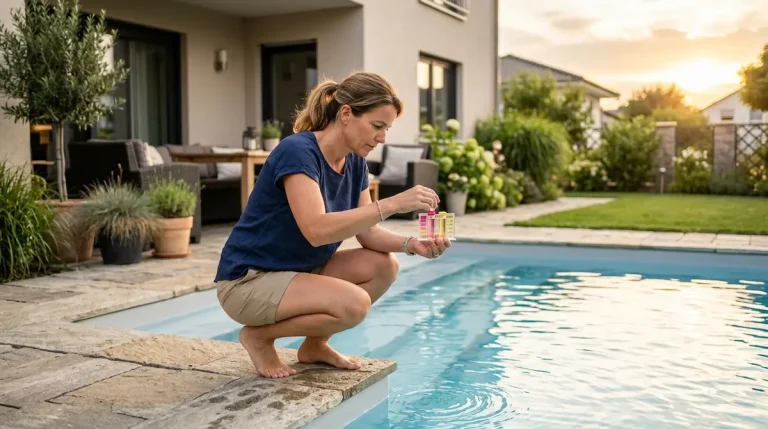
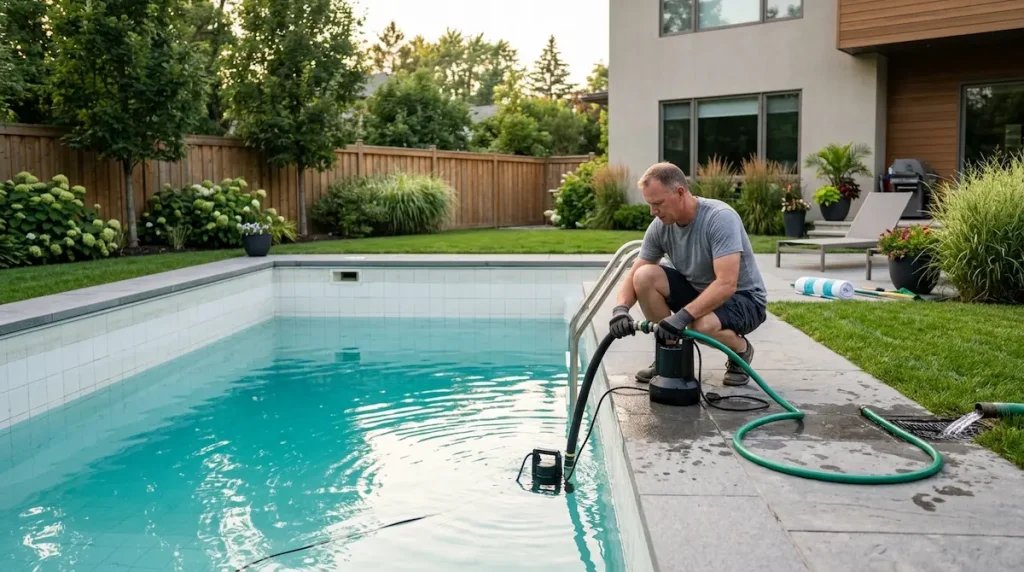
This is my go-to for almost any pool running hot on cyanuric acid. Start with a test so you’re working from a real number, not a hunch. Kill the pump, let out the volume from the calculator below, then refill from the hose and re-balance pH, alkalinity, and chlorine once it’s full. A hard-won warning: with a high water table, or a vinyl or fiberglass pool, never empty it completely. A bare shell can float up out of wet ground, and a dry liner can pull tight and crack. Go in stages and you stay out of trouble.
Reverse osmosis: save the water
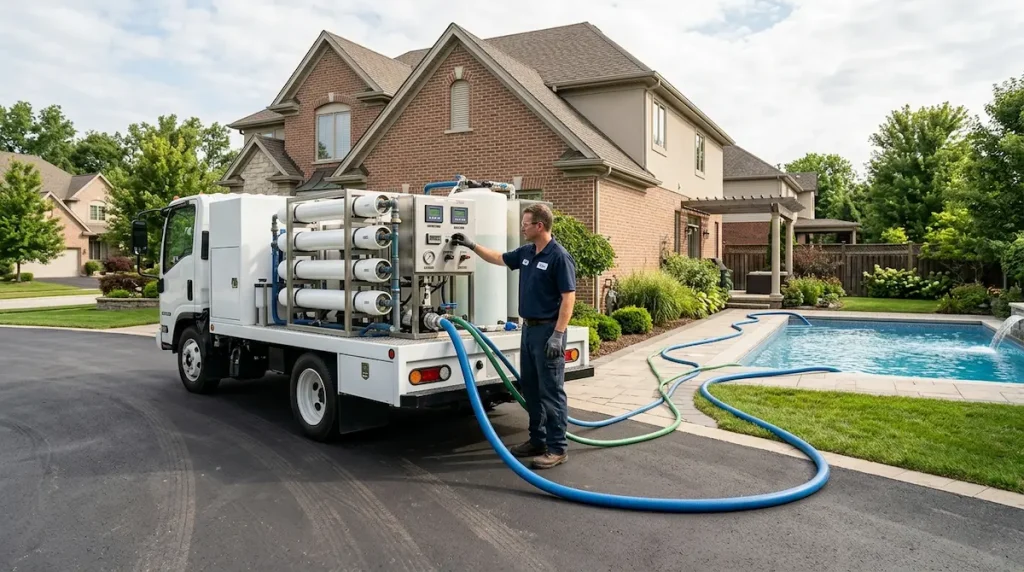
Stuck under watering rules, or just can’t stomach sending thousands of gallons down the drain? With mobile RO, a technician rolls a filtration rig up to your house and scrubs the water you already have, stripping out cyanuric acid and dissolved solids while most of your pool stays put. Greenest choice on the list. It’s also the priciest, and you’re working around the company’s calendar.
CYA reducers: mixed but sometimes worth it
Enzyme products such as Bio-Active advertise cuts of up to 50 percent with no draining at all. Owner reviews land all over the map. I’ve seen one report of a drop from 109 to 46 ppm off a single bag, and just as many where the needle barely moved. Expect to pay somewhere around $45 to $59 for an 8-ounce dose, though prices shift by brand and season, so check current pricing before you commit. They also want warm water (above 65°F), low chlorine, and a couple of patient weeks. Treat it as a coin flip that occasionally lands your way, not a sure thing.
Let rain and backwash chip away
Backwash a sand or DE filter, slosh water over the coping, or catch a good downpour, and each time a little cyanuric-heavy water walks out while clean water takes its place. Slow going, no question. But if you’re only mildly high, say 60 to 70 ppm, simply refilling after routine losses can nudge you back into range across a single season.
How much water should you actually drain?
“Drain some water” is where most guides stop. Let’s put a real figure on it. The math is proportional: swap out a given share of the water and cyanuric acid falls by close to that same share, as long as your fill water carries little or none of it. The shortcut:
Percent to replace ≈ (1 − target CYA ÷ current CYA) × 100
| Current CYA (ppm) | Target 40 ppm | Water to replace |
|---|---|---|
| 60 | 40 | about 33% |
| 80 | 40 | 50% |
| 100 | 40 | around 60% |
| 150 | 40 | roughly 73% |
| 200 | 40 | 80% |
Once you’re north of 150, one massive drain turns wasteful and risky. Split it into two smaller swaps about a week apart, testing between rounds. Every refill resets the calculation, so the gap closes quicker than you’d expect.
Mistakes I see pool owners make
- Reading a test strip that’s pegged at its max. Most strips and drugstore kits quit around 100 ppm. If yours says “off the chart,” spring for a dilution test so you know whether you’re sitting at 110 or a brutal 250. That gap changes the drain math completely.
- Draining, then reaching straight back for trichlor pucks. Do that and you’ll be right back here by midsummer. Move to liquid chlorine or a salt system once the water’s fresh.
- Grabbing a reducer before you’ve even tried draining. A hose and your sewer cleanout is the cheapest sure thing going, not a $55 bottle riding on coin-flip odds.
- Skipping the re-balance. Fresh fill water pulls your calcium and alkalinity down with it. Run the full test panel after refilling, not cyanuric acid alone.
Frequently asked questions
What is the ideal cyanuric acid level?
On a standard outdoor chlorine pool, keep it between 30 and 50 ppm. Saltwater setups like it a touch richer, around 60 to 80 ppm, since the chlorine generator runs best with a bit more stabilizer on hand.
Can I lower cyanuric acid without draining?
You can, though the toolbox is thin. Both reverse osmosis and enzyme reducers lower cyanuric acid with no drain involved. RO delivers but costs more; reducers cost less and gamble on results. For most owners, a partial drain still comes out ahead on price and certainty.
Will high cyanuric acid go down on its own?
Barely. Cyanuric acid won’t evaporate and it won’t cook off in the sun. The only exit is with water that physically leaves: backwash, splash-out, an overflowing rain, or a deliberate drain. Ignore it and a high number just sits there.
Is high cyanuric acid dangerous?
The real hazard is sneaky. Because high cyanuric acid handcuffs your chlorine, the water can look crystal clear while it’s quietly under-sanitized, rolling out the welcome mat for algae and bacteria. Straight, concentrated cyanuric acid can also irritate skin and the stomach, which is one more reason to keep levels in check.
How much water do I drain to lower CYA?
Lean on the formula from earlier: (1 − target ÷ current) × 100. Dropping from 100 to 40 ppm works out to replacing roughly 60 percent of the water. To see how cyanuric acid plays with pH, chlorine, and alkalinity, it helps to step back and look at your pool water chemistry as a whole.
What I’d do in your shoes
First, test with a dilution kit so your starting number is honest. Then drain and refill straight off the percentage table, splitting it into two rounds if you’re over 150. Leave the reducers on the shelf unless draining is physically off the table, and if it is, get a quote for mobile RO instead. Once you land back at 40 ppm, retire the trichlor tabs for liquid chlorine so you’re not repeating this next year. Yes, draining burns some water and a little cash on re-balancing chemicals, so budget for that. Curious where it lands over a full season of upkeep? It slots into your broader pool maintenance cost. Fix the cause instead of chasing the number, and cloudy water will steal far fewer weekends next summer.
Source on safe ranges and chlorine effects: Portage County (OH) public health guidance on high cyanuric acid.