Shocked the pool last night and the kids are already tugging at their swimsuits? Short version: probably not yet. How long after shocking pool can you swim depends almost entirely on the type of shock you used and what your test kit says, not the clock on the wall. Most chlorine shock needs a full day. Some oxidizers let you back in within minutes. Let’s sort out which camp you’re in, and the one number that actually tells you the water’s safe.
So how long after shocking a pool can you swim?
Used chlorine shock (cal-hypo, dichlor, or liquid)? Give it a full day, then test before anyone gets in. The green light is free chlorine back down to 1 to 4 ppm with pH around 7.2 to 7.6. Non-chlorine shock (MPS) is the quick one, roughly 15 to 30 minutes.
That gap is huge, and it trips people up constantly. The word “shock” covers two very different products. One super-charges your chlorine to burn through contaminants. The other oxidizes without raising chlorine much at all. Same shelf at the store. Totally different wait.
| Shock type | Typical wait before swimming | Best for |
|---|---|---|
| Calcium hypochlorite (cal-hypo) | 24 to 48 hours | Deep cleans, algae, pool opening |
| Sodium dichlor | 12 to 24 hours | Stabilized pools, routine shocking |
| Liquid chlorine (sodium hypochlorite) | 8 to 24 hours | Fast-dispersing weekly boosts |
| Non-chlorine (potassium monopersulfate / MPS) | 15 to 30 minutes | Quick oxidizing when chlorine is already 2 ppm or higher |
Notice these are ranges, not promises. Always read the label on your specific product first. A heavy dose to knock out algae sits at the long end of every window, sometimes past 48 hours.
The number that matters more than the clock
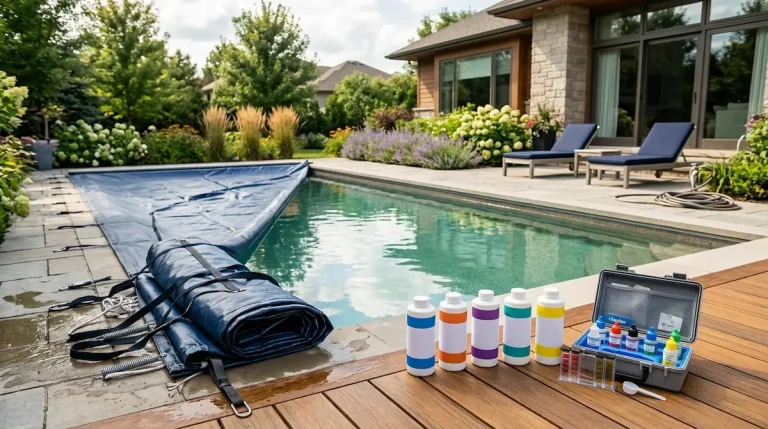
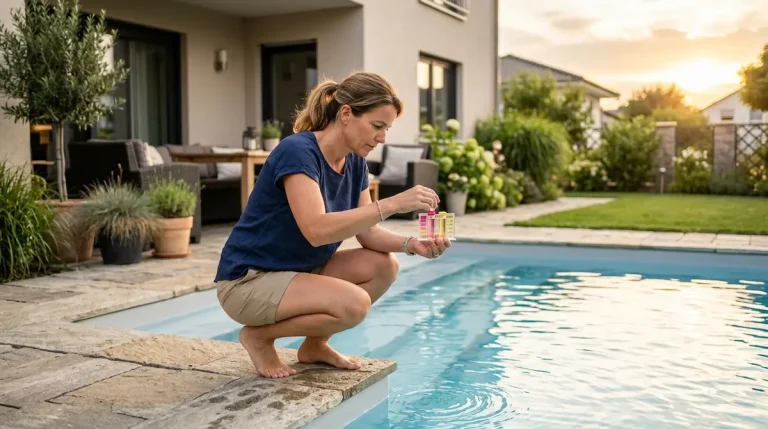
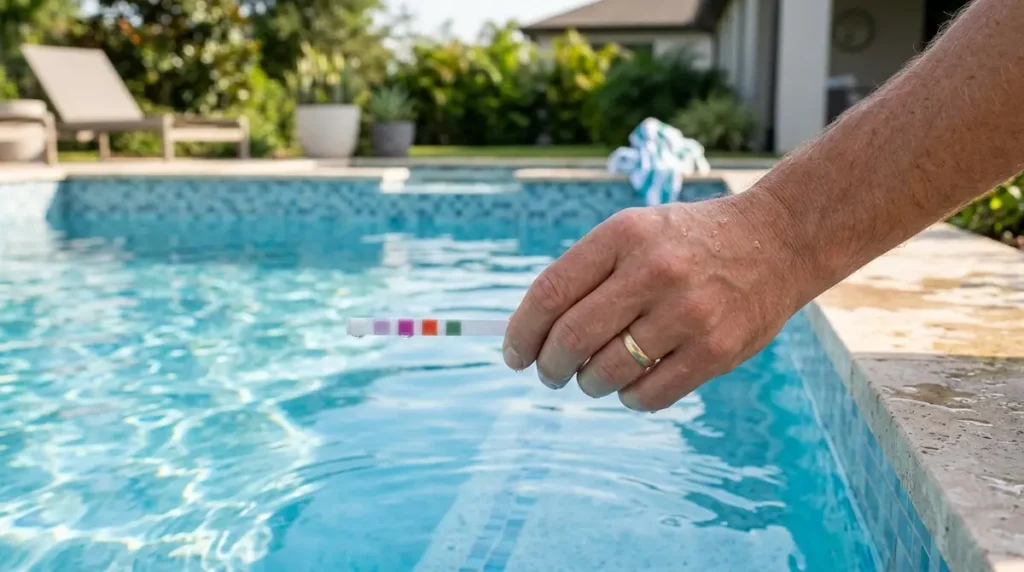
Time is a rough guess. Your test kit is the real answer. Before anyone gets in, your free chlorine should read between 1 and 4 ppm, with pH near 7.2 to 7.6. That range isn’t backyard folklore. Public-health advice points the same way: the CDC’s healthy swimming recommendations put free chlorine at 1 ppm or higher and pH in the 7.2 to 7.8 band for a well-kept pool (CDC: Healthy Swimming).
Why not just swim at 6 or 8 ppm? You technically can survive it. You won’t enjoy it. Too much chlorine burns your eyes, leaves skin itchy and dry, and pulls the color straight out of swimwear. I’ve watched a neighbor dump two bags of cal-hypo at noon, then wonder why the water still smelled like a science lab at dinner. The test strip told the whole story before anyone jumped in.
A quick swim-readiness check
Run through this before the first cannonball. If all four are true, you’re good:
- Free chlorine tests between 1 and 4 ppm.
- pH lands around 7.2 to 7.6.
- Water looks clear, not cloudy or tinted.
- No sharp bleach smell hanging over the surface.
Want to understand how the numbers fit together before you test? Worth a read if the readings ever confuse you, and it makes the whole pool water chemistry picture click.
Chlorine shock vs non-chlorine shock: which wait applies to you
This is the fork in the road. Pick the wrong assumption and you either waste a swim day or jump into water that’s too hot with chlorine.
| Type | Pros | Cons | Best for |
|---|---|---|---|
| Chlorine shock (cal-hypo, dichlor, liquid) | Kills algae and bacteria, sanitizes, clears cloudy water | Long wait, spikes chlorine well above swim range, that strong smell | Real problems: algae, murky water, after a storm or a crowd |
| Non-chlorine shock (MPS) | Swim in about 15 to 30 minutes, low odor, gentle on liners | Won’t kill algae, no lasting sanitizer, not a fix for a sick pool | Routine oxidizing when chlorine already reads 2 ppm or more |
Simple rule of thumb. If your free chlorine is already above 2 ppm and you just want to clear up dull water, reach for non-chlorine shock and you’ll swim the same afternoon. If chlorine’s low or algae’s creeping in, you need chlorine shock, and you need patience.
What changes your wait time
Dose and superchlorination
The more you add, the higher chlorine climbs, and the longer it takes to fall back into range. A light weekly shock might clear in 8 to 12 hours. A superchlorination hit for green algae can run 48 hours or longer before free chlorine settles.
Pump run time and pool size
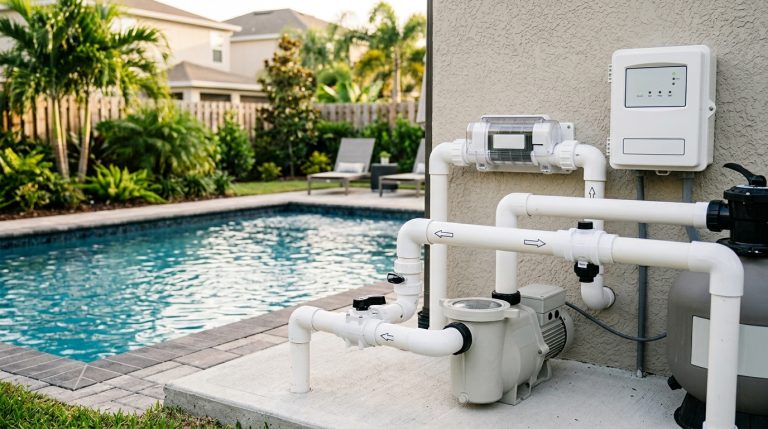
Chlorine has to actually mix before it drops evenly. Keep the pump running on high for at least 8 to 10 hours after you shock, ideally overnight. Big pools take longer to circulate, so a 30,000-gallon pool won’t clear as fast as a small above-ground one. Running the filter also breaks up “hot spots,” those pockets of concentrated chemical that can burn skin and bleach a vinyl liner.
Sun, heat, and time of day
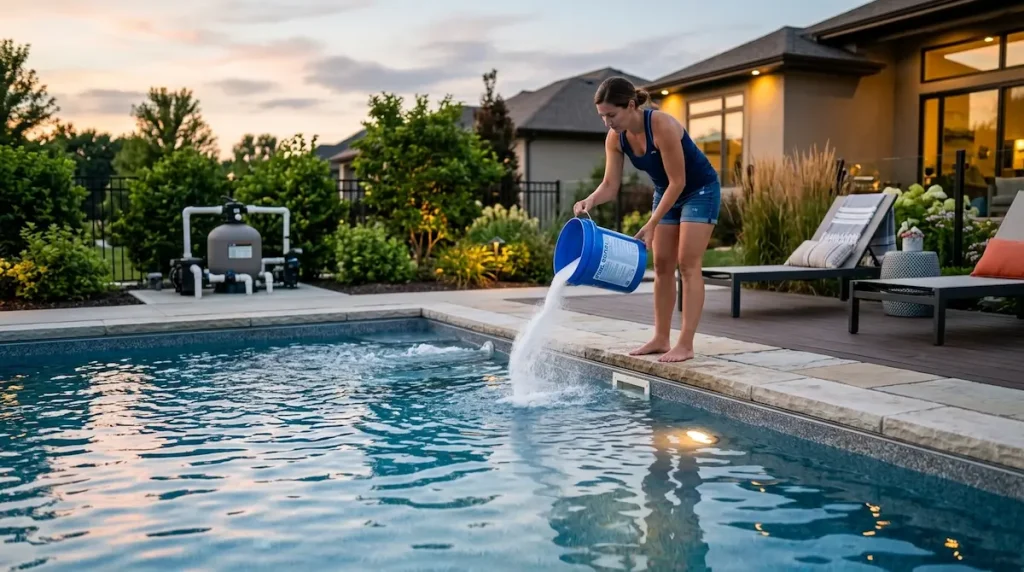
Here’s a trick most guides skip over. Shock at dusk, not at noon. Sunlight burns off unstabilized chlorine, which sounds helpful until you realize it also makes your results unpredictable during the day. Add it in the evening, let it work overnight, and test in the morning. Warm water speeds chlorine consumption too, so a hot July pool often clears faster than a cool spring one.
What happens if you swim too soon
Nothing dramatic at slightly high levels. Mostly discomfort. Red, burning eyes. Itchy, dry skin. Faded swimwear and a lingering chemical smell in your hair. At the very high levels right after a heavy shock, you also risk respiratory irritation, especially for kids and anyone with asthma. Not worth saving a few hours.
If you shock at the right level to begin with, most of this never happens. Learning to shock it correctly in the first place saves you both the guesswork and the wait.
Special cases worth knowing
- Kids and sensitive skin: aim for the low end, 1 to 3 ppm, before they get in.
- Salt water pools: super-chlorinating through the salt cell can take a day or two, far slower than tossing in bagged shock.
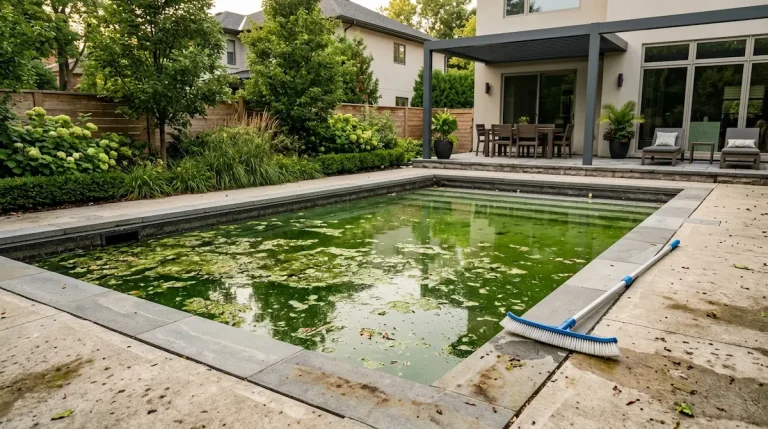
- Still cloudy after 24 hours: don’t swim. Cloudy water can mean the chlorine hasn’t finished its job or your filter needs help.
Frequently asked questions
Can you swim 12 hours after shocking a pool?
Sometimes, if you used a light dose of liquid or dichlor and the pump ran the whole time. Test first. If free chlorine reads 1 to 4 ppm, you’re fine. After a heavy cal-hypo dose, 12 hours usually isn’t enough.
Is it safe to swim in a pool with 5 ppm chlorine?
It sits right on the edge. Plenty of sources call anything under 5 ppm swimmable, but the sweet spot is 1 to 4 ppm. At 5 you may feel a little eye or skin sting, so an extra hour of patience is the kinder move.
What happens if you swim right after shocking?
You expose yourself to very high chlorine. Expect stinging eyes, itchy skin, bleached swimsuits, and possible breathing irritation. It’s uncomfortable and easily avoided with a quick test.
Can you shock a pool and swim the same day?
With non-chlorine shock, yes, about 15 to 30 minutes later. With chlorine shock, usually no, unless it was a small dose early in the morning and your test confirms the level has dropped by evening.
Should you shock a pool before or after swimming?
After, and ideally in the evening once everyone’s out. That way the treatment works overnight and the pool’s ready by morning. Shocking a busy pool mid-day wastes chemical and forces everyone out anyway.
What I’d actually do
Shock in the evening, run the pump overnight, and test in the morning instead of watching a clock. If free chlorine reads 1 to 4 ppm and the water’s clear, swim. If not, give it a few more hours and test again. For a quick oxidizing refresh before guests arrive, keep non-chlorine shock on hand so you’re back in the water within half an hour. And if you’re mapping out the year, factor shock into what regular upkeep runs, your pool maintenance cost, so nothing catches you off guard.