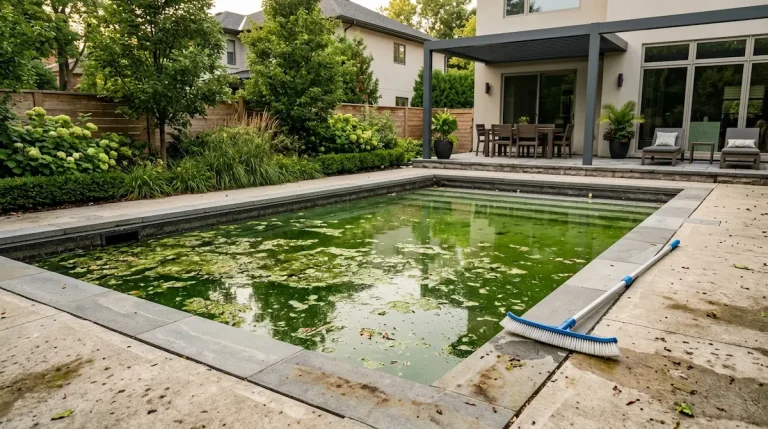
That pool used to be the best part of summer. Now it’s a leaky, green-tinged money pit you’d rather see gone. So the first question is always the same: what’s the real pool removal cost? As a local price range, most homeowners should budget somewhere around $3,000 to $19,000, with the final number changing fast once you choose between a simple fill-in and a full dig-out.
This guide walks you through what you’ll pay, where the sneaky fees hide, and how to choose between a cheap fill-in and a full teardown. You’ll also see the one calculation most homeowners skip before they sign.
How much does pool removal cost?
Pool removal cost usually runs about $3,000 to $19,000 for an inground pool, depending on the removal method, pool size, material, access, permits, and local disposal fees. A partial fill-in often falls around $3,000 to $8,000. A full removal usually lands closer to $8,000 to $19,000. Above-ground pools are far cheaper, often $300 to $3,000.
| Removal type | Average cost | Best for |
|---|---|---|
| Above-ground teardown | $300 to $3,000 | Quick, cheap yard reset |
| Partial fill-in (inground) | $3,000 to $8,000 | Budget fix, open space only |
| Full removal (inground) | $8,000 to $19,000 | Building over the footprint later |
Partial fill-in vs full removal: the choice that sets your price
Almost your entire bill comes down to this one decision. Contractors offer two routes for an inground pool, and they cost very different amounts because the labor is worlds apart.
Partial fill-in, the budget route
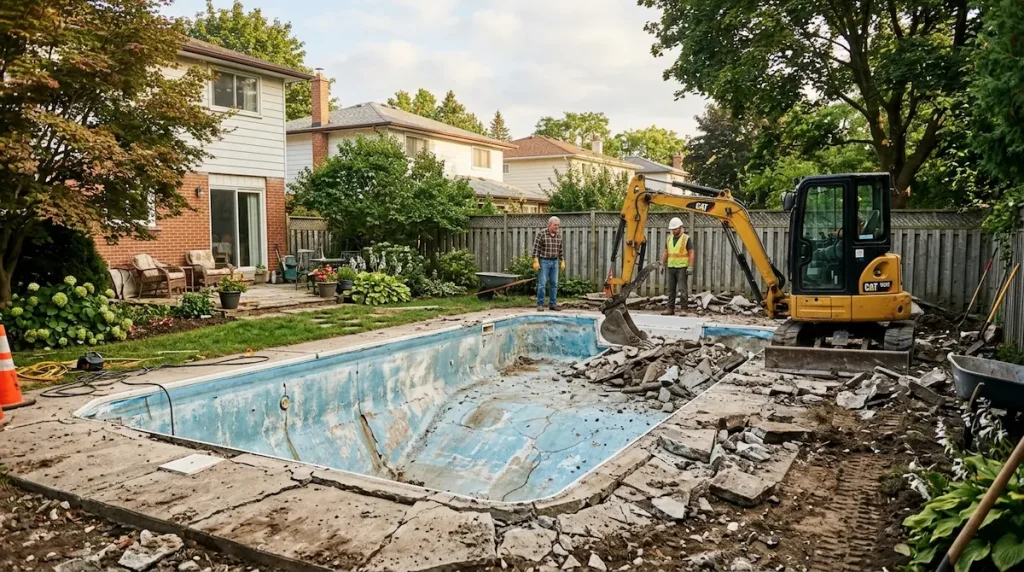
With a partial fill-in, the crew creates drainage openings in the pool floor, removes the upper 18 to 24 inches of the walls, and uses gravel and soil to bury the remaining shell. It’s fast, usually one to three days, and it’s kind to your wallet.
- Cheaper up front, often half the price of a full dig-out.
- Less noise, fewer trucks, quicker cleanup.
- The catch: you can’t build anything heavy on that spot later. No addition, no garage, no patio slab that matters.
- You’ll have to disclose the buried pool when you sell, and some soil settling is possible down the road.
Full removal, the clean slate
Here the whole shell gets demolished and hauled off, then the hole is backfilled and compacted to engineered standards. More labor. More disposal. More money. What you get back is a buildable, honest piece of land.
- No disclosure headache and the strongest resale story.
- You can build over the footprint once the soil’s compacted.
- Downside: it’s the priciest and most disruptive option, sometimes topping $20,000 for a big concrete pool.
Pool removal cost by material
What your pool is made of decides how hard it fights back. Concrete and gunite are the stubborn ones. Fiberglass and vinyl come out easier, so they cost less to demolish.
| Pool material | Typical full removal cost | Why |
|---|---|---|
| Concrete / gunite | $8,000 to $20,000+ | Heavy demolition, lots of debris to haul |
| Fiberglass | $6,000 to $15,000 | Shell lifts out, but it’s bulky |
| Vinyl liner | $4,000 to $10,000 | Thin walls, lighter tear-out |
Above-ground pools are a different story
These barely count as demolition. A standard resin pool runs about $500 to $1,500 to dismantle and haul. Steel-frame models cost more, around $1,500 to $2,500, because the metal puts up a fight. Hybrid steel-and-resin pools sit near $1,500 to $3,000. If you’re handy, a weekend and a couple of friends can knock most of these out yourself.
What you’ll pay by pool size
Bigger hole, bigger bill. Size drives both the demolition labor and the truckloads of fill you’ll need to buy. These 2026 figures from Angi give you a realistic ballpark before you call anyone. Treat them as local-price estimates, not fixed quotes, because labor, dump fees, and material costs can shift by city.
| Pool size (ft) | Partial fill-in | Full removal |
|---|---|---|
| 10 x 20 | $2,000 to $6,200 | $4,300 to $10,800 |
| 14 x 28 | $2,300 to $7,700 | $4,900 to $12,900 |
| 18 x 36 | $2,800 to $9,300 | $5,600 to $15,100 |
| 20 x 40 | $3,000 to $10,300 | $6,100 to $16,400 |
| 30 x 50 | $4,100 to $14,700 | $8,000 to $22,500 |
The fees nobody quotes up front
The demolition price is only part of it. A few line items love to show up after you’ve already said yes, so build them into your budget now.
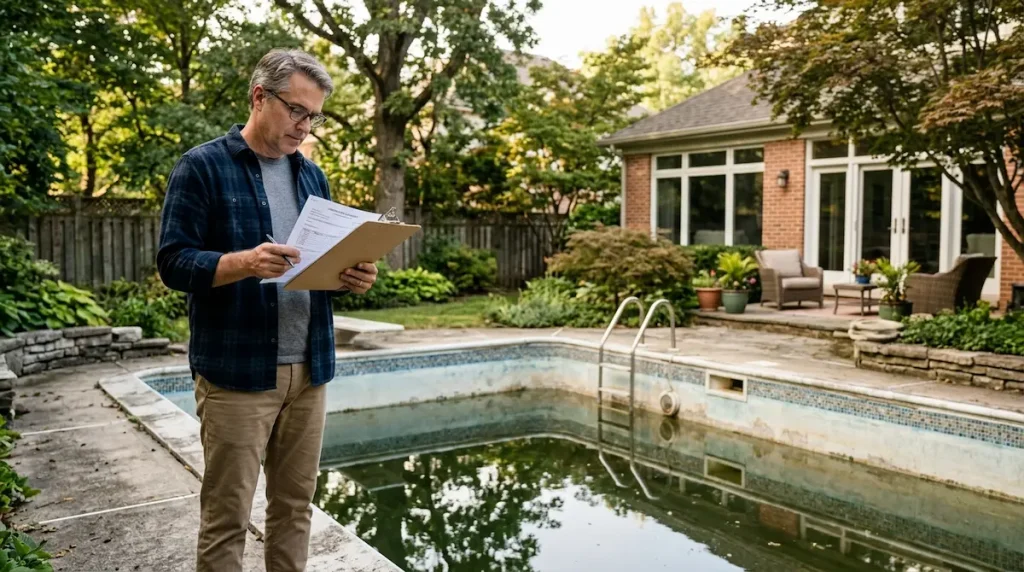
- Permits. Most cities require a demolition permit, often around $100 to $500. Some ask for engineered plans or a soil report first, so check your local building department before treating any quote as final.
- Backyard access. Tight side gates or no room for an excavator mean smaller machines, more hand labor, and a fatter invoice.
- Disposal and hauling. Concrete is heavy, and dump fees add up fast the farther the site is from a landfill.
- Deck, coping, and fencing removal often sit outside the base quote. Ask.
- Compaction can change the job, too. Some jurisdictions require the backfill to be compacted to about 90% density under a geotechnical engineer, with a signed report before final inspection. For a strict example, see Maricopa County’s official pool demolition requirements.
Will filling in the pool actually save you money?
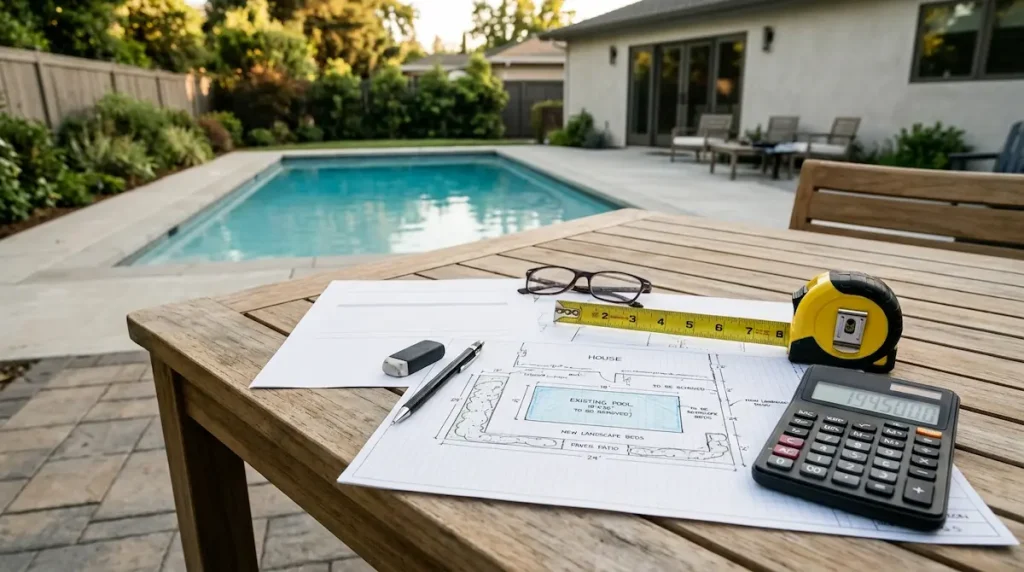
This is the math almost nobody runs, and it’s the whole point. Say a full removal costs you $12,000. If you’re spending roughly $1,200 a year keeping the pool alive, it takes a solid decade just to break even on the removal itself. Run the numbers against your real pool maintenance cost before you commit to anything. Sometimes the pool that annoys you is still cheaper to keep than to kill.
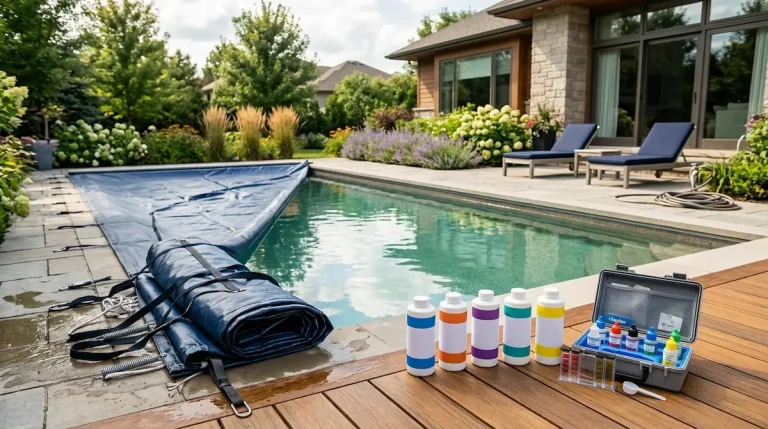
And if the weekly test kit is the real reason you want out, that’s worth a second look too. Balancing chemicals is a habit, not a life sentence. Our pool water chemistry guide shows the routine you’d be walking away from, and for a lot of people it’s less work than they feared.
Resale and the disclosure catch
A pool doesn’t always help you sell. In cold-climate markets, plenty of buyers see it as a chore and a liability. But a filled-in pool has its own baggage. Realtor.com notes that a buried pool may need to be disclosed at sale, and buyers can get nervous about settling or a yard section they can’t build on. Full removal sidesteps most of that worry.
Don’t forget your property taxes
Losing the pool can lower your home’s assessed value, which can trim your property tax bill. One trap, though. In many areas the assessor won’t drop your assessment automatically. You have to file the paperwork and tell them the pool is gone. Skip that step and you keep paying tax on a feature you already paid to destroy.
Frequently asked questions
Is it cheaper to fill in a pool or remove it completely?
Yes. Filling in, or partial removal, is usually cheaper because less material is hauled away. Expect roughly $3,000 to $8,000 for a partial fill-in versus about $8,000 to $19,000 for full removal. The tradeoff is real: the filled area may not be suitable for future building.
How long does pool removal take?
Most inground jobs run one to seven working days once permits are approved. A partial fill-in can wrap in a day or two. Full removal takes longer because crews have to break up the shell, haul debris, backfill the hole, and compact the soil.
Do I need a permit to remove my pool?
Almost always, yes. A demolition permit typically costs about $100 to $500, though local rules vary. Skipping it can lead to fines, failed inspections, or resale problems. Your contractor usually pulls the permit, but confirm that before work begins.
Can I remove an above-ground pool myself?
You can. A resin above-ground pool is mostly unbolting panels and rolling up the liner, doable in a weekend for the cost of dump fees. Steel-frame models are heavier and harder, so weigh your time against the $500 to $1,500 a pro would charge.
Does removing a pool hurt home value?
It depends on your market and the pool’s condition. An old, broken pool often drags value down, so removing it helps. In warm regions where buyers expect a pool, taking it out can cost you appeal. Know your local buyers first.
So what should you do?
Match the method to your plan for the space. Want a lawn, a garden, or just an end to the upkeep? A partial fill-in gets you there for the least money. Planning to build a patio, an addition, or an ADU over that footprint? Pay for the full removal and the compaction report, because a buried shell will block those plans cold. Get at least three itemized quotes, confirm who pulls the permit, check current local prices, and file the tax reassessment the day the job’s done. That last step quietly pays you back every year.