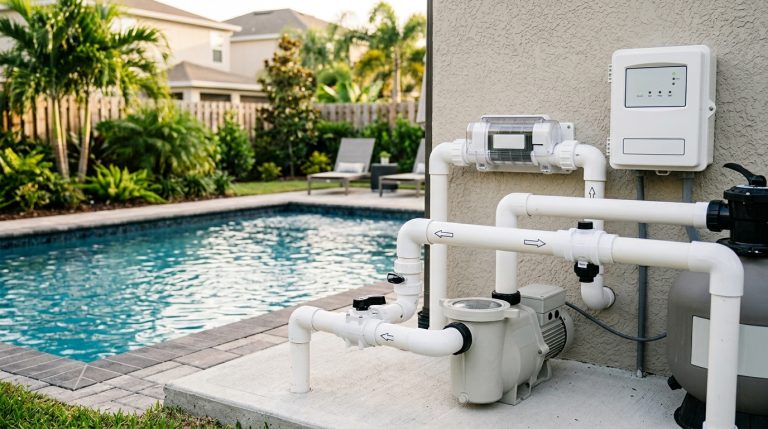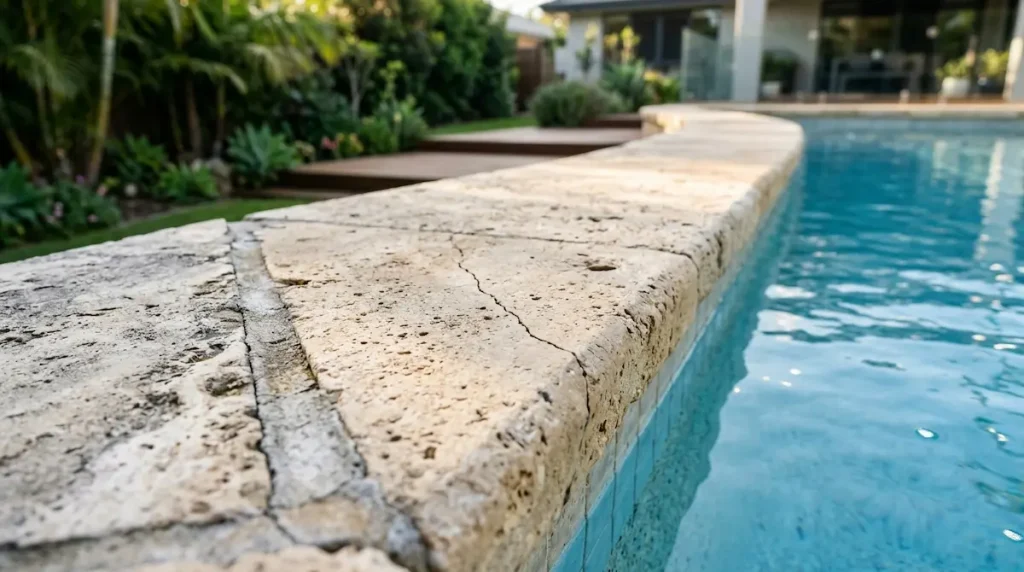
That strip of stone or concrete along the edge of your pool does more than finish the look. It acts like a protective lip, sending water away from the shell and covering the bond beam below. Once it cracks or starts to wobble, water can slip behind it. That is when a small pool coping repair can grow into a structural repair.
Catch it early and you may be looking at a weekend job plus a patch kit. Let it sit, and the bill can climb fast.
So how do you tell a quick fix from a real problem, and what should any of it cost? Let’s walk through it like you’re standing at the edge of the pool with me.
The short answer on repair versus replace
Repair makes sense when the damage is small: a hairline crack, a loose joint, or one or two stones that move underfoot. Replacement starts to make more sense once hollow spots, lifting, or cracks spread across roughly a quarter of the pool perimeter, or when the bond beam underneath is no longer sound.
Simple single-stone repairs often stay under a few hundred dollars. Full coping replacement usually lands in the thousands.
What pool coping repair actually costs
Prices swing hard depending on the coping material, the size of the damaged area, and whether you handle the small repairs yourself. Use these numbers as planning ranges, not fixed quotes. Materials, labor rates, and local availability can change the final price, so check current local pricing before you commit.
| Repair type | Typical cost | Best for |
|---|---|---|
| DIY hairline crack patch | About $20 to $60 in materials | Thin surface cracks, small chips |
| Re-caulk expansion joint (DIY) | About $15 to $50 per kit, depending on product and local pricing | The gap between coping and deck |
| Reset one loose stone (pro) | Usually a few hundred dollars; localized repairs rarely top $2,000 | One or two wobbly stones |
| Partial section replacement | Roughly $1,000 to $3,000 as a planning range; check current local pricing | Damage confined to one run |
| Full coping replacement | About $3,000 to $12,000+; many mid-range 15×30 pool projects fall around $4,000 to $8,000 | 25 to 30% or more of the perimeter |
Why the range is so wide
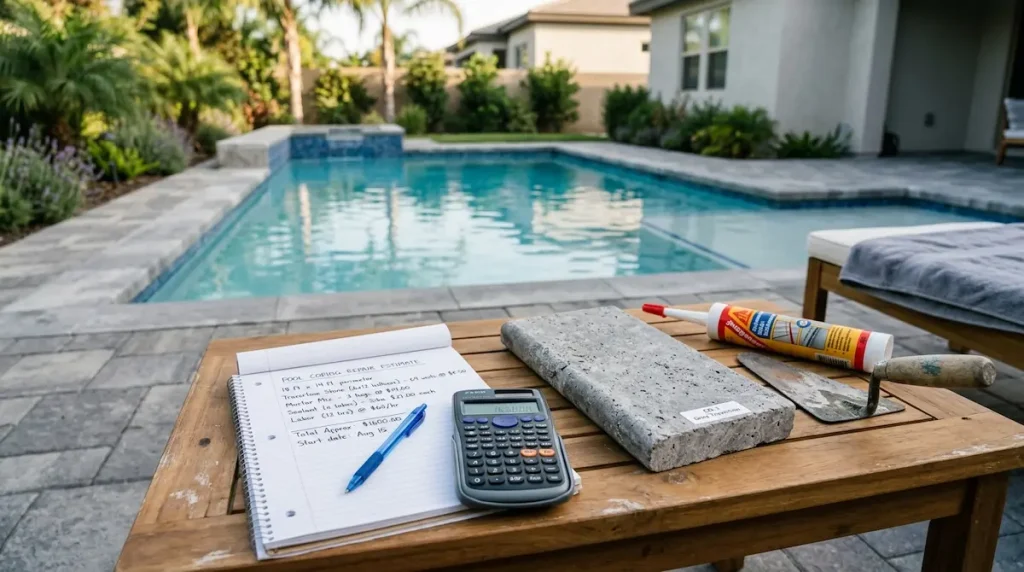
Material is the biggest lever. Cantilevered concrete coping is often quoted around $6 to $15 per linear foot, while travertine or natural stone can climb to about $40 to $60 per linear foot (River Pools). On a 15-by-30-foot pool, you are usually measuring somewhere around 90 to 100 linear feet of coping. That is why a full mid-range swap can land around $4,000 to $8,000 (Simplified Pools).
Where DIY saves you real money
Got one hairline crack or a single stone that lifts a little? You can often handle that for the price of a patch kit or sealant. The cost jumps when a pro has to remove coping, inspect the bond beam, rebuild the mortar bed, and reset everything level.
That is slow work. Skilled work, too.
How to reset a loose coping stone
A coping stone that rocks under your foot is not just annoying. It is a trip hazard, and it gives water a path under the cap. If you are comfortable working with mortar, resetting one loose stone is a realistic weekend repair. The basic process follows the same idea recommended by pool suppliers such as In The Swim.
- Lift the loose stone carefully, then remove old mortar from the underside and edges.
- Clean the old mortar bed on the bond beam, rough it up so the new material can grip, then dampen the surface with water.
- Mix thin-set mortar. If the whole bed was stripped back, use a medium-bed mortar and spread it evenly.
- Set the stone back in place and tap it level with a large rubber mallet.
- After the mortar sets, fill the side joints with outdoor sanded grout.
Fixing hairline cracks and crumbling joints
Cracks are simpler, but prep matters more than people think. Scrape loose grit, old sealant, and dirt out of the crack with a wire brush or screwdriver. Vacuum the dust. Let the area dry fully.
Then fill the crack with a pool-rated patching compound or flexible sealant, smooth it flush, and let it cure before anyone walks on it. A patch over dust and damp debris will not last. Simple as that.
Can you repair coping without draining the pool?
Often, yes. If the shell and bond beam are sound, you can lower the water just below the coping line, protect the pool interior, and work from there. Old coping comes off, the bond beam gets patched if needed, and new pieces go down with pool-rated mortar. NT Pavers describes this no-full-drain approach for many coping replacement jobs.
Skipping a full drain can save money and hassle. It also avoids one real risk: in some soil conditions, an empty pool shell can shift.
The 60-second wobble-and-waterline test
Before you call anyone, do this quick check. It tells you most of what you need to know, and it is the kind of triage most cost guides skip.
- Step on each coping stone and feel for movement. A solid stone does not budge. A rocker needs resetting before water erodes the bed below it.
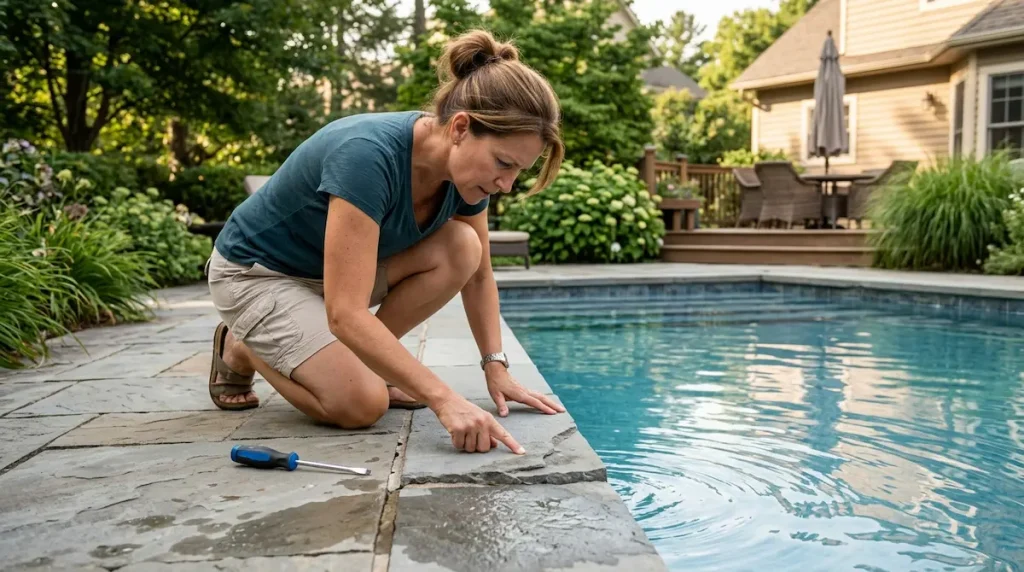
- Tap along the run with a screwdriver handle. A crisp click usually means the mortar is still solid. A dull, hollow thud means the bond below may have let go.
- Look at the joint where coping meets the pool. Dark staining or a gap wide enough for a coin means water is getting behind the cap now.
- Check after rain. If puddles sit on the coping instead of draining away from the pool, the slope is wrong. That is usually a replacement warning, not a patch job.
Count how many stones fail. One or two? Reset them. A whole side gone hollow? Start pricing replacement.
The quiet cost of ignoring a cracked cap
A cracked coping stone rarely stays just a cracked coping stone. Water works under the cap, freezes, expands, and can pop more stones loose each season. It also moves toward the shell and tile line, which is how a $40 patch can turn into a four-figure repair.
There is a chemistry angle, too. When dirty runoff drains back into the pool instead of away from it, you spend more time trying to keep the water balanced. Over time, that can push up your pool maintenance cost.
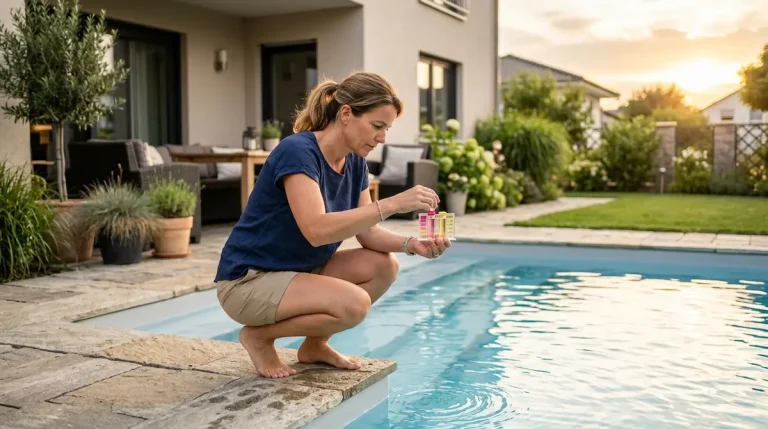
Deck water can carry debris into the pool and nudge your pH out of range. If your test numbers have felt off lately and the coping is cracked, the two may be connected. Read our pool water chemistry guide alongside your repair plan.
Repair or replace: a side-by-side look
| Option | Best for | Pros | Cons |
|---|---|---|---|
| Repair (patch or reset) | Isolated cracks or a few loose stones | Cheap, fast, often DIY-friendly, usually no draining | Will not fix a failing bond beam; matching old color can be tough |
| Replace | Widespread damage or old, discontinued coping | Level, watertight, fresh edge; lets you fix the bond beam | Costs thousands; usually needs a pro and partial draining |
Simplified Pools puts the replacement line at damage across more than 25 to 30% of the perimeter, a bond beam that needs reinforcement, or coping so old the material has been discontinued. If none of that applies, repair and move on.
Pool coping repair FAQ
Can you repair pool coping without replacing it?
Yes, as long as the damage is localized. A small crack is usually a patch job. A moving stone needs to be reset. Worn joints need fresh grout or sealant. Replacement becomes the smarter call when a large share of the perimeter is failing or the bond beam underneath is compromised.
How much does it cost to fix loose pool coping?
Resetting one or two loose stones typically runs a few hundred dollars with a pro, and individual coping repairs rarely climb past $2,000 (Anthony Sylvan). If you DIY a single crack, you are mostly paying for a patch kit. Treat all cost numbers as local planning ranges, not fixed prices.
What makes pool coping crack or come loose?
Most failures start at the mortar bed, not the stone itself. Old mortar, poor installation, ground movement, freeze-thaw cycles, and water sneaking behind the cap can all loosen coping. Weak sealing at installation can shorten the life of the edge dramatically.
Can I repair pool coping myself?
Small repairs, yes. Patching cracks and re-caulking joints are beginner-friendly if you take your time with prep. Resetting one stone is doable if you are comfortable with mortar. Leave full replacement, bond beam repair, and cantilever pours to a pro, since mistakes there can damage the shell.
How long should pool coping last?
As a planning range, well-installed coping can last 15 to 20 years or more. Poor mortar work, harsh freeze-thaw weather, drainage problems, or weak sealing can cut that short. Resetting stones as they loosen can buy you years before a full replacement is unavoidable.
My recommendation
Run the wobble-and-waterline test first, then act on what you find. One or two loose stones or a hairline crack? Patch or reset them this weekend if you are handy, and save the labor money.
A hollow-sounding run, standing water on the cap, or damage across a quarter of the perimeter is different. Get two or three quotes for replacement and ask each contractor to inspect the bond beam before they price it.
Either way, do not sit on a cracked cap through another freeze. That one decision is what keeps a cheap repair from becoming an expensive one.