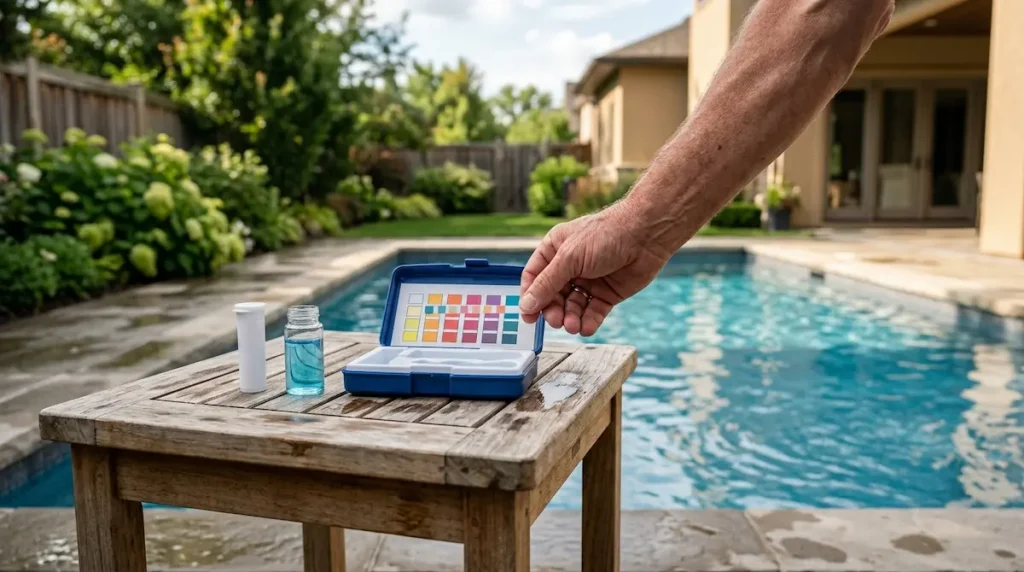
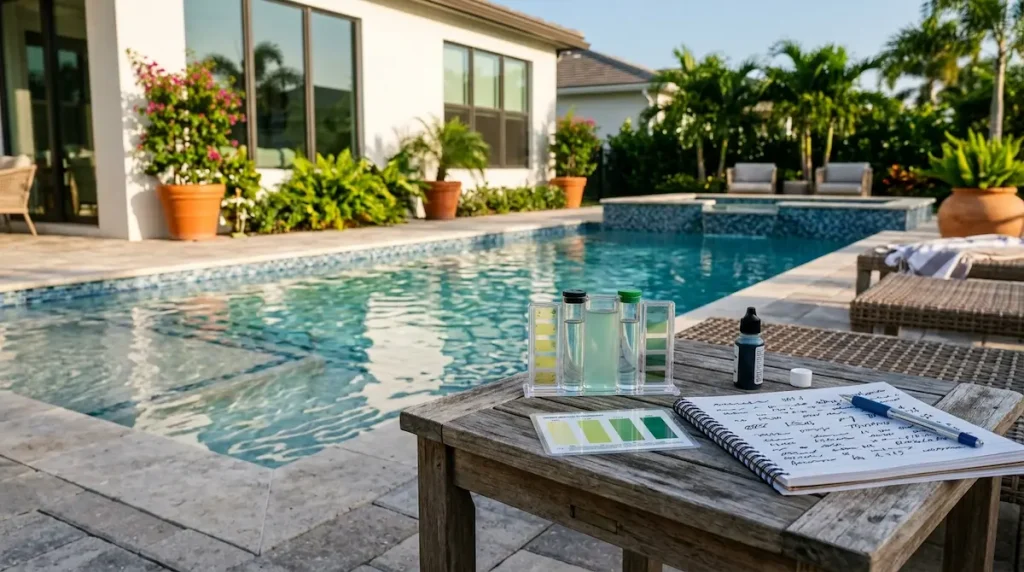
You got your water tested, and the report flagged phosphates somewhere in the thousands. Now the counter guy wants to sell you a bottle. Take a breath first. Phosphates in a pool are real, and they can make algae problems easier to trigger when chlorine slips. But that scary number on the printout doesn’t automatically mean your pool is in trouble.
Let’s sort out what actually matters and what’s just an upsell.
What phosphates in pool water really do
Think of phosphates as fertilizer waiting in the water. Leaves, lawn runoff, swimmer waste, and even fill water can bring them in. If algae gets a chance to start growing, that extra food can make the problem move faster and push chlorine demand higher. Many pool pros start looking at treatment once phosphate levels pass 500 ppb. Still, sanitation comes first. If free chlorine is held in the right range, high phosphates by themselves do not make a clear pool turn green overnight.
| Phosphate level (ppb) | What it means | What to do |
|---|---|---|
| Under 125 | Ideal to acceptable | Nothing. Keep testing monthly. |
| 125 to 500 | Creeping up | Hold your chlorine steady and watch it. |
| 500 to 1,000 | Action zone | Consider a remover. Check your fill water and filter. |
| Over 1,000 | High | Treat if you keep fighting algae. Never let chlorine dip. |
Where phosphates come from
They’re almost impossible to keep out completely. A swimming pool is an open bucket sitting in the weather, so phosphate has plenty of ways to sneak in.
- Leaves, pollen, grass clippings, and soil runoff after rain
- Lawn and garden fertilizer, blown or washed in from the yard
- Bird droppings, plus whatever the neighborhood ducks and dogs leave behind
- Sweat, sunscreen, lotions, and hair products off swimmers
- Tap or well water used to fill the pool, which in some areas is already high in phosphate
- Certain stain and scale chemicals, since many sequestering agents are phosphate based
That last one catches people off guard. You can add a metal-control product to solve one water problem and quietly feed your phosphate level at the same time.
What phosphate level is too high?
There is no magic number that every pool owner has to obey. Most service techs treat anything below 125 ppb as a watch-and-maintain range, then start recommending action once the test climbs past 500 ppb. Once you are around 1,000 ppb or higher, algae has an easier runway if your chlorine ever falls behind.
The counter view worth knowing
Plenty of experienced pool owners run phosphates far higher with zero algae. On the Trouble Free Pool forums, longtime members report levels bouncing between 1,600 and 4,500 ppb for years without a single green day, as long as free chlorine stays where it should relative to cyanuric acid. So a high number alone isn’t a crisis. It’s a warning light, not a fire.
The part most pool stores skip
Algae still needs a sanitation gap before phosphates matter. Picture fertilizer sitting in dry soil. Nothing happens until a seed lands, water shows up, and nobody pulls the weeds. In pool terms, chlorine is what blocks that chain. Keep the sanitizer steady, and the algae cannot use the phosphate buffet sitting in front of it.
This matters for your money. A phosphate remover is not an algaecide. It binds orthophosphate so your filter can trap it, but it does not kill an active bloom and it does not magically fix weak sanitation. If you keep your water balanced, you can read more about how the numbers fit together in our pool water chemistry guide, and you may never need a remover at all.
How to remove phosphates from your pool
Decided your level is high enough and your algae battles keep coming back? Removal is not complicated. The slow part is waiting for the filter to do its job.
- Test first so you know your starting number and how much product to buy.
- Backwash or clean your filter thoroughly. The product binds dissolved phosphate into particles your filter has a chance to trap.
- Get chlorine and pH in range before you dose. Balanced water helps the treatment behave more predictably.
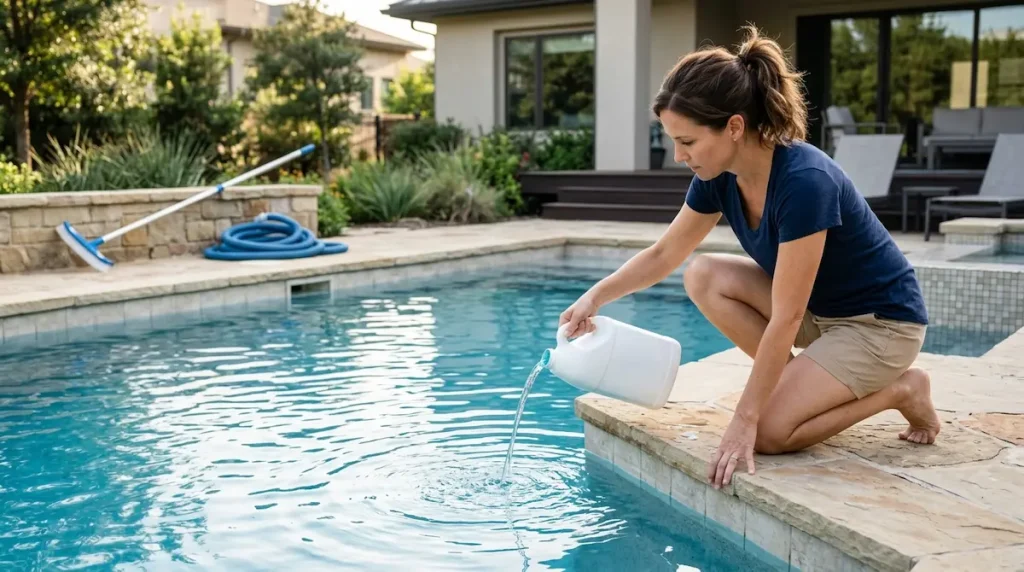
- With the pump running, pour the remover slowly across a wide area of the pool.
- Plan on 24 to 48 hours of continuous filtration. Cloudy water is common because the phosphate is binding up.
- Backwash again, then retest after two days. Above 125 ppb still? Repeat the dose.
Phosphate removers compared
Not every bottle does the same job. Match the product to your situation instead of grabbing whatever’s on the shelf.
| Type | Best for | Pros | Cons |
|---|---|---|---|
| Lanthanum concentrate (heavy duty) | Big drops from high levels | Strong, fast, clears 2,000+ ppb per 10,000 gallons | Clouds the water, needs a backwash after |
| Weekly maintenance formula | Prevention and small pools | Gentle, keeps levels near 100 ppb, easy routine | Won’t rescue a pool that’s already sky-high |
| Professional service | Severe cases or no free time | Done for you, includes testing | Costs the most by far |
What it costs
As a rough shopping benchmark, a one-quart bottle of standard lanthanum-chloride remover often sits around the $19 to $20 range and may treat up to 2,000 ppb in 10,000 gallons, depending on the label. Larger concentrated jugs can climb toward about $170 per gallon. Professional service costs vary much more. One owner reported a three-visit package near $600 once labor and a new filter cartridge were included, so DIY can save real money here. Treat these as local price references, not fixed quotes. Check current prices in your area because brand, pool size, region, and purchase timing can change the total. For how remover fits your yearly chemical budget, see pool maintenance cost.
How to keep phosphates low without chemicals
Prevention beats treatment, and most of it is free. Skim leaves before they rot. Rinse off before you swim if you’re heavy on sunscreen. Keep fertilizer away from the pool edge when you feed the lawn. Test your fill water once, because if your tap is high in phosphate, topping off all summer keeps refilling the tank.
Brush and run the filter. Boring, but it’s the habit that actually keeps water clear.
Frequently asked questions
Do phosphates really matter if my chlorine is balanced?
Not much. If your free chlorine stays in range for your cyanuric acid level, algae cannot do much with the phosphates sitting in the water. Many owners run high phosphates for years with no problem. Chlorine is the gatekeeper.
What’s a normal phosphate level for a pool?
If the test reads under 125 ppb, most pool owners can treat that as acceptable. Closer to zero is cleaner on paper, but action usually becomes more reasonable above 500 ppb, especially if you have had algae before.
Do phosphate removers kill algae?
No. They remove part of the food supply, not the algae itself. If your pool is already green, chlorine has to do the killing. Use remover afterward if you want to lower the odds of the next bloom.
Why do my phosphates keep coming back?
Fill water is a common culprit. If your tap water tests high, every top-off adds more phosphate. Sequestering products, heavy leaf load, rain runoff, and lots of swimmers can keep feeding the number too.
Can I lower phosphates naturally?
Partly. Good skimming, filtration, brushing, and keeping fertilizer out of the pool slow the buildup. For dissolved phosphate already in the water, the practical options are phosphate remover, dilution, and better source control.
So what should you actually do?
Test monthly and write the number down. If it’s under 500 ppb and your water is clear, spend nothing and keep your chlorine steady. If you’re above 1,000 ppb and stuck in a loop of green water, backwash the filter and run one measured dose of remover, then retest. Fix your sanitizer routine first, treat phosphates second, and check your fill water before you blame anything else. For most pools, that order solves it without a monthly bottle habit. Learn more about pool chlorine safety from the American Chemistry Council and the technical side of chlorine demand from Orenda Technologies.