You pulled off the cover, and your pool looks like watered-down milk. Frustrating, especially with the weekend coming. If you’re trying to figure out how to clear cloudy pool water fast, the reassuring bit is simple: most hazy pools bounce back in a day or two once you fix the real cause. Let’s get yours swim ready.
Quick answer: Start by testing and balancing the water, shock it if chlorine has dropped, then brush, vacuum, and keep the filter running nonstop. Adding a clarifier or flocculant speeds up the settling. Most pools go clear within 24 to 48 hours.
Before you fix it, check if it’s even safe
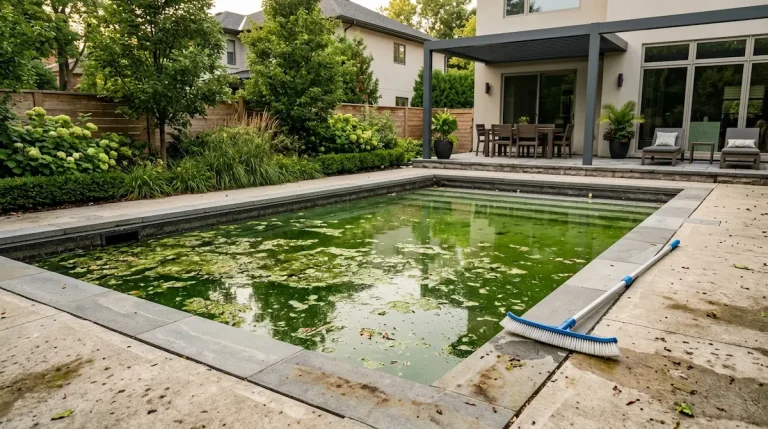
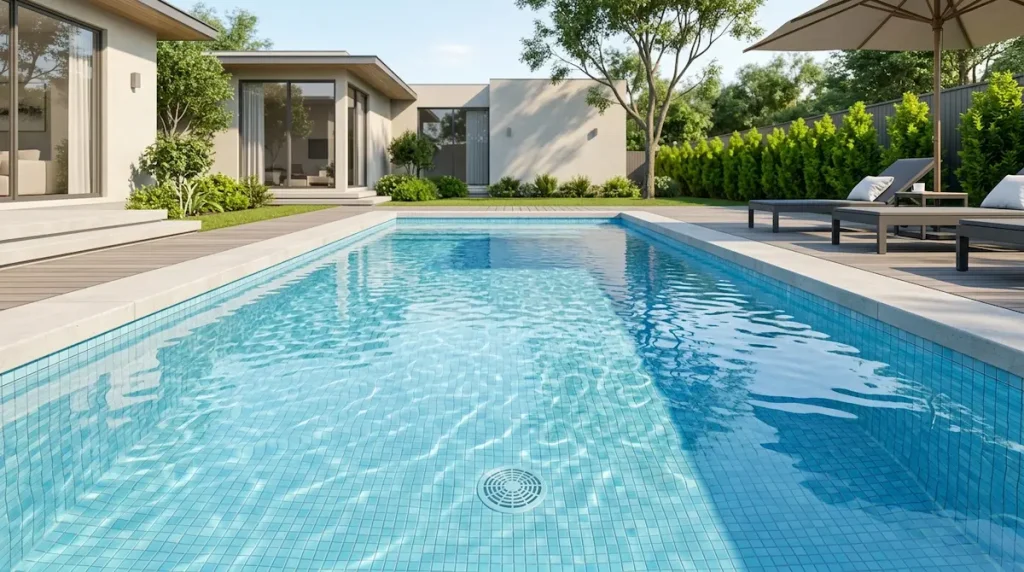
Cloudy water isn’t just an eyesore. It’s a safety problem. Pros use one quick check: from the deep end, try to spot the main drain on the floor. Can’t make it out? The pool stays closed until it clears. Public-health guidance from the CDC puts chlorine in the 1 to 4 ppm band and pH at 7.0 to 7.8, since water that’s clear and sanitized is what lets you catch a swimmer in trouble.
Why so strict? Most drownings are silent. No splashing, no shouting. If a child slips under hazy water, you lose the seconds that matter. Treat a cloudy pool like a locked gate until you can see the bottom.
What’s actually turning your water cloudy
You can’t fix what you can’t name, and naming the cause saves you days of guessing. Cloudiness almost always traces back to a short list of culprits. For the full breakdown of triggers, it helps to know the usual causes of cloudy pool water.
- Chemistry that’s off. High pH (above 7.8), high alkalinity, or low chlorine will cloud the water fast.
- Weak filtration, or a dirty filter that can’t trap fine particles anymore.
- Too much calcium. Hard water leaves a milky haze and scale on the surfaces.
- A packed pool day, a storm, or the first hint of an algae bloom.
Want to get the balancing right before you start dumping in product? Get your pool water chemistry dialed in first.
How to clear cloudy pool water fast, step by step
Work these in order. Skipping the test at the start is the number one mistake I see, and it’s exactly why people burn through a whole bottle of shock and still have soup.
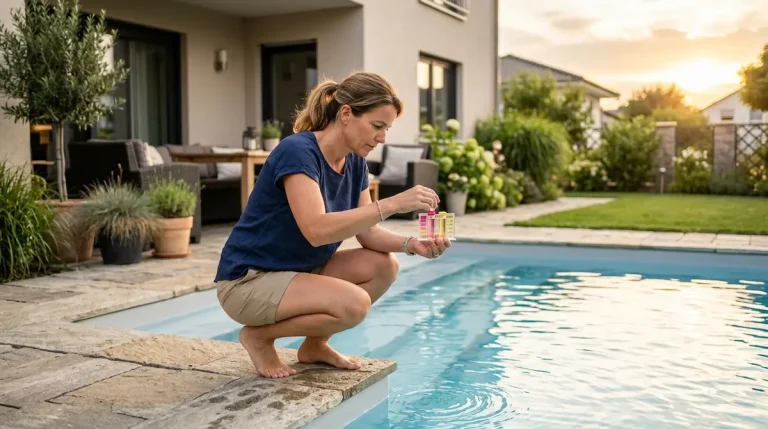
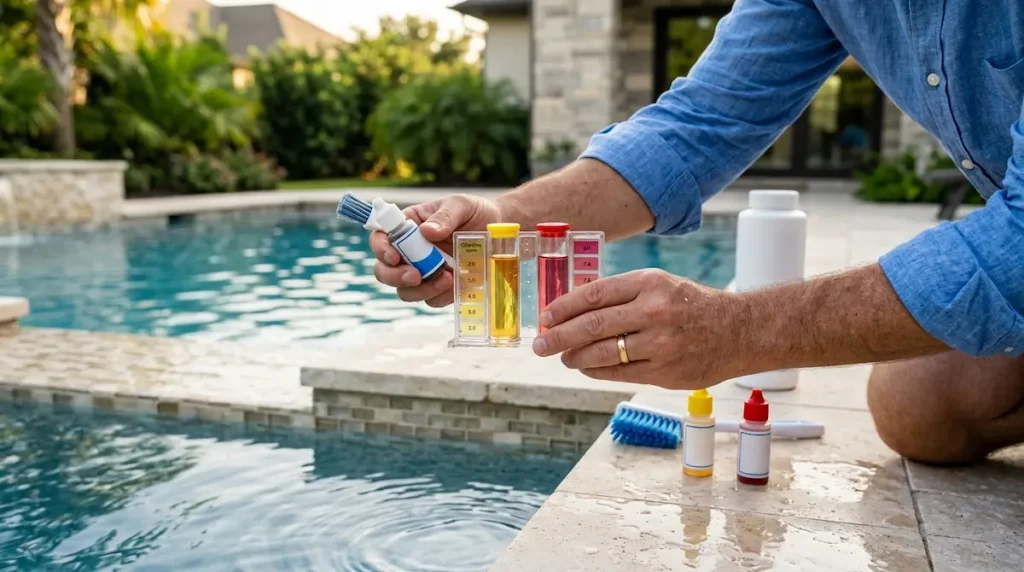
- Test the water. Check free chlorine, pH, alkalinity, and calcium hardness. This tells you what’s wrong instead of leaving you to guess.
- Balance pH and alkalinity. Aim for pH in the 7.2 to 7.6 range. If it’s high, add a pH reducer and let it circulate a few hours.
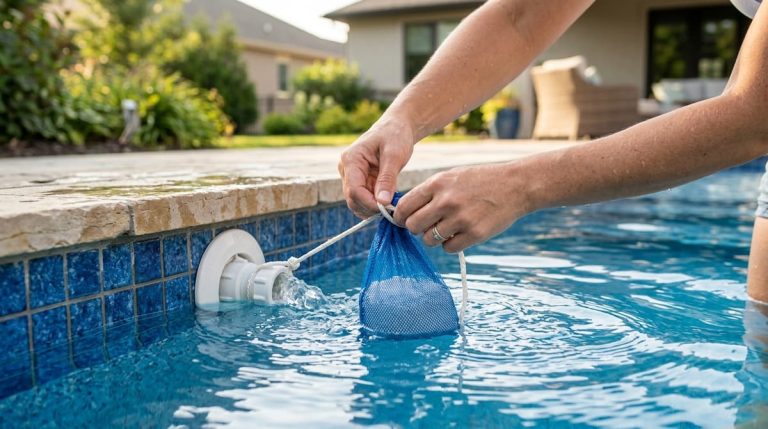
- Skim, brush, and vacuum. Knock debris off the walls and floor so the filter can grab it. Empty the skimmer baskets while you’re at it.
- Shock only if chlorine is low. Do it after sundown, not in the middle of the day, because sunlight burns off fresh chlorine before it gets to work.
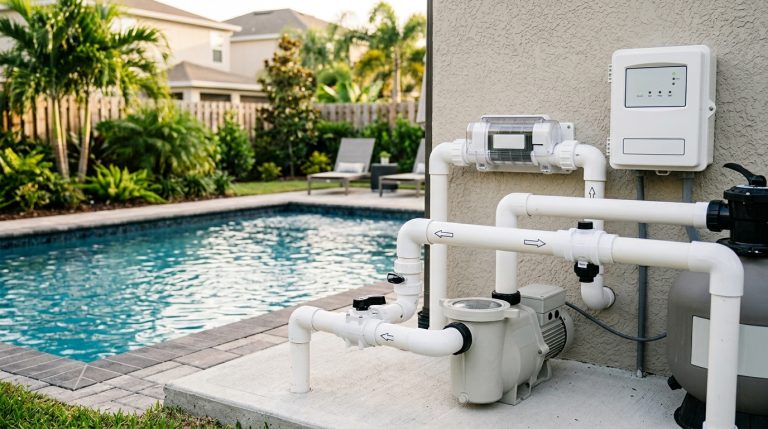
- Run the filter hard. Keep the pump going 24 hours if you can, and backwash sand or DE filters once the cloudiness starts dropping.
Not sure how long to run the pump on a normal day? Leslie’s suggests a simple gauge: about one hour of runtime for each 10°F of air temperature. Clearing a haze, though? Run it around the clock until the drain comes back into view.
Clarifier or flocculant: pick by your filter
Both clump tiny particles so they clear out, but they work differently, and your filter type decides which one is safe. Get this wrong and you can gum up a cartridge filter.
| Product | Best for | How it works | Filter |
|---|---|---|---|
| Clarifier | Light to moderate haze, routine touch-ups | Clumps fine particles so the filter can catch them. Slower, low effort. | Sand, DE, and cartridge |
| Flocculant | Severe, can’t-see-your-toes cloudiness | Sinks particles to the floor so you vacuum them out by hand. Faster, more work. | Sand or DE only (skip cartridge) |
Going the floc route? Pour it in, recirculate for roughly two hours, then switch the pump off and leave it alone for 12 to 48 hours while everything sinks. Vacuum that sludge on the “waste” setting so it bypasses your filter entirely. Clarifier is the lazy-Sunday move: add it, keep the filter running, and wait.
How long does it take to clear?
Depends on the cause and the method you pick. A minor haze from a busy weekend can clear overnight. A near-green mess takes longer. Rough timelines:
| Method | Typical time to clear | Best for |
|---|---|---|
| Balance and filter only | 2 to 3 days | Minor cloudiness |
| Shock (low chlorine) | 24 to 48 hours | Sanitizer crash, early algae |
| Clarifier | 2 to 3 days | Mild haze, cartridge filters |
| Flocculant | A few hours to settle, then vacuum | Heavy cloudiness, sand or DE filters |
Still cloudy after 24 hours?
Don’t panic, and don’t keep dumping in more chemicals. A few checks worth running:
- Your filter media could be spent. Sand that’s more than five years old stops grabbing the fine stuff, and no amount of backwashing revives it.
- You balanced the chemistry but never ran the pump long enough. Circulation does the heavy lifting.
- It’s dead algae. After a solid shock, dying algae can turn the water a cloudy white as it breaks down. Keep filtering and it clears.
- Calcium hardness is sky-high, and only a partial drain-and-refill will move the needle.
Chasing clarity for days gets pricey in chemicals and water. If you’re curious where that money actually goes, the full pool maintenance cost adds up over a season in ways worth knowing.
Frequently asked questions
Can I swim in a cloudy pool?
No. If you can’t see the main drain at the deep end, it isn’t safe. Cloudy water hides swimmers in trouble, and it often means your sanitizer can’t keep up with germs.
Will baking soda clear a cloudy pool?
Only when low alkalinity is the culprit. Baking soda bumps up alkalinity and gives pH a small push, which can sharpen clarity. For a clogged filter or an algae outbreak, it does nothing.
Does clarifier or flocculant work faster?
Flocculant is faster because it drops the gunk to the floor within hours. The catch is the manual vacuuming afterward. Clarifier is slower but hands-off.
Why is my pool still cloudy after shocking?
Usually dead algae or not enough filtration. Keep the pump running around the clock and backwash as needed. If nothing changes in two days, test your calcium and inspect the filter media.
Do I need to drain the pool?
Rarely. Draining is a last resort for very high calcium or dissolved solids. Balancing, filtering, and floc solve the vast majority of cloudy pools.
Your fast-clear game plan
Test first. Balance pH and alkalinity. Shock after sundown if chlorine’s low, then run that filter nonstop. If you’re impatient and you’ve got a sand or DE filter, floc gets you there fastest. Cartridge owners, reach for a clarifier and give it a day. Most pools go from milky to swimmable inside 48 hours, and you’ll know it worked the moment you can count the tiles on the bottom.