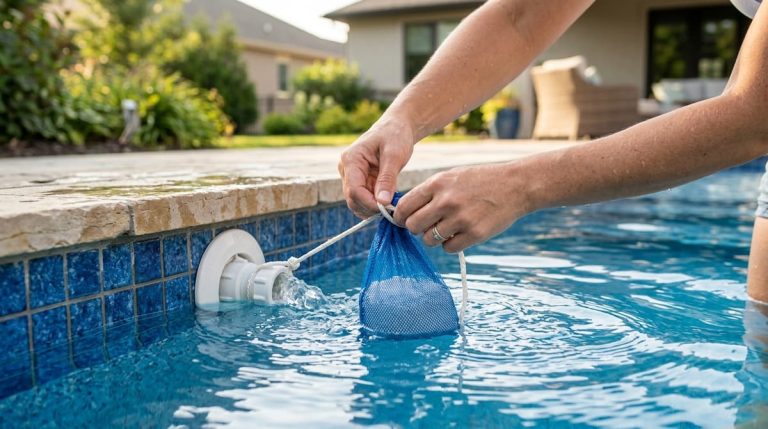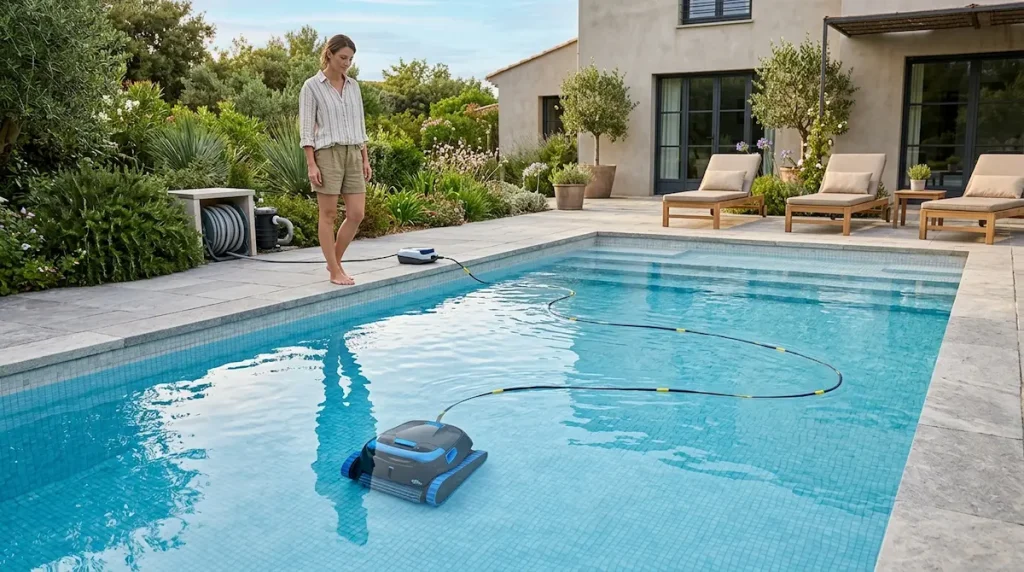
You didn’t buy a pool to lose your Saturdays to a scrub brush. So if you’re hunting for the best automatic pool cleaner, the real question isn’t which brand gets the loudest praise online. It’s which type actually fits your pool, your debris, and your budget. Get that right, and the cleaner fades into the background of your week. Get it wrong, and you’ll be babysitting the thing every few days.
I’ve watched plenty of pool owners buy on price alone, then regret it by mid-summer. Let’s not do that.
The quick answer for busy pool owners
If you own a typical in-ground pool, start with a corded robotic cleaner. It is usually the best automatic pool cleaner for the money because it scrubs the floor, walls, and waterline on its own low-voltage power, runs for pennies a session, and does not lean on your pool filter. Choose suction-side if you want the cheapest way in. Go pressure-side if fallen leaves are your real enemy.
The three types, side by side
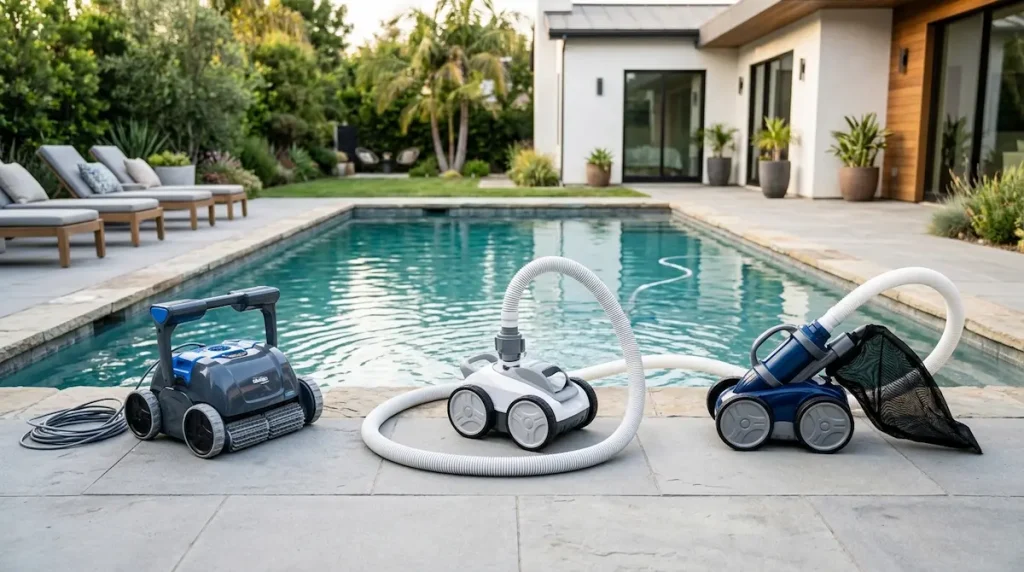
Automatic cleaners split into three main types. The difference is not just the shape of the machine. It is how the cleaner moves, where the debris goes, and how much work your pump has to do.
| Type | How it runs | Upfront cost | Cleans | Best for |
|---|---|---|---|---|
| Suction-side | Your pump’s suction pulls debris into the filter | $200 to $500 | Floor, some walls | Budget buyers, light debris, smaller pools |
| Pressure-side | Water pressure, often from a booster pump, drives it; debris goes to its own bag | Around $400 to $700 | Floor, walls, big debris | Heavy leaf loads, larger in-ground pools |
| Robotic | Own electric motor, brushes, and internal filter; fully independent | $500 to $1,500+ | Floor, walls, waterline | Convenience, most modern pools, lowest running cost |
Suction-side: cheap and simple
A suction cleaner connects to your skimmer or a dedicated suction line. Your pump creates the pull, and the cleaner rides that flow around the pool. Simple. The upside is price: these are usually the cheapest automatic cleaners to buy and easy to set up.
The trade-off shows up later. Debris lands in your pump basket and filter, so you’ll empty and backwash more often. Coverage is usually floor-first, too. Fine dust and wall grime can still hang around.
Pressure-side: built for leaves
Pressure-side cleaners move with returning water and collect debris in a separate bag. That bag is the whole point. If your yard drops leaves, acorns, seed pods, or other chunky debris, the cleaner catches the mess before it clogs your filter system.
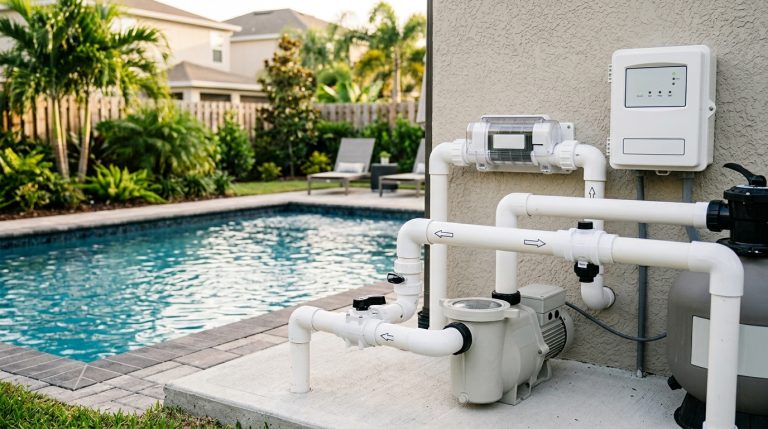
Just watch the power side. Many pressure cleaners need a separate booster pump, and that extra pump can turn a decent cleaner into an expensive one to run.
Robotic: the set-and-forget option
A robot works more like a small pool appliance than a pump attachment. You plug it into a standard outlet through a low-voltage transformer, drop it in the water, and let it handle the route. Good models use smart navigation, rotating brushes, and an internal basket you rinse by hand.
The big win is independence. A robot cleans the floor, climbs walls, scrubs the waterline, and ignores your pool pump entirely. That is why the running cost stays so low.
Which type actually wins for your pool
Skip the vague answer. Match the cleaner to the mess you actually have.
- Small above-ground pool or a pool under 15,000 gallons? A compact robot or a basic suction cleaner can do the job cheaply.
- Big oak trees dropping leaves all fall? Pressure-side, every time. That bag saves your filter.
- You want to press a button and forget it? Robotic. Nothing else comes close on convenience.
- Tight budget and light debris only? Suction-side gets you clean water for the least money down.
One honest caveat. If you already run a variable-speed pump 24/7, a suction cleaner piggybacks on power you’re already spending, which changes the math a little. Worth knowing before you buy.
What a robot really costs to run
This is where robots pull ahead. Most robotic cleaners draw somewhere between 100 and 250 watts. Use a 200-watt model for three hours, and the session costs under ten cents in many areas. Clean three times a week and you’re looking at less than $2 a month, or roughly $23 a year in electricity. Treat that as a planning estimate, not a fixed bill, because local electricity rates vary.
Now compare that to a pressure cleaner. Add a booster pump and total draw can jump to about 2,000 to 3,000 watts per session, which pencils out to roughly $92 to $138 a year just in power. The U.S. Department of Energy notes that pool pumps can be one of the larger energy users around a home, so anything that leans on your pump adds up fast. In that kind of setup, robots can cut cleaning-related energy by up to 90% versus pressure systems.
Debris and chemistry both play into how hard your cleaner works, and a robot won’t fix bad water on its own. If you’re battling green water or heavy buildup first, read more on pool water chemistry before you rely on any machine to keep things clear.
The 5-year cost most buying guides skip
Sticker price only tells you what hurts today. A $300 suction cleaner can cost more over five years than an $800 robot once you factor in energy and extra filter workload. Here is a rough total cost of ownership using the energy figures above and typical lifespans. Treat these as planning ranges, not quotes. Check current local prices before you buy parts or equipment.
| Type | Purchase | 5-yr energy (est.) | Likely repairs (est.) | 5-yr total (est.) |
|---|---|---|---|---|
| Suction-side | About $300 | Runs on your pump (higher, varies) | Hoses, diaphragms (around $50) | About $350 plus added pump runtime |
| Pressure-side | About $550 | About $460 to $690 | Booster pump motor ($150 to $300) | About $1,160 to $1,540 |
| Robotic (corded) | About $800 | About $115 | One motor or power supply (around $200) | About $1,115 |
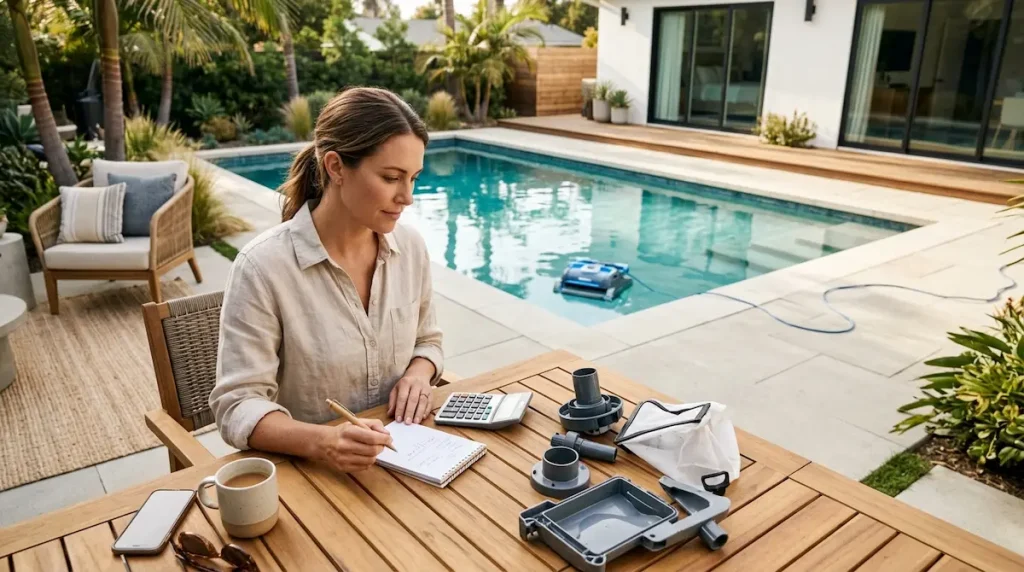
Look at the pressure-side row again. The booster pump is what quietly makes it the priciest option to live with. A mid-range robot often ends up cheapest over its life, even though it costs the most on day one.
Top picks worth your money
Brand loyalty runs deep in the pool world, and for good reason. A few models keep showing up at the top of independent testing year after year.
| Model | Type | Why it stands out | Best for |
|---|---|---|---|
| Dolphin Nautilus CC Plus | Robotic (corded) | CleverClean mapping, plug-and-play, 3-year warranty | Best overall for most in-ground pools |
| Dolphin Cayman | Robotic (corded) | Wall climbing, weekly timer, strong value | Best value robot |
| Dolphin Escape | Robotic (corded) | Lightweight, tuned for smaller pools | Best for above-ground pools |
| Polaris Vac-Sweep 360 | Pressure-side | Runs without a separate booster pump | Leaf-heavy yards on a budget |
Notice the warranty gap. A 3-year warranty on the Nautilus CC Plus is not marketing fluff. Robot power supplies are the part most likely to fail, so longer coverage genuinely protects your money.
A quick word on corded vs cordless
Cordless robots look tempting. No hose, lift it out whenever you want to swim. But in head-to-head testing, corded models still win on suction, filtration, and runtime, especially in deep or full-size pools. Cordless units also run on lithium-ion batteries, and the CPSC has recalled at least one cordless model over battery risk. If you’ve got a large in-ground pool, corded is the safer bet today. Cordless makes more sense for smaller pools far from an outlet.
Mistakes that kill your cleaner early
Use 3 to 7 years as a realistic planning window for a robot. Owners in milder climates sometimes report 7 to 10 years with one or two repairs around $200 along the way. The difference usually comes down to a few habits.
- Yanking it out the second it stops. Let it sit in the water about 20 minutes first so the motor cools down.
- Ignoring your outlet. A bad ground or a power surge fries the sensitive power supply. A cheap GFCI tester is worth it.
- Baking it in the sun. UV wrecks the housing and cord. Store it shaded, off the ground.
- Expecting it to solve algae. A cleaner picks up debris, not a chemical problem. For a persistent algae film, a targeted tool like best pool vacuum for algae plus balanced water does the real work.
Curious how a cleaner fits into your bigger upkeep budget? Our pool maintenance cost guide breaks down the monthly and yearly numbers.
Frequently asked questions
Is a robotic pool cleaner worth it?
For most owners, yes. You’ll spend more up front, but the low running cost, wall and waterline cleaning, and saved weekend hours usually justify it within a couple of seasons. If you swim often and hate maintenance, it pays for itself in time alone.
How long do robotic pool cleaners last?
Plan on 3 to 7 years. Good storage, a clean power supply, and gentle handling push that toward the high end. Cheap treatment and constant sun exposure drag it toward the low end.
Suction or robotic: which is better?
Robotic wins for most pools. It cleans walls and the waterline, filters independently of your pump, and traps finer debris. Suction is better only when your top priority is the lowest possible purchase price.
Do robotic pool cleaners use a lot of electricity?
No. Most use 100 to 250 watts, which is closer to a small household appliance than a pool pump. A typical week of cleaning costs well under $2 in many areas. That is a fraction of what a booster-pump pressure cleaner can burn through.
Can you leave a robotic cleaner in the pool?
You can, and some owners run theirs on a daily schedule for years. Just know that constant water and sun exposure can shorten its life, so pulling it out between cleanings is the safer habit.
My recommendation
If you have a standard in-ground pool and you want the least fuss for the money over time, buy a corded robotic cleaner with a 3-year warranty, like the Dolphin Nautilus CC Plus. Got a leaf-dumping yard and a tighter budget? A pressure-side Polaris 360 without a booster pump will keep you sane through fall. Only chasing the lowest price today? A suction cleaner works, as long as you accept the filter cleaning that comes with it. Match the type to your debris first, then pick the model. Do it in that order and you’ll get it right.
SEO Meta
Title tag: Best Automatic Pool Cleaner: Robotic vs Suction
Slug: /pool-care/best-automatic-pool-cleaner
Meta description: Find the best automatic pool cleaner for your pool. Compare robotic, suction and pressure-side cleaners by cost, debris, energy use and ease.
Focus keyword: best automatic pool cleaner
Secondary keywords: robotic pool cleaner, suction pool cleaner, pressure-side pool cleaner, pool cleaner cost
Category: Pool Care
Tags: Leave empty or noindex tag archives to avoid thin content and cannibalization.
Schema: Article + FAQPage
| Internal link anchor | Target slug | Status |
|---|---|---|
| best pool vacuum for algae | /pool-care/best-pool-vacuum-for-algae | Use as internal link when publishing |
| our pool maintenance cost guide | /pool-care/pool-maintenance-cost | Use as internal link when publishing |
| more on pool water chemistry | /pool-care/pool-water-chemistry | Use as internal link when publishing |
External source to restore at publish: U.S. Department of Energy: Swimming Pool Pumps — https://www.energy.gov/energysaver/swimming-pool-pumps
Safety source to verify before publish: CPSC recall database or CPSC recall notice for cordless pool cleaner battery risk.