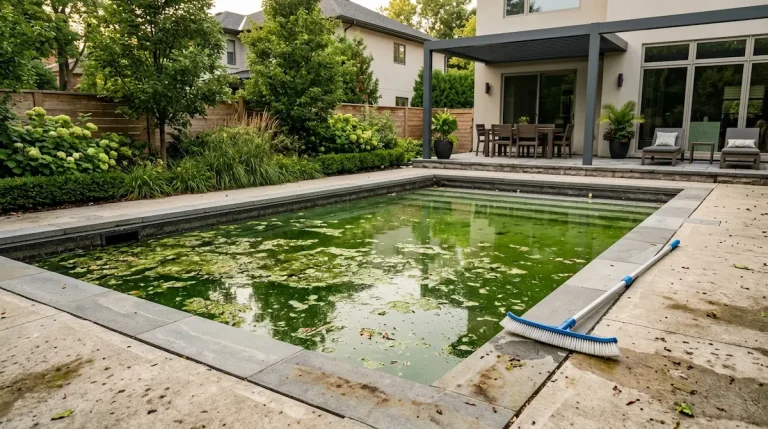
Your pool used to feel smooth under your feet. Now it snags your toes, looks blotchy no matter how hard you scrub, and the color’s gone patchy. That’s the surface wearing out, and pool resurfacing is how you reset it. This guide breaks down what it costs, which finish fits your budget, how long each one lasts, and the signals that say it’s time.
Quick answer: Pool resurfacing usually costs about $6,000 to $15,000 for an average 1,000-square-foot pool, with many national estimates landing near $11,000. Treat those numbers as planning ranges, not fixed prices. Plaster sits at the low end and lasts about 7 to 10 years. Pebble finishes cost more upfront but can run 20 years or longer.
What pool resurfacing actually means
Think of resurfacing as giving the pool shell a new skin. The old finish has done years of work against sun, water, chemicals, brushing, and foot traffic. Once it turns rough, stained, or thin, a new surface restores the feel underfoot and helps seal the shell again.
Resurfacing vs. replastering: the mix-up worth clearing up
People swap these terms constantly. Replastering means chipping out old plaster and troweling on a fresh plaster coat. Resurfacing is the broader job: it might use plaster, or it might mean pebble, quartz, or tile instead. So every replaster is a resurface. Not every resurface is a replaster. If you want a different look or a longer-lasting material, you’re resurfacing, not just replastering.
How much pool resurfacing costs
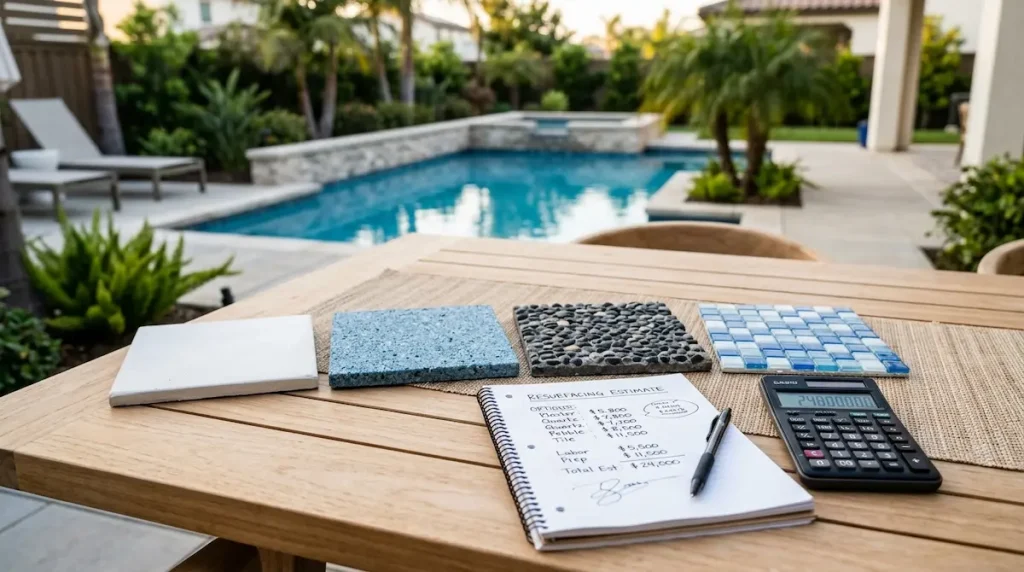
For budgeting, many homeowners should expect a pool resurfacing project to land somewhere between $6,000 and $15,000, with a national average around $11,000 for a 1,000-square-foot pool. Per square foot, that puts the finished surface in the rough $6.40 to $7.80 range. Your real quote can move up or down fast based on pool size, finish choice, access, local labor, and how much prep the old surface needs.
Want to keep the total predictable? Fold resurfacing into your yearly planning the same way you budget for chemicals and pump wear. If you track your pool maintenance cost across the season, a resurface every decade stops feeling like a surprise hit.
Cost by finish type
| Finish | Cost per sq. ft. | Typical total (1,000 sq. ft.) | Lifespan | Best for |
|---|---|---|---|---|
| Plaster (marcite) | around $4 to $5.50 | $6,000 to $8,000 | 7 to 10 yrs | Tight budgets, classic white look |
| Quartz aggregate | $7 to $10 | $8,000 to $11,000 | 10 to 15 yrs | Balance of price and durability |
| Pebble | $10 to $19 | $11,000 to $15,000+ | 15 to 25 yrs | Longest life, hard-water areas |
| Tile (full) | $8 to $32 | $15,000+ | Highly variable | High-end remodels |
| Fiberglass gelcoat | $10 to $30 | $5,000 to $15,000 | Varies | Fiberglass shells only |
The extras nobody quotes upfront
The finish price isn’t the whole bill. Before you sign, ask whether the quote includes the line items below. Prices vary by market, water rates, pool access, and the condition of the shell, so use these as planning ranges and check current local pricing.
- Draining, cleaning, and refilling can add about $425 to $475 for the service, plus roughly $55 per 5,000 gallons of refill water.
- Crack or structural repair can add $1,000 to $5,000 if the shell has real damage underneath.
- Tile and coping work may increase the project cost, but many owners handle it at the same time because the pool is already drained.
Your finish options, compared
Here’s how the main choices stack up once you look past the sticker price.
Plaster (marcite)
The classic. Cheapest option, smooth white finish, and it’s been used for decades. The catch is lifespan and upkeep. Plaster is porous, so algae likes it, and you’ll typically acid wash every few years. Best for: owners who want the lowest upfront cost and don’t mind resurfacing again in 8 to 10 years.
- Pros: lowest price, timeless look, widely available.
- Cons: shortest lifespan, stains easily, rougher over time.
Quartz aggregate
Crushed quartz blended into plaster. You get better stain resistance and a longer life for a moderate step up in price. For a lot of homeowners this is the sweet spot. Best for: anyone who wants more durability without jumping to premium pricing.
- Pros: tougher than plain plaster, more color options, resists etching.
- Cons: costs more than marcite, still not as long-lived as pebble.
Pebble
Small stones bound into the surface. It’s the most durable mainstream finish and shrugs off hard water, which matters if your fill water runs mineral-heavy. The texture is grippier underfoot, which some love and some don’t. Best for: owners planning to stay put and wanting one resurface that lasts 20 years.
- Pros: longest lifespan, excellent hard-water resistance, natural look.
- Cons: highest cost, texture can feel rough on bare feet.
Tile and fiberglass
Full tile is the luxury tier, gorgeous and long-lasting, with a price to match. Fiberglass is its own world: instead of replaster, a fiberglass shell usually gets a new gelcoat or an epoxy coating sprayed on. If you own a fiberglass pool, your process and pricing won’t match the concrete numbers above.
The real cost, spread over its life
Most guides stop at the upfront number. That’s misleading. Divide each finish by how long it lasts and the gap narrows fast. The rough annual cost below uses the price and lifespan ranges in this article, so treat it as a planning comparison rather than a contractor quote.
| Finish | Rough annual cost per sq. ft. |
|---|---|
| Plaster | about $0.50 to $0.70 |
| Quartz | about $0.60 to $0.85 |
| Pebble | about $0.50 to $0.95 |
Read that again. Pebble’s yearly cost can land right alongside plaster, even though it costs far more on day one. If you’re staying in the home long term, the “expensive” finish often isn’t. These figures are our own calculation from the ranges above and will shift with local labor rates, material availability, and the quote you get in your area. Check current local prices before you commit.
How long each finish lasts
Lifespan swings a lot with water chemistry. Balanced water stretches any finish. Neglected water shreds it. As a planning range, plaster often gives you 7 to 10 years, quartz commonly runs 10 to 15, and pebble can stretch 15 to 25 years or more. Many concrete or gunite pools start asking for serious surface attention somewhere in that 7 to 15 year window.
The single biggest lever you control is chemistry. Low pH and swingy chlorine levels eat plaster from the inside out. Keep things dialed in with our pool water chemistry guide and you’ll squeeze years out of whatever finish you choose.
Signs your pool is telling you it’s time
Pools give plenty of warning before they fail. Watch for these:
- Peeling or flaking plaster, also called spalling. This one means real deterioration, not a cosmetic hiccup.
- Rough, sandpapery texture that scratches feet and swimsuits.
- Stubborn stains and blotchy discoloration that won’t scrub out, a sign the surface has gone porous.
- Visible cracks, chips, or exposed gunite. Left alone, water reaches the rebar and rusts it.
- Pebbles working loose from a pebble finish.
- Creeping water loss and rising chemical use, which can point to leaks through a failing surface.
One rule from the field: don’t wait until you see bare gunite. Once the shell is exposed, water gets into the structure, and a resurface job quietly turns into a repair job.
What the resurfacing process looks like
Knowing the steps helps you judge a contractor’s quote and timeline.
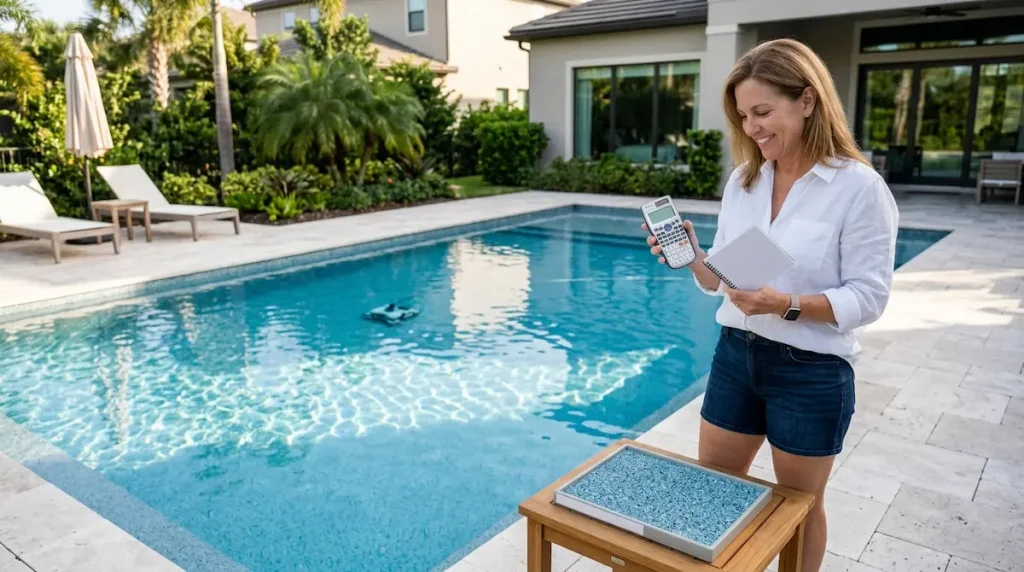
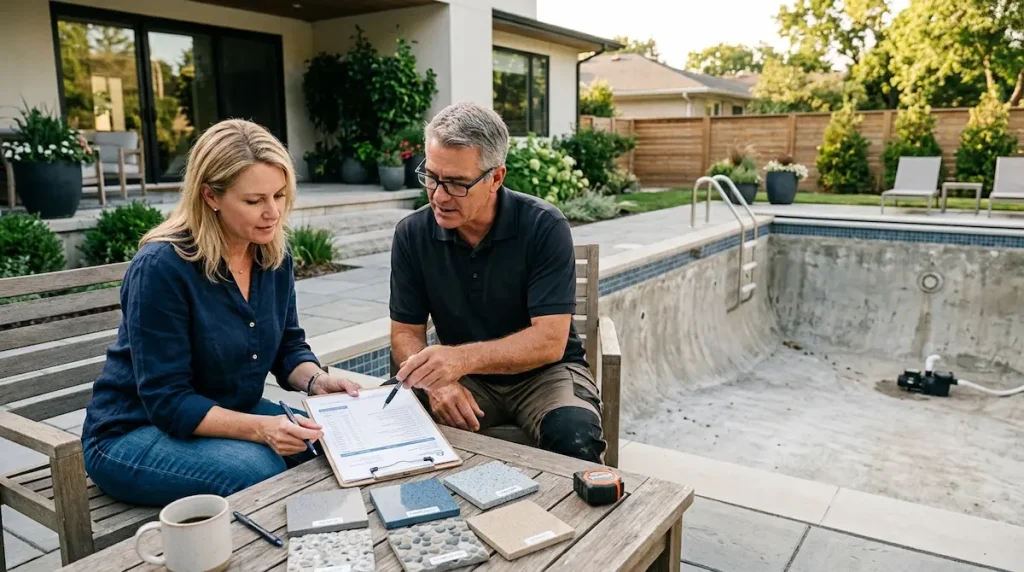
IMAGE PLACEHOLDER 3 — pool-resurfacing-quote-review.webp Alt: Homeowner reviewing a pool resurfacing quote with finish samples.
- Drain the pool completely.
- Chip out or prep the old surface, then bond-coat the shell.
- Patch cracks and any structural damage.
- Apply the new finish, troweled or sprayed depending on material.
- Cure, then refill and rebalance the water chemistry.
Start to finish, most jobs run 5 to 14 days of active work, with pebble and tile on the longer end. Weather can stretch that. Curing needs several days before the pool’s truly ready, so don’t book a party for the weekend after.
Frequently asked questions
How often should you resurface a pool?
Plan on every 7 to 10 years for plaster and 10 to 15 years for many gunite pools with aggregate finishes. Pebble can push past 20. Good water chemistry is what moves you toward the high end of those ranges.
How long does pool resurfacing take?
Expect 5 to 14 days of work depending on size, finish, weather, and repairs. Add several days for curing and water balancing before you swim.
What’s the cheapest way to resurface a pool?
If price is the whole battle, standard white plaster (marcite) usually wins. Just weigh the lower upfront cost against its shorter lifespan and higher upkeep.
Can I resurface a pool myself?
For plaster and aggregate, it’s rarely worth it. Troweling a smooth, durable finish takes real skill, and a bad coat can fail fast. DIY makes more sense for small patch repairs than a full resurface.
Can you resurface over old plaster?
Sometimes, yes. The prep matters more than the sales pitch. Many pros still prefer chipping out failing plaster first so the new layer bonds properly. Ask each contractor exactly how they’ll handle the old surface, and be wary of anyone who wants to skip prep.
So what should you do?
Match the finish to how long you’ll own the pool. Staying five years or less? Plaster keeps cash in your pocket. Planning to stay a decade or more? Quartz gives you the best balance, and pebble wins if hard water is your reality or you never want to think about this again. Whatever you pick, get three itemized quotes, confirm how the crew preps the old surface, and lock your water chemistry in afterward. That last step decides whether your new finish lasts eight years or eighteen.
For a full cost reference, see HomeAdvisor’s pool resurfacing cost data.