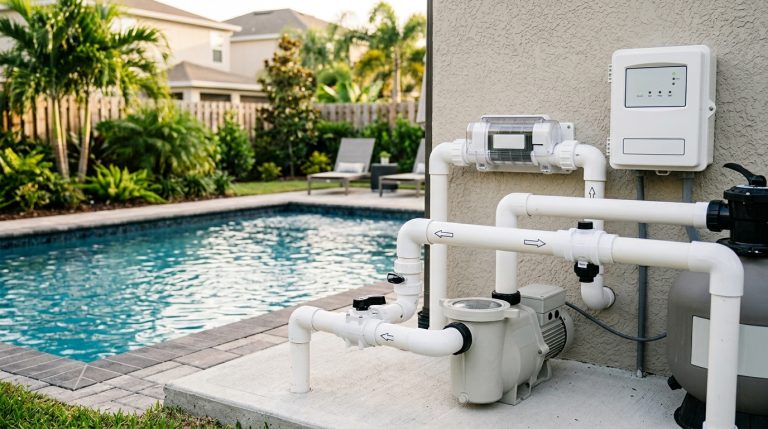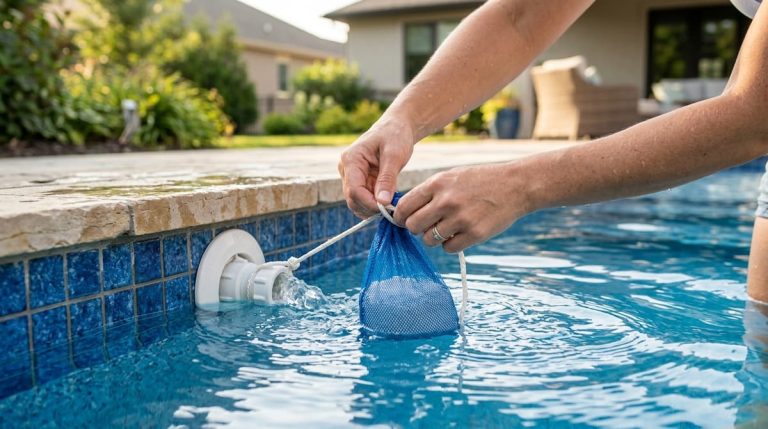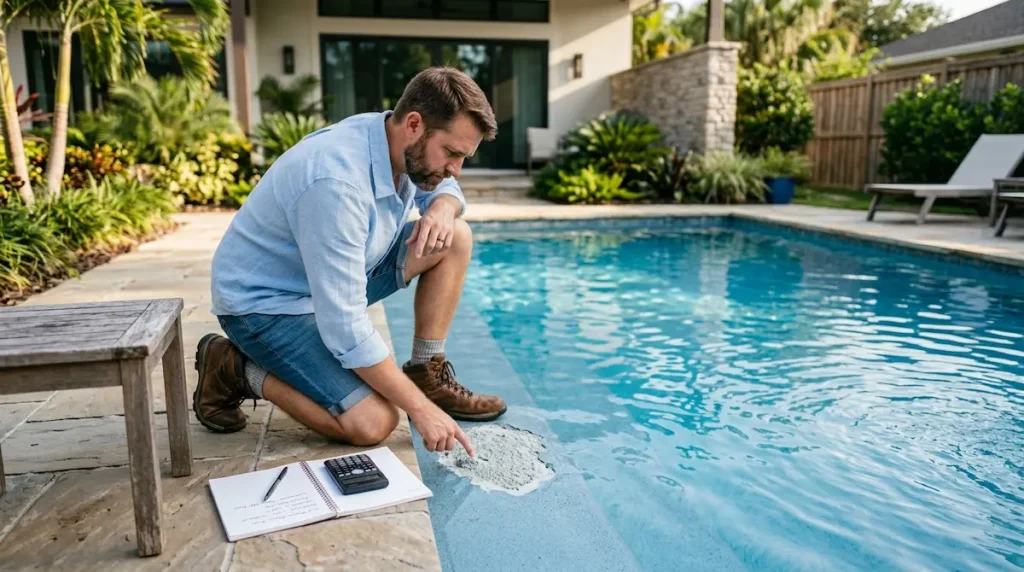
Your pool used to feel smooth. Now the steps scratch your feet, there’s a rough patch near the light, and a chip by the skimmer keeps catching your eye. That’s usually when homeowners start looking into pool plaster repair, often somewhere around the ten-year mark. The good news? Not every flaw means a full replaster. Some small spots can still be fixed in an afternoon for less than a nice dinner out.
This guide covers what you can patch yourself, what belongs to a pro, and what each option typically costs in 2026. You’ll also get a simple way to choose between a cheap patch and a full redo, using the one number most cost guides skip.
Pool plaster repair at a glance
For most homeowners, pool plaster repair sits somewhere between one small underwater patch and starting over with a new plaster coat. A DIY patch kit can handle a coin-sized spot for under $50 in many cases. A professional replaster for an average 16 by 32 foot pool often lands around $5,000 to $9,000, depending on the finish, local labor, and how much prep the old surface needs.
| Job | Typical price | Best for |
|---|---|---|
| DIY patch kit (single spot) | Usually under $50 per kit; check current pricing by brand and store | Coin-sized chips and craters |
| Pro spot patch / small crack | Often around $150 to $400 as a planning range; confirm with local quotes | A few isolated bad spots |
| Acid wash | About $450 as a rough benchmark; local pricing varies | Surface stains, mild roughness |
| Full replaster (standard white) | $4 to $7 per sq ft as a common planning range (national avg $2,869 to $4,696) | Worn, stained, or rough surfaces past about 10 years |
| Quartz aggregate finish | Roughly $7,000 to $15,000 | More life for a bit more money |
| Pebble finish | Roughly $9,000 to $20,000+ | Longest lifespan, premium look |
How to tell your plaster actually needs work
Plaster wears from two directions at once: your feet and your water chemistry. After about a decade, most concrete pools start showing it. The trick is reading the symptom correctly, because the fix for a few chips is nothing like the fix for a surface that’s failing all over.
Five warning signs worth watching
- Rough, sandpapery walls that scrape your skin
- Bare gray gunite or concrete peeking through worn spots
- Stubborn stains that keep coming back after brushing
- A spreading web of fine hairline cracks
- Chips, flakes, or small craters, especially on steps and the shallow floor
One or two isolated flaws? That’s a patch job. Several of these at once, across the whole pool? You’re probably looking at a replaster.
Repair or replaster: a quick triage
| What you see | Likely cause | Typical fix | Rough cost |
|---|---|---|---|
| A few small craters or chips | Spalling or impact | DIY patch kit | Usually under $50; check current kit pricing locally |
| Rough, sandpapery surface | Etching (low pH, alkalinity, or calcium) | Acid wash; sand small areas; replaster if widespread | About $450 acid wash as a rough benchmark |
| White crusty buildup | Scaling (high pH or calcium) | Brush and acid treatment | Low, often DIY |
| Web of hairline cracks | Crazing (plaster shrinkage) | Monitor; replaster if severe | $0 to full replaster |
| Plaster lifting off the concrete | Delamination | Patch if small, replaster if large | Patch to full replaster |
| Bare gunite plus stains everywhere | Age, end of surface life | Full replaster | $2,869 to $4,696 avg, before premium finish upgrades or heavy prep |
What pool plaster repair costs in 2026
Two numbers drive the whole bill: your pool’s square footage and the finish you pick. For budget planning, standard white plaster is often quoted in the $4 to $7 per square foot range. Take an average 16 by 32 foot pool at roughly 1,088 square feet of interior surface. At $5 a foot, that’s about $5,440 for the job.
Small fixes are a different world. A patch kit costs pocket change compared with a full refinish. An acid wash to freshen a stained surface may run around $450, but treat that as a local quote item, not a fixed national price. The jump comes when you upgrade the finish or when the old surface is in bad shape and needs extra prep.
Cost by finish, in plain numbers
| Finish | Typical installed cost | Durability | Best for |
|---|---|---|---|
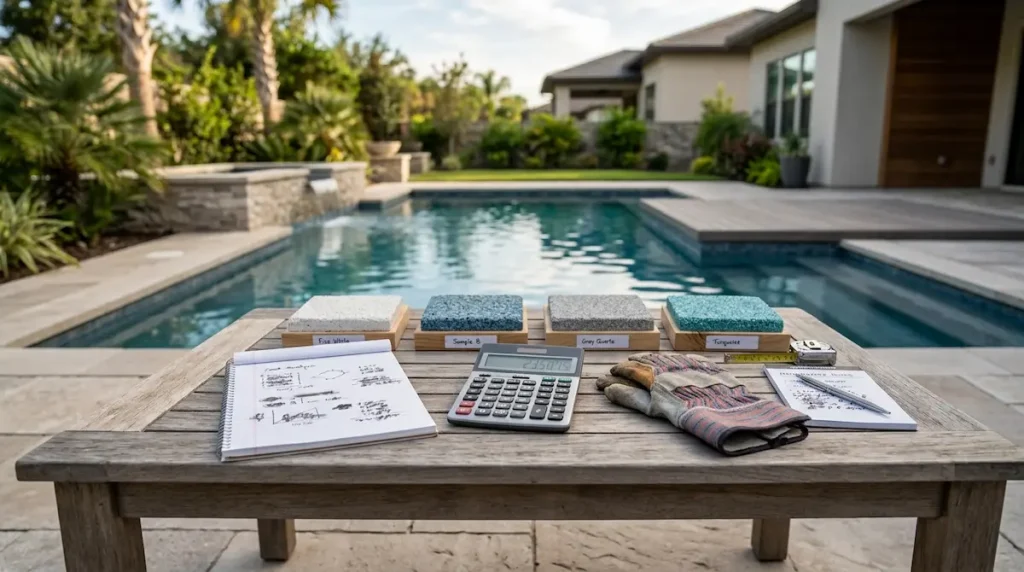
| Standard white plaster | $4 to $7 per sq ft | Shortest, around 10 years | Tight budgets, quick turnaround |
| Quartz aggregate | $7,000 to $15,000 | Longer than white | A middle-ground upgrade |
| Pebble | $9,000 to $20,000+ | Longest | Owners staying put for years |
Quick pros and cons before you commit:
- White plaster is cheapest and looks classic. It’s also the least durable, gets rough first, and stains the easiest.
- Quartz buys you better color retention and a tougher surface for a mid-range price.
- Pebble lasts the longest and looks high-end, though it costs the most and can feel coarse underfoot.
The cost-per-year math most guides skip
Sticker price lies a little. What matters is cost per year of surface life. That angle settles the patch-versus-replaster argument faster than the total price alone.
Say a $600 pro patch buys you two more decent seasons. That’s about $300 a year. A $6,000 replaster that lasts ten years works out to roughly $600 a year, but it resets the entire surface, not just one spot. So the rule of thumb goes like this: if your plaster is under about seven years old and the damage is isolated, patching wins on math. Once you’re past ten years with rough, stained, or flaking plaster in several places, a replaster is usually the cheaper move over time.
Common plaster problems and the fix for each
Plaster fails in predictable ways. Name the problem, and the fix usually becomes much easier to choose.
Crazing (hairline cracks)
These small clustered cracks show up when plaster shrinks too much during curing. Most of the time they’re cosmetic. A bad case can trap stains, feed algae, and lead to calcium nodules, and that’s when a replaster earns its keep.
Etching and scaling
When pH, alkalinity, or calcium stay too low, the water slowly eats at the plaster until it feels gritty. That’s etching. Scaling goes the other way. High pH or calcium can leave pale, crusty buildup on the finish. Both trace straight back to chemistry, which is why balanced water is your cheapest repair tool.
Spalling (flaking)
With spalling, the failure is shallow. A thin skin of plaster, often around one-eighth of an inch, starts flaking off the surface. It often begins on steps and the shallow floor, usually from over-troweling or too much water during the original finish. You can sometimes sand the spot smooth. If it has spread across the pool, replastering is the honest answer.
Delamination
This is the serious one. Delamination means the plaster is no longer bonded to the concrete shell underneath, often because the shell was not prepped well before finishing. Earth movement can trigger it too. A small delaminated area can be patched. A large one means a full redo.
Stains and fading
Every concrete pool stains and fades eventually. Organic stains from leaves often lift with chlorine and a brush. Metal stains need the metal identified first. Color plaster tends to shift noticeably by the 8 to 12 year mark. Worth knowing: acid washing helps, but a pool can only take so many acid washes before the surface has to be refinished for good.
How to patch pool plaster yourself
Small spots are genuinely DIY-friendly. You’ll need a pool-grade plaster patch kit (brands like E-Z Patch or Pool Patch), a small chisel or putty knife, and an hour of patience. Underwater kits exist, so you don’t always have to drain.
- Chip out the loose plaster and undercut the edges slightly so the patch grips instead of popping out later.
- Clean the spot. Clear away dust, algae, and any crumbling material.
- Mix the patch compound with its bonder exactly to the ratio on the kit. Small batches only, since it sets fast.
- Press it in firmly, overfill a touch, then smooth it flat with a trowel or a gloved finger.
- For underwater fast-set patches, hold steady pressure for a minute or two while it grabs.
- Keep your chemistry balanced while it cures, and skip adding salt anywhere near a fresh patch.
For curing and start-up best practices on new or freshly repaired plaster, keep the National Plasterers Council as an industry reference in your source list.
When a full replaster is the smarter buy
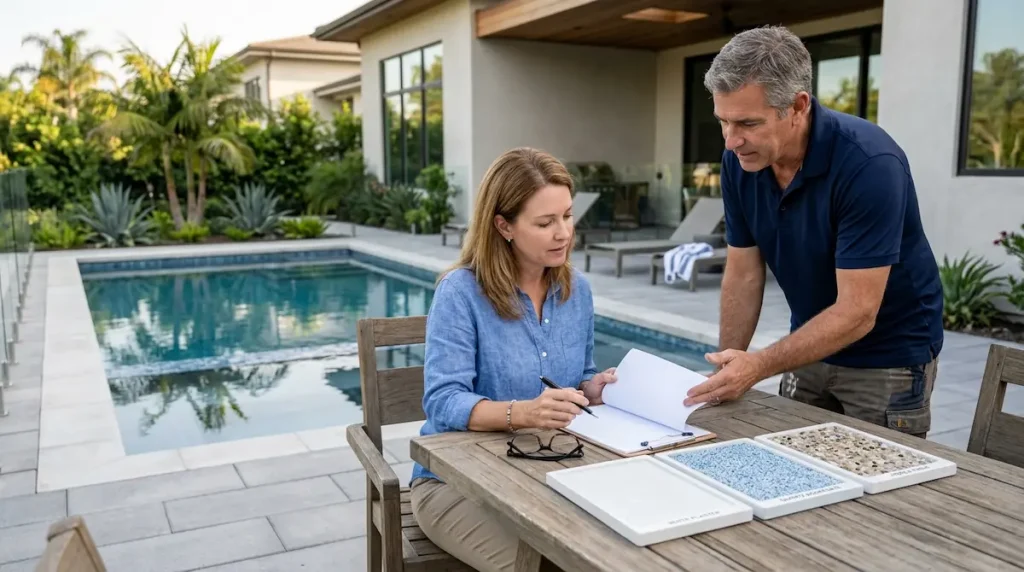
Past a certain point, patching is just delaying the inevitable and spending money twice. Once bare gunite shows in multiple spots, the whole surface feels like sandpaper, or the color’s gone blotchy, it’s replaster time. Here’s roughly how the pros do it.
- Drain the pool and scrape or chip off the peeling plaster.
- Acid-wash the shell to clean and open the surface.
- Sand or prep so the new coat bonds tightly.
- Apply fresh plaster in sections, letting each set properly.
- Refill with fresh water and rebalance the chemistry from day one.
A standard replaster typically lasts about a decade before you’re back here again. Upgrading to quartz or pebble stretches that out, which is part of why some owners pay more up front.
Mistakes that shorten a fresh plaster job
New plaster is fragile in its first month, and a few avoidable slips can wreck it. The contractors who do this daily repeat the same warnings.
- Don’t add salt within 30 days of a replaster, and never let salt sit directly on fresh plaster.
- Don’t skip start-up brushing. Daily brushing in the first weeks removes plaster dust and helps the surface cure evenly.
- Don’t dump undiluted acid into the water. Pre-dilute it first, or you’ll etch the brand-new finish.
Most of these come down to water balance, which is also what protects your surface for the long haul. If you want the numbers to get right, read our pool water chemistry guide before you refill. And when you’re budgeting the year ahead, fold a future replaster into your overall pool maintenance cost so it doesn’t blindside you.
Pool plaster repair FAQ
How much does pool plaster repair cost?
A DIY patch kit often runs under $50, depending on the brand and store. A pro spot repair may land around $150 to $400. A full replaster of a typical pool averages $2,869 to $4,696 nationally, and can climb to $9,000 or more with premium finishes or heavy prep. Always check current local pricing before budgeting.
Can you patch pool plaster underwater?
Yes. Fast-set underwater kits from brands like E-Z Patch and Pool Patch let you fix small chips and craters without draining the pool. They set in minutes and are made for exactly this.
How often should you replaster a pool?
For standard white plaster, ten years is a fair planning mark if the chemistry has been cared for. Color often fades noticeably by the 8 to 12 year mark. Balanced water and regular brushing can push that timeline out.
What’s the difference between replastering and resurfacing?
People use the terms loosely, but they differ. In a replaster, the worn plaster coat comes off and a new plaster finish goes back on the shell. Resurfacing is the broader idea of renewing the interior, which can include plaster, aggregate, or tile finishes.
Can I repair pool plaster myself?
Yes, if the damage is small, shallow, and not spreading. A patch kit and an afternoon can handle chips and craters. Widespread spalling, delamination, or a fully worn surface belongs to a pro with the right tools.
So which repair is right for you?
If you’ve got a handful of small chips and the rest of the surface still feels smooth, buy a patch kit and spend an afternoon on it. If the roughness covers whole steps, the color’s blotchy, or bare gunite is showing, get two or three replaster quotes and budget $5,000 to $9,000 for a standard job. Either way, fix your water chemistry first. Do that, and your next surface lasts the full ten years instead of failing early.
SEO block
Title: Pool Plaster Repair: Cost, Patch and Replaster
Slug: /pool-care/pool-plaster-repair
Meta description: Pool plaster repair costs vary by patch, finish and prep. See repair options, replaster prices and when to redo your pool surface.
Focus keyword: pool plaster repair
Secondary keyword: pool replaster cost, pool plaster patch, pool resurfacing cost
Category: Pool Care
Tags: Leave empty or noindex tag archives to avoid thin content and cannibalization.
Internal link note: Keep the two-way silo structure exactly as mapped in the Google Sheet. During publish, convert the original red markers into clean hyperlinks with the exact anchors and slugs.
Source note: Keep National Plasterers Council as an industry reference for curing/start-up guidance. Add source URLs for cost benchmarks in your SEO/source tracking block.
Price note: All costs are planning ranges. Check current local pricing because brands, labor rates, prep work, region, and buying time can change the final price.
Final pre-publish checklist
- Export images as real WebP files, not JPG/PNG renamed to .webp.
- Resize images to 1200×675, quality around 75, target under 150 KB when possible; up to about 200 KB is still acceptable.
- Set featured image and fill alt text. Watch for duplicate display if the theme automatically shows the featured image.
- Fill RankMath title, slug, meta description, focus keyword, and secondary keyword.
- Set one category only: Pool Care.
- Leave tags empty or noindex tag archives.
- Convert red internal-link markers into clean hyperlinks at publish.
- Check internal and external links before indexing.
- Run final anti-duplication scan and rewrite any flagged sentence structurally, not just with synonyms.