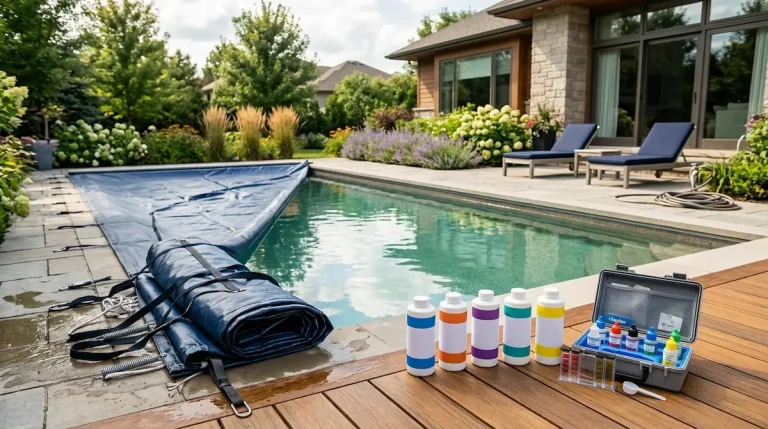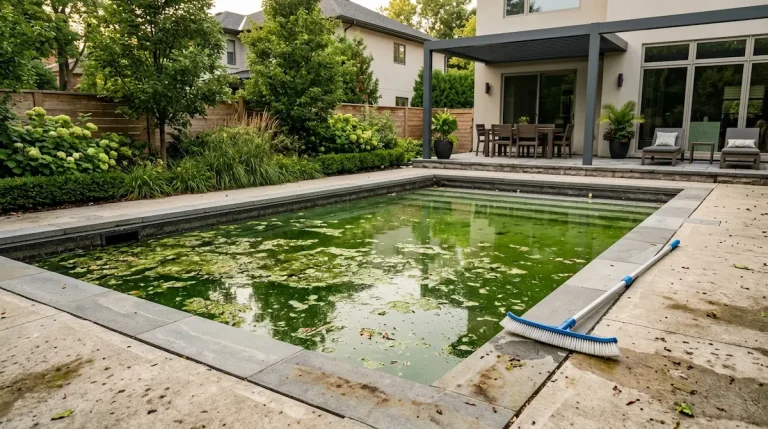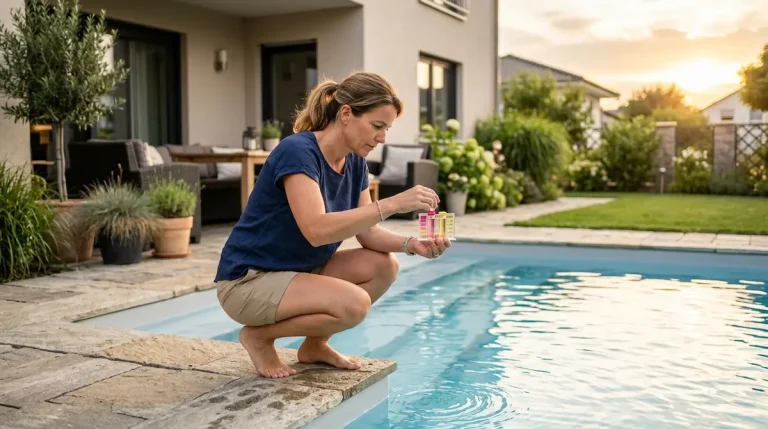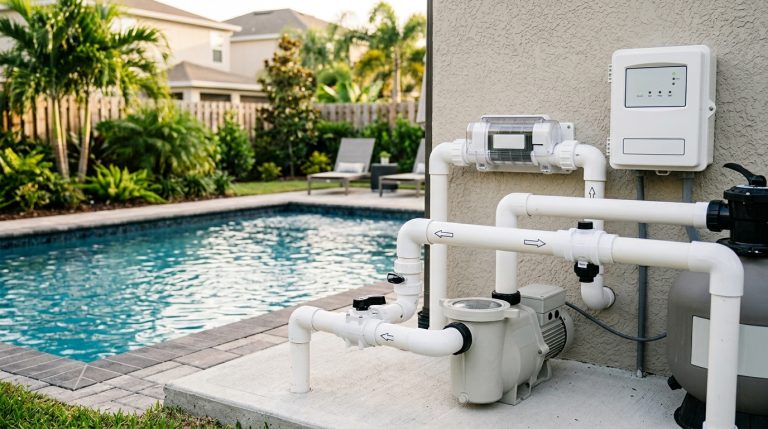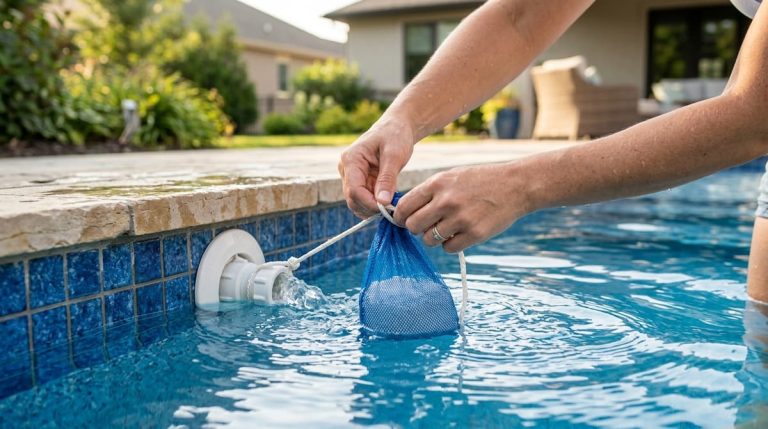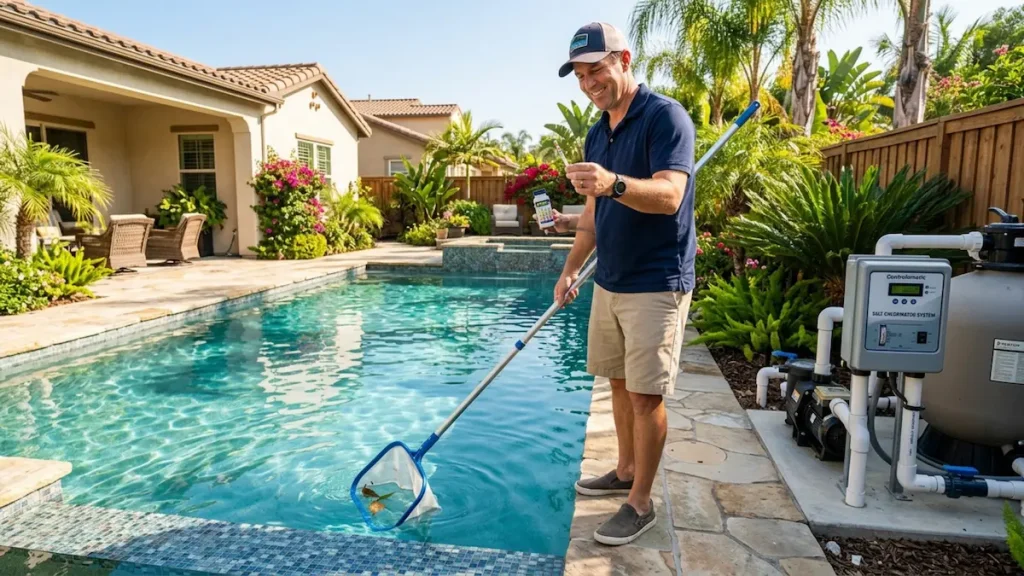
So you’ve got a saltwater pool. Maybe it came with the house, or you finally switched over and nobody handed you a manual. Good news: saltwater pool care is mostly a handful of small habits done consistently, not a chemistry degree. The salt cell makes chlorine for you. Your job is keeping the water balanced, keeping that cell clean, and catching small problems before they turn into a pricey part swap. Let’s walk through what that looks like week to week.
What saltwater pool care actually involves
At its core, saltwater pool care is a numbers game: keep salt in the 2,700 to 3,400 ppm band, free chlorine at 1 to 3 ppm, and pH near 7.5, then clean the salt cell a few times a season. Test weekly. Brush and skim often. Keep the pump running 8 hours a day or more.
That’s the whole game. Everything below is just detail on how to hit those numbers without babysitting the pool.
Your target water levels
| Reading | Ideal range | Why you care |
|---|---|---|
| Salt | 2,700–3,400 ppm (many aim ~3,200) | Fuel for the generator. Too low and it stops making chlorine. |
| Free chlorine | 1–3 ppm | The actual sanitizer keeping water safe. |
| pH | 7.4–7.6 | Salt cells nudge pH up, so this drifts fast. |
| Total alkalinity | 80–120 ppm | Buffers pH and stops wild swings. |
| Calcium hardness | 200–400 ppm | Low levels get corrosive, high levels scale the cell. |
| Cyanuric acid (stabilizer) | 60–80 ppm for outdoor pools | Shields chlorine from the sun so the cell works less. |
Always check your generator’s manual first. Some brands want a slightly different salt window, and running outside it can trip the unit off. If the chemistry side still feels fuzzy, read up on pool water chemistry for the full breakdown.
Your weekly and monthly routine
Consistency beats intensity with a salt pool. Ten minutes a few times a week keeps you out of trouble far better than a frantic Saturday rescue.
Every week
- Test pH and free chlorine. In peak summer, checking every two or three days is smarter.
- Skim the surface and empty the skimmer baskets.
- Brush the walls, steps, and any dead spots where water sits still.
- Glance at the generator display for a salt or “check cell” warning.
Once a month (or after heavy rain)
Rain and top-off water thin out your salt, so check salinity, stabilizer, and calcium once a month. Vacuum the floor. Backwash or rinse the filter when pressure climbs. If salt reads low, add pool-grade salt in small doses. As a rough yardstick, Galaxy Home Recreation figures about 30 pounds per 1,000 gallons to move a pool from zero toward 3,500 ppm, so a modest top-up is usually plenty.
Taking care of the salt cell
The cell is the heart of the whole system. Treat it right and it’ll quietly crank out chlorine for years. Neglect it, and you’ll be shopping for a replacement sooner than you’d like.
Cleaning the cell
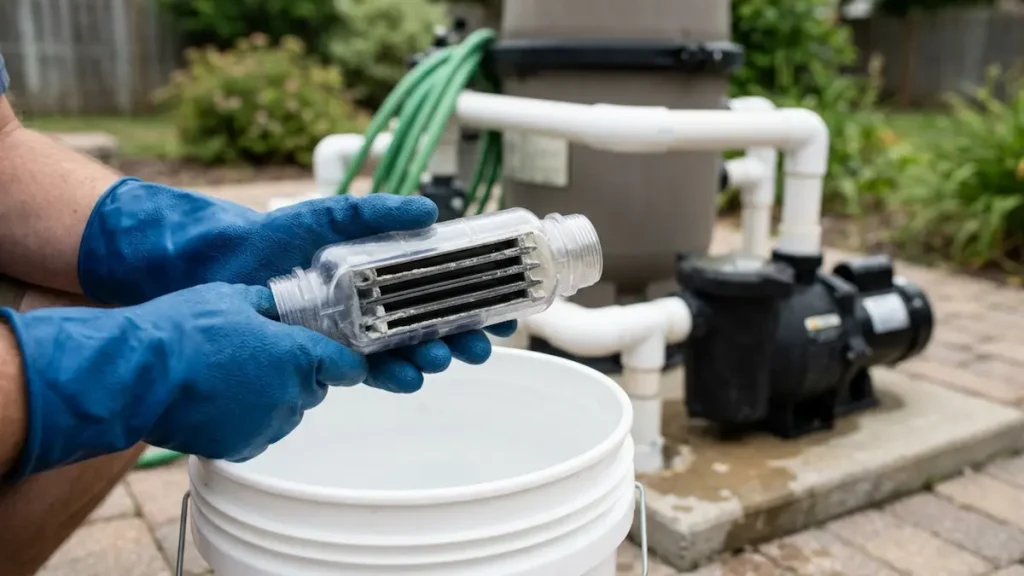
Calcium scale creeps across the metal plates and slowly strangles chlorine output. Give the cell a look every three to four months. White, crusty flakes are your cue to rinse it. A high-pressure hose handles light buildup on its own. For scale that won’t budge, mix a soak of four parts water to one part muriatic acid and let the cell sit for 10 to 15 minutes. Don’t overdo it. The acid nibbles at the coating every time, so save it for when you can actually see deposits. For the step-by-step, use a dedicated how to clean a salt cell guide.
When to replace it
Even a well-kept cell wears out eventually. River Pools puts a salt chlorine generator’s life at about 3 to 7 years. When the cell finally goes, a new one runs $700 to $1,100, and a replacement control board adds $500 to $900. Erratic salt readings, weak chlorine output despite clean plates, or visibly corroded plates all point to a cell on its way out. When that day comes, compare current models in a best salt cell replacement roundup before you buy.
What saltwater pool care really costs
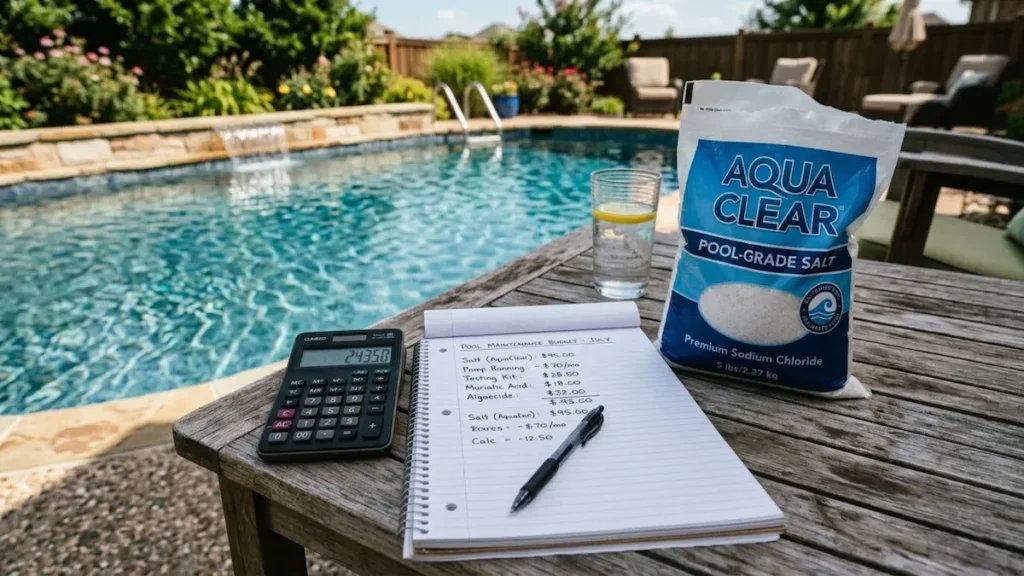
Most guides breeze right past this part. A salt pool feels cheap day to day because you’re not hauling home jugs of chlorine every week. The real bill lands every few years, when the cell dies. Budget for it upfront and the surprise disappears.
| Cost | Typical price | How often |
|---|---|---|
| Replacement salt cell | $700 to $1,100 | every 3–7 years |
| Control board | $500 to $900 | as needed |
| Pool-grade salt (40 lb bag) | around $8 to $20 | top-ups after rain/dilution |
| DIY cell cleaning (acid rinse) | a few dollars | every 3–4 months |
| Pro cell cleaning | roughly $50 to $120 (service call, varies locally) | as needed |
Even counting the cell, yearly chemical spend on a salt pool usually lands near $100 to $150, next to $250 to $300 for a pool fed with chlorine pucks, per The Aqueous Solution. Spread that cell cost across its lifespan and salt still tends to win for a busy family pool. Treat every price here as a ballpark. Brand, region, and when you buy all move the numbers, so check current local pricing before you budget. Want the full backyard picture beyond sanitizer? Check the full pool maintenance cost breakdown.
Cold water changes everything
Nobody warns new owners about this next trap. Salt cells barely make chlorine in cold water. Once the water dips below roughly 50 to 60°F, most units throttle down and plenty quit generating altogether, which is why your fall readings can crater even when nothing else changed. In shoulder season, don’t panic and dump in salt. Add a little liquid chlorine by hand to bridge the gap, or close the pool for winter. If you’d rather run a salt system from day one on a fresh conversion, a how to convert pool to saltwater guide walks through the setup.
Mistakes I see saltwater owners make
A few patterns come up again and again with folks who fire their pool service and go DIY.
- Adding salt without testing. Over-salting is real, and draining water to fix it is a genuine hassle.
- Trusting the generator’s salt number as gospel. It drifts. Confirm with test strips or a meter now and then.
- Ignoring pH. Salt systems push pH upward on their own, so it needs regular attention, not once a month.
- Letting stabilizer sit too low in a sunny yard, which burns off chlorine and makes the cell work overtime.
- Over-cleaning the cell out of habit. That shortens its life instead of extending it.
None of these are hard to avoid. They just cost you when they slip.
Saltwater pool care FAQ
Do you still need chlorine in a saltwater pool?
Yes, just not the kind you pour from a jug. While the pump runs, the cell keeps turning dissolved salt into a steady stream of chlorine. You’re still swimming in chlorinated water, only at gentler, steadier levels.
Do saltwater pools need to be shocked?
Sometimes. If your chlorine stays in range, you’ll rarely need it. After a big party, a storm, or an algae scare, a manual shock helps. Many generators have a “boost” or “super chlorinate” mode that does the same thing.
How often should you test a saltwater pool?
Test pH and chlorine weekly, or every couple of days in hot weather. Check salt, stabilizer, and calcium monthly. Retest after heavy rain or heavy use.
Are saltwater pools really easier to maintain?
Day to day, yes. You handle fewer harsh chemicals and chlorine stays more consistent. The trade-off is the equipment: you’re maintaining and eventually replacing a cell that a plain chlorine pool doesn’t have.
Where to start this week
Grab a decent test kit, get your pH and chlorine dialed in, and pencil a cell inspection onto the calendar every few months. Nail those three and your saltwater pool care mostly runs itself for the season. For the deeper “why” behind each reading, lean on the River Pools guide to salt generator lifespan and the CDC’s Healthy Swimming guidance for safe chlorine and pH.