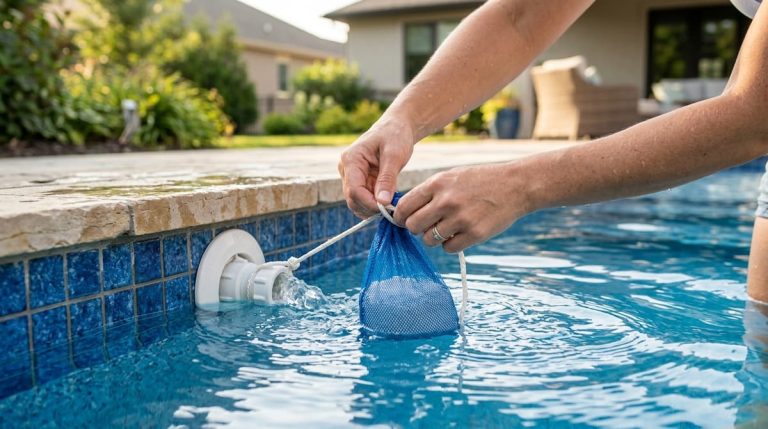
So you’ve got a pool, and now the bills are rolling in. The good news: pool maintenance cost is more predictable than most people expect, once you know where the money actually goes. You’ll pay for chemicals, power to run the pump, cleaning, and a couple of seasonal jobs. This guide lays out the real monthly and yearly numbers, what makes them swing, and how to trim the bill without letting your water turn green.
The short answer on pool maintenance cost
Keeping a pool clean and swimmable costs most owners about $80 to $260 a month, which lands at roughly $1,000 to $4,000 over a year. Chemicals, electricity, and cleaning eat up most of that. Do the work yourself and the running cost can drop to around $20 to $60 a month.
Prices below are ballpark ranges. Brand, region, and when you buy all move the numbers, so check current local prices before you set your budget.
| Expense | Typical monthly | Typical yearly | Notes |
|---|---|---|---|
| Chemicals (chlorine pool) | $50 to $80 | $300 to $800 | Less for saltwater |
| Electricity (pump, heater) | $65 to $100 | $780 to $1,200 | Pump is the big draw |
| Cleaning, professional | $60 to $400 | $720 to $4,800 | Weekly service |
| Cleaning, DIY | $20 to $100 | $240 to $1,200 | Your time, mostly |
| Opening + closing (seasonal) | varies | $170 to $850 | Cold climates only |
| Repair reserve | $40 to $100 | $500+ | Set it aside monthly |
Where the money actually goes
A single monthly number hides a lot. Break it into pieces and the picture gets clearer, and you can see which parts you actually control.
Chemicals and water balance
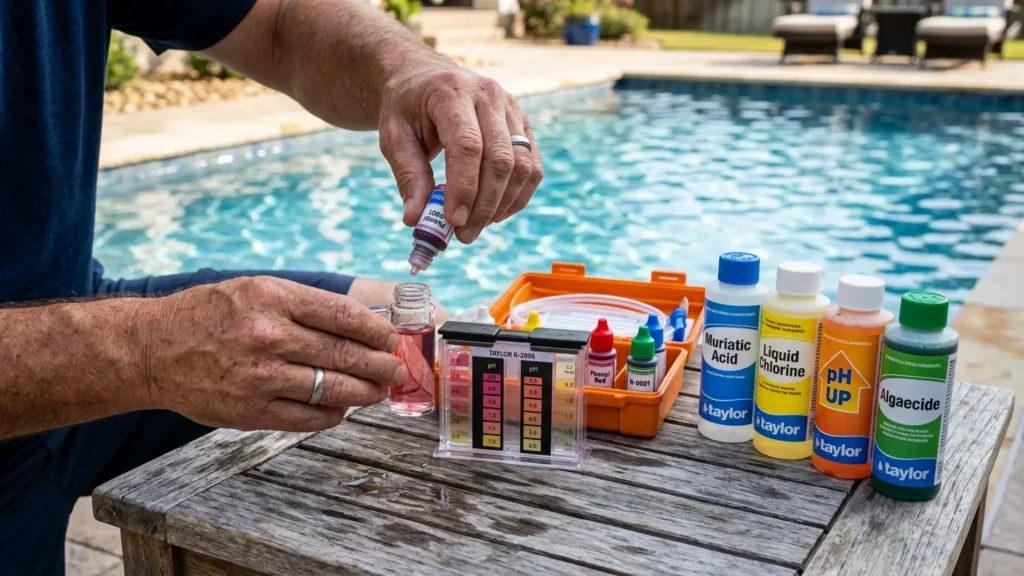
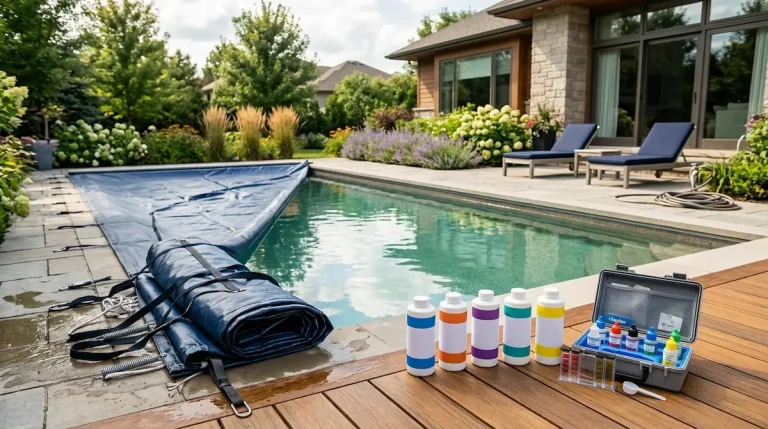
During swim season a standard chlorine pool usually needs $50 to $80 a month of chlorine, pH balancers, algaecide, and test-kit refills. Buy in bulk before summer and each dose costs less. Most of your monthly spend is really about chemistry, so getting it right saves money twice: balanced water uses fewer chemicals and it’s gentler on your equipment. For the full routine, get your pool water chemistry right before you start buying jugs at random.
Electricity and the pump
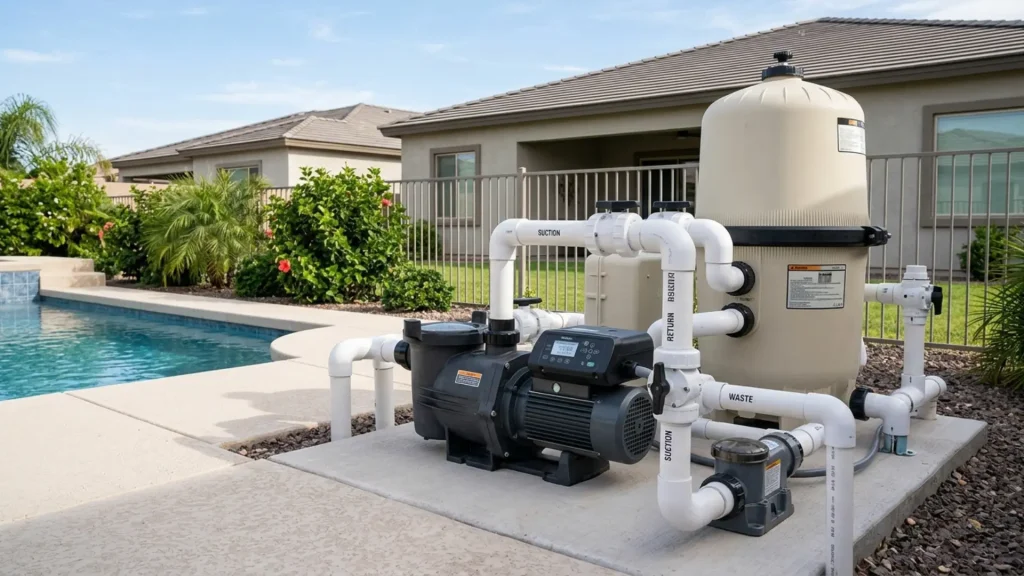
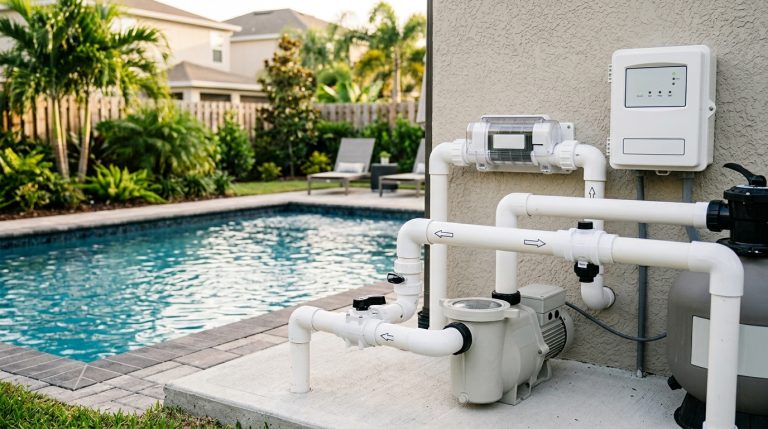
The pump is the quiet budget killer. An older single-speed pump can add $65 to $100 a month to your power bill, and more in hot regions where it runs longer. Switch to a variable-speed model and the savings are real. The U.S. EPA reports that ENERGY STAR certified pool pumps can cut pump energy use by around 70% versus standard pumps, which often puts $200 to $300 back in your pocket every year. (Source: ENERGY STAR, energystar.gov)
Cleaning and routine service
You’ve got two roads here: skim, brush, vacuum, and empty the baskets yourself, or pay a pro to show up weekly. A basic monthly service starts around $86 and climbs past $300 for bigger pools with more visits. One-off jobs add up too. Professional filter cleaning runs $60 to $150 a visit, and a water test-and-balance call is usually $50 to $100.
Opening and closing the pool
Live somewhere with real winters? Budget for two seasonal jobs. Opening in spring costs about $85 to $350. Winterizing in fall lands anywhere from $85 to $500, depending on your setup and whether you buy a winter cover. Owners in warm states like Florida or Arizona can mostly skip this line.
DIY versus hiring a pro
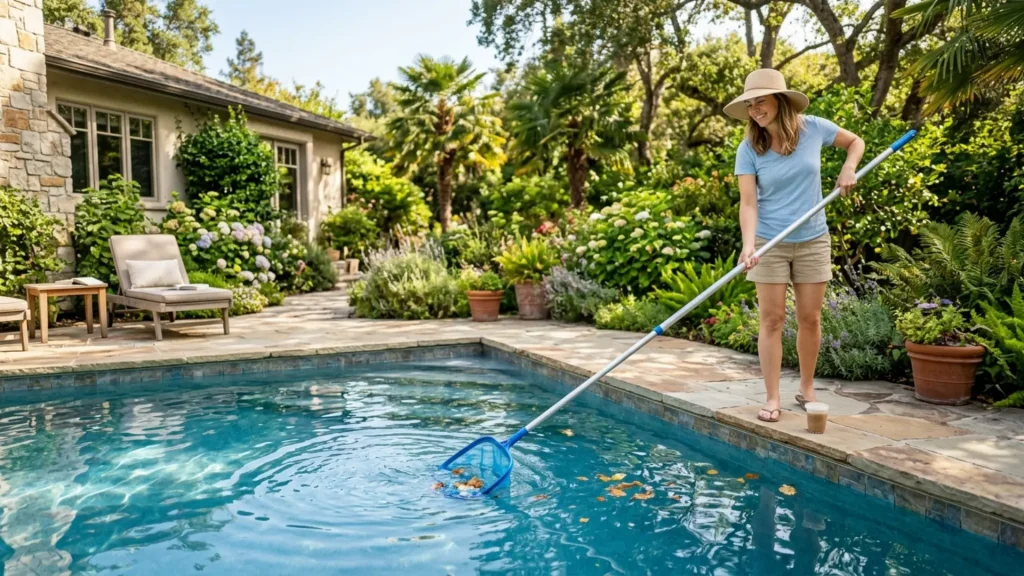
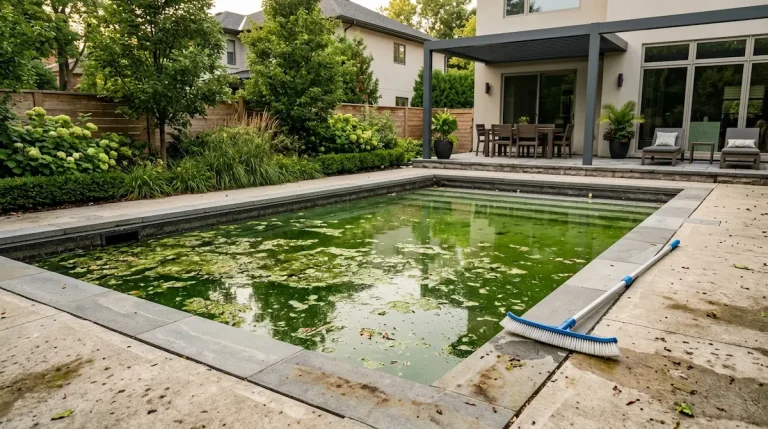
This one decision moves your budget more than anything else. The cheapest path is DIY pool maintenance, where your main cost is chemicals and a little gear. The trade is your time and a learning curve. Get the chemistry wrong and one algae bloom can wipe out a season of savings in shock and clarifier.
| Option | Typical cost | Best for | Pros | Cons |
|---|---|---|---|---|
| DIY | $20 to $60 / month | Small, simple pools and hands-on owners | Cheapest, full control, you learn your pool | Takes time, easy to mis-dose early on |
| Weekly pro service | $100 to $300 / month | Busy households, large or complex pools | Hands-off, catches small problems early, protects warranties | Priciest option, ongoing bill |
Honest take? If you’ve got a small pool and don’t mind fifteen minutes a few times a week, DIY wins on cost. A big pool with a heater, a busy family, and no free weekends usually justifies a service.
Cost by pool type over ten years
Most cost guides stop at the monthly number, and that’s a mistake. The real gap between pool types shows up in the big periodic bills, not the weekly chemicals. Here’s the longer view most people don’t see until it’s too late.
| Pool type | Routine upkeep / year | Big periodic cost | 10-year upkeep outlook |
|---|---|---|---|
| Fiberglass | $375 to $1,200 | Rarely resurfaced; smooth gel coat needs less | Lowest |
| Vinyl liner | $500 to $1,500 | Liner swap $5,000 to $7,500 every 8 to 10 years | Medium |
| Concrete / gunite | $1,200 to $2,500 | Resurfacing $10,000+ every 10 to 15 years, plus more brushing and chemicals | Highest |
| Saltwater system | $70 to $100 / month in chemicals | Salt cell replacement $200 to $700 every 3 to 5 years | Low on chemicals, watch the cell |
Fiberglass is the low-maintenance champ because algae struggles to grip its nonporous surface. Concrete is beautiful and endlessly customizable, but it drinks chemicals and needs pricey resurfacing on a clock. Vinyl sits in the middle until liner day arrives, and that day always arrives.
Saltwater versus chlorine
People assume saltwater is free to run. It isn’t, but it is cheaper on chemicals. A saltwater pool often costs $70 to $100 a month, while a traditional chlorine pool runs $100 to $200 a month once you factor in buying chlorine all season. The catch is the salt cell: it wears out every few years and a replacement runs $200 to $700, so bank a little for it.
What pushes your bill up or down
- Pool size. More water means more chemicals and more pump hours.
- Climate and season length. A year-round pool in Phoenix costs far more to run than a three-month pool in Minnesota.
- How hard you use it. Big pool parties add oils, sunscreen, and debris, which means extra shock and cleaning.
- Heating. A heater is comfort you pay for monthly, sometimes steeply.
- Above-ground versus inground. Above-ground pools are cheaper to keep up across the board.
That last point matters on a tight budget. Above-ground owners get off easier, and above ground pool maintenance follows a smaller routine with lower numbers across the board.
How to lower your pool maintenance cost
You don’t have to accept the high end of every range. A few habits do most of the work.
- Run a variable-speed pump on a timer during off-peak hours. This is the single biggest saver.
- Use a solar or safety cover to slow evaporation, hold heat, and keep debris out.
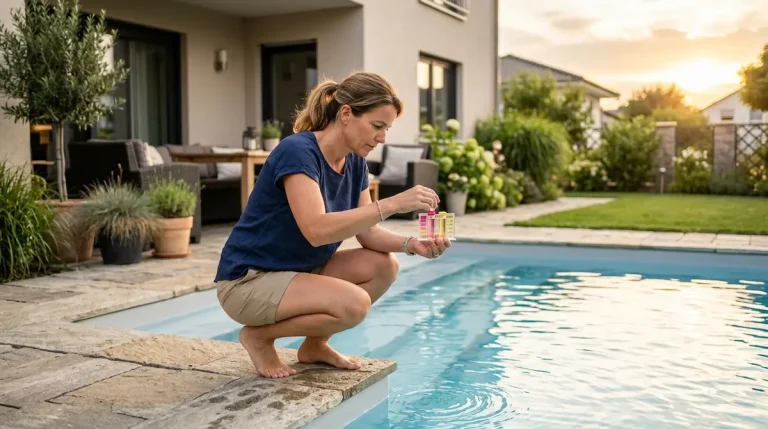
- Test your own water weekly so small swings never become a green pool.
- Buy chemicals in bulk before peak season instead of emergency runs to the store.
- Keep the filter clean so the pump doesn’t strain and burn extra power.
Do even three of these and you’ll shave real money off the yearly total without touching your swim time.
Frequently asked questions
How much does pool maintenance cost per month?
Expect about $80 to $260 a month for a typical inground pool with some professional help. Handle it yourself and you can get down to $20 to $60 a month, mostly for chemicals.
What’s the most expensive part of pool maintenance?
Over a single year, electricity to run the pump and heater usually tops the list. Over ten years, the big surprise costs are resurfacing a concrete pool or replacing a vinyl liner.
Is it cheaper to maintain a pool yourself?
Yes, by a wide margin on cash. DIY supplies run roughly $17 to $25 a month versus $100 to $230 for weekly service. You’re trading money for time and a bit of a learning curve.
How much does it cost to maintain a saltwater pool?
Around $70 to $100 a month in chemicals, which beats a chlorine pool. Just remember the salt cell replacement of $200 to $700 every three to five years.
Why is pool maintenance so expensive?
It stacks several ongoing costs at once: chemicals, power, cleaning, and seasonal service. Add one repair or a heater and the monthly number jumps fast.
Bottom line and what to do next
Budget about $1,000 to $4,000 a year and you’ll be ready for most of what a pool throws at you. If you want the lowest number, run a variable-speed pump, cover the pool, and learn to test your own water before you consider a weekly service. If your pool is large or your calendar is packed, pay for a pro and treat the fee as insurance against a $2,000 repair. Set aside $40 to $100 a month for the eventual big job, whether that’s a liner, a salt cell, or resurfacing, and no future bill will catch you off guard.